What are the tusks of the wild boar, and what is their primary role?
Answer
Elongated canine teeth used as primary defensive and offensive weapons
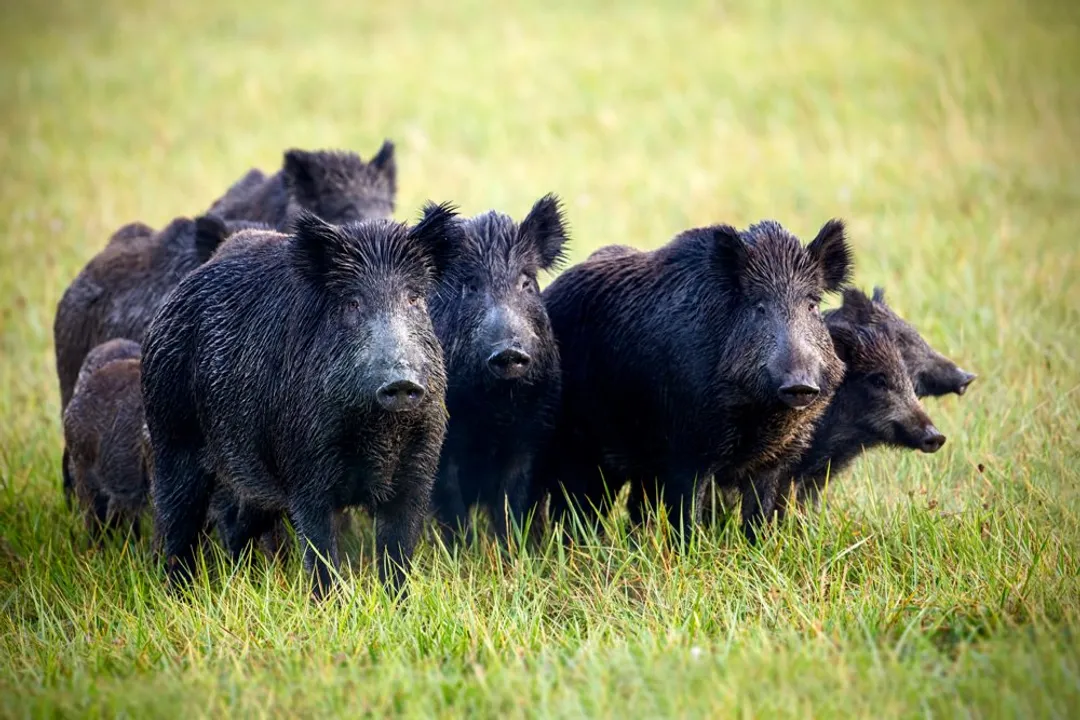
The structures referred to as tusks in both male and female wild boars are not specialized grinding implements but are, in fact, highly developed canine teeth that have elongated significantly beyond typical dental structure. These tusks serve a critical purpose in survival, acting as the animal's primary means of both defense against threats and offense during territorial or dominance disputes, especially among males. The lower tusks are particularly noteworthy as they curve upward and can achieve considerable length and sharpness, reinforcing their role as formidable weapons when the animal is threatened or engaged in combat.
Related Questions
What structural element supports the wild boar's elongated snout for rooting in the soil?What coat coloration is most characteristic of pure wild boar populations?What specialized hair feature runs along the spine of mature male wild boars?How does the wild boar's eyesight compare to its senses of smell and hearing?What are the tusks of the wild boar, and what is their primary role?How does the wild boar's stocky build and short legs aid its movement?Generally, how does the typical weight range of a mature male boar compare to a sow?What tail characteristic often suggests a strong feral hog influence?How does the hair density typically compare between pure wild boar and feral individuals regarding their coats?In terms of facial profile, how does the head shape of a pure wild boar differ from feral hogs?What typical weight range is associated with a mature female wild boar (sow) in standard conditions?