Wild Boar Physical Characteristics
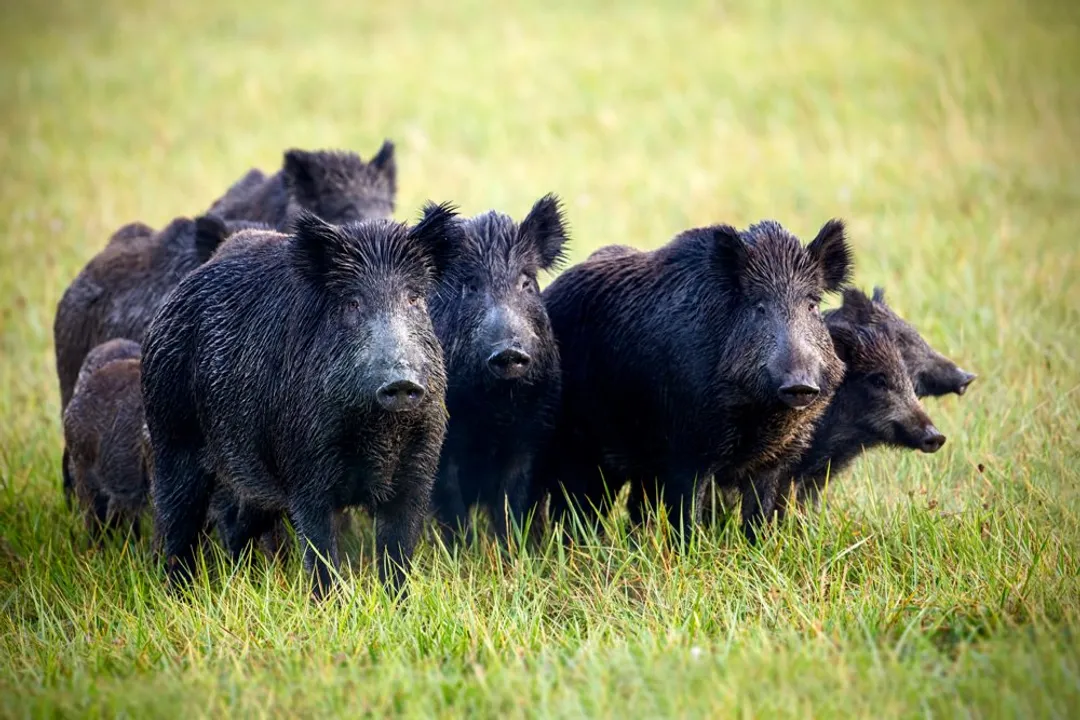
The wild boar presents a formidable appearance, often instantly recognizable by its sturdy build and rough coat, a creature adapted for foraging and defense in varied environments. [2][4] While the term "wild boar" is sometimes used generally, it often specifically refers to the European wild boar (Sus scrofa), which has distinct physical traits compared to its hybridized descendants known as feral hogs in places like North America. [1][3] Understanding these characteristics requires looking closely at their structure, integument, and the notable differences between sexes and populations. [2][5]
# Body Shape
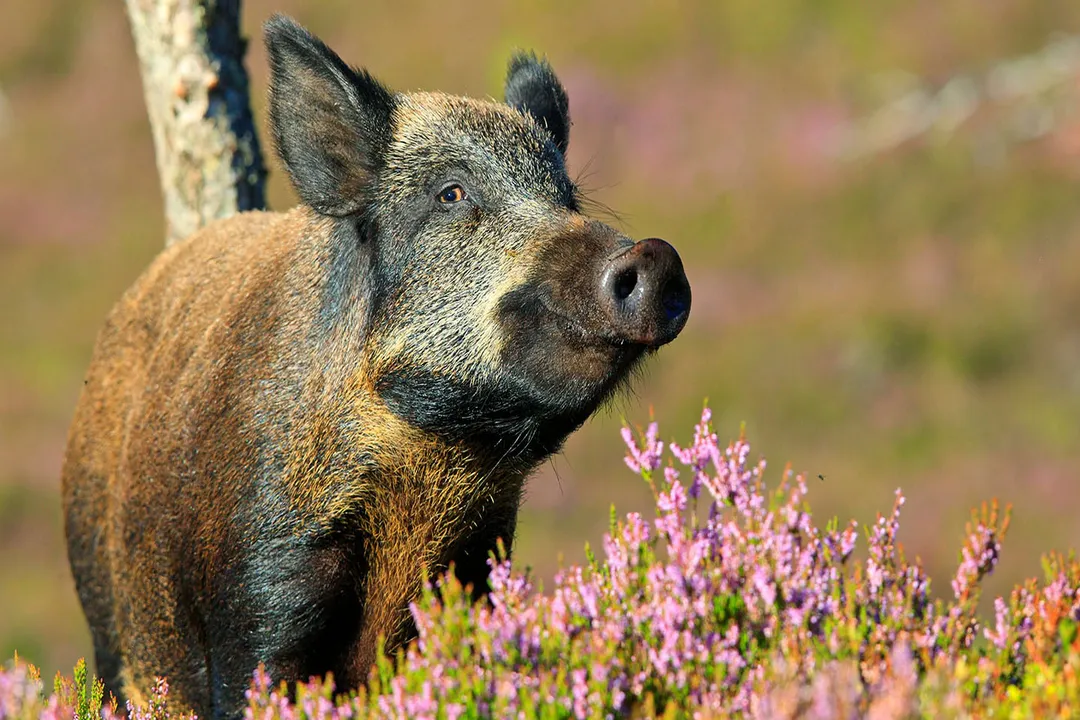
The fundamental structure of the wild boar is stocky and powerfully built, characterized by a somewhat barrel-shaped torso supported by relatively short, strong legs. [2][4] This build gives them a low center of gravity, which aids in navigating dense underbrush and rooting in the soil. [2] The head is large in proportion to the rest of the body, tapering into a distinctive, elongated, and pointed snout. [2][5] This snout is supported by a tough disk of cartilage at the tip, which is perfectly suited for digging, or "rooting," for food underground. [2] While pure wild boars often maintain this classic, robust profile, feral hog populations resulting from escaped domestic pigs can show a wider array of body shapes, sometimes appearing less uniformly compact than their purely wild ancestors. [1][3]
# Coat Texture
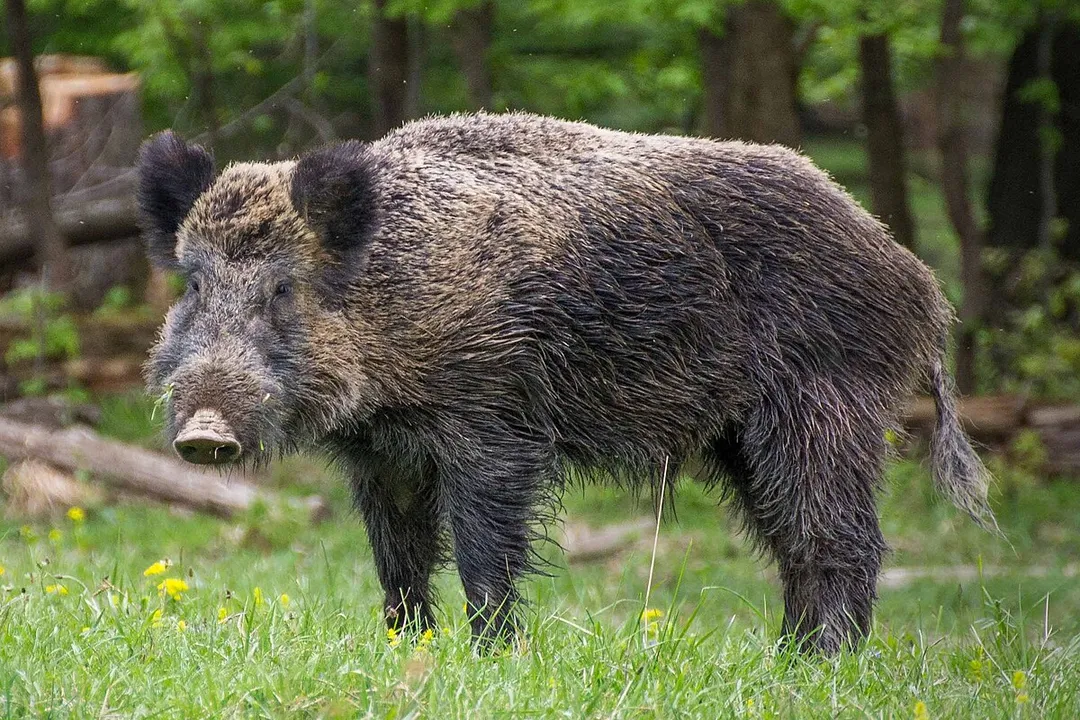
A defining feature of the wild boar is its protective covering of hair. [2] This coat is generally described as coarse and bristly, providing excellent insulation and camouflage. [2][5] The color is typically dark, ranging from dark brown to nearly black. [2][5] A notable feature, especially in mature males, is the presence of a distinct mane—a line of longer, stiffer hair running along the spine from the neck down toward the middle of the back. [2]
The variation in coat appearance is one of the clearest ways to distinguish between pure wild boar populations and introduced or feral ones. [1][6] Pure wild boar tend to maintain the darker, more uniform coloring. [4] In contrast, feral hogs, which often involve interbreeding with domestic swine, display far greater phenotypic diversity. [1][3] It is common to see feral hogs that are reddish-brown, solid black, spotted, or even light-colored or nearly white. [1][3] Furthermore, the density of the hair can vary significantly; feral individuals may possess thinner, less dense coats compared to their Eurasian counterparts, an adaptation that might be influenced by the climate they inhabit or their genetic background. [1] Observing the coat texture—whether it is thick and uniformly bristly or patchy and variable—can offer a quick initial assessment of the animal's heritage. [1][5]
# Facial Features
The head itself is elongated, contributing to the animal's characteristic profile. [2] Beyond the tough snout mentioned earlier, the ears are relatively small, upright, and pointed, positioning them high on the head. [2] Wild boars possess dark, keen eyes, though their eyesight is generally considered poor compared to their keen senses of smell and hearing. [2] When evaluating a sounder or an individual, the proportions of the face—the length of the snout relative to the cranium—can often indicate age and sex, with dominant males developing more pronounced features over time. [5]
# Tusks Weaponry
Both male and female wild boars possess tusks, which are actually elongated canine teeth. [2] These structures are far more than simple chewing implements; they function as primary defensive and offensive weapons. [2] The lower tusks are particularly noticeable, as they curve upward, sometimes growing quite long and sharp. [2]
In adult males, known as boars, the tusks are significantly more developed than in females (sows). [2][5] The size and sharpness of a boar's tusks are often related to its age, dominance status, and fighting frequency. [2] When comparing a wild boar to a feral hog, the condition and size of the tusks remain reliable indicators, though poor nutrition in some feral populations might stunt their maximum growth potential compared to boars in prime European habitats. [5]
# Size Variation
One challenge in describing a definitive "wild boar" is the sheer variability in size and weight, which is strongly influenced by environmental factors, diet, and geographic location. [5] Generally, sexual dimorphism is pronounced: males are consistently larger than females. [2][5]
A pure European wild boar can reach impressive sizes. For instance, mature males may weigh upwards of 150 to 200 kilograms (about 330 to 440 pounds) in ideal conditions, though weights significantly below or above this range are common depending on the specific region. [5] Sows are smaller, typically weighing around 50 to 70 kilograms (about 110 to 154 pounds), though they can become quite large when pregnant or nursing. [2][5]
To put this variability into perspective, consider the expected ranges across different environments, keeping in mind that these are not rigid standards but rather observed tendencies based on available nutrition:
| Characteristic | Male (Boar) Estimate | Female (Sow) Estimate | Key Influencer |
|---|---|---|---|
| Weight (kg) | 90 – 200+ | 50 – 100 | Diet and Habitat Quality [5] |
| Height at Shoulder (cm) | 80 – 110 | 65 – 85 | Age and Genetics |
| Tusk Prominence | Very High | Moderate | Age and Dominance [2] |
It is useful for field identification to remember that while a very large feral hog might weigh more than a smaller European boar due to domestic lineage, the pure wild boar often carries its weight in a denser, more muscular frame optimized for continuous woodland movement. [1][4]
# Distinguishing Feral Hogs
Because the term "wild pig" often encompasses populations resulting from escaped domestic pigs interbreeding with native wild boars, recognizing the physical traits unique to feral swine is important for accurate identification. [1][3][6] While they share the same species designation (Sus scrofa), hybridization leads to physical characteristics that deviate from the classic wild boar standard. [1]
Key physical markers that often suggest a strong feral influence include:
- Coloration and Hair: As noted, the wild variation in color—spots, stripes, or pale coats—is much more common in feral populations than in pure wild boar. [1][3] The hair may also be less uniformly dense or bristly. [1]
- Head Shape: Feral hogs sometimes exhibit a head shape that is slightly shorter or less sharply tapered than the long, straight profile of the pure wild boar. [3]
- Tail: Feral hogs often retain a tail that is straighter or more mule-like, whereas pure wild boars tend to have a tail that hangs down but may curl slightly upward when agitated. [3]
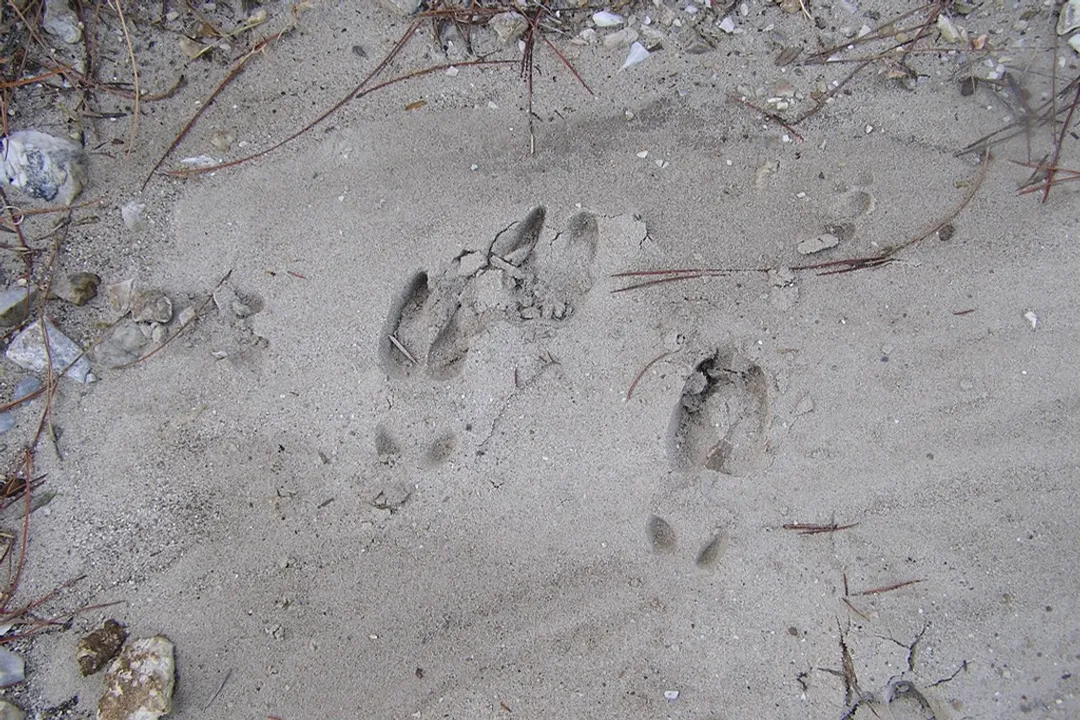
The presence of these traits together—a lighter or spotted coat, a less defined mane, and a slightly broader head profile—strongly suggests an animal whose physical characteristics have been influenced by domestic stock. [1][6] Despite these variations, both pure wild boars and feral hogs possess cloven hooves, sharing the basic pedal structure necessary for traversing uneven terrain. [2]
Related Questions
#Citations
Physical Characteristics of Feral Hogs
Wild boar - Wikipedia
Sus scrofa (wild boar) | INFORMATION - Animal Diversity Web
Wild Boar (Sus scrofa) - British Mammals - Woodland Trust
Wild Boar | Outdoor Alabama
Physical Characteristics | Wild Pig Info - Mississippi State University
Wild Pigs - UC IPM
Wild Pigs - Invasive Species Centre
DNR: Fish & Wildlife: Feral / Wild Hog - IN.gov