How does the wild boar's stocky build and short legs aid its movement?
Answer
Provides a low center of gravity aiding navigation in dense underbrush
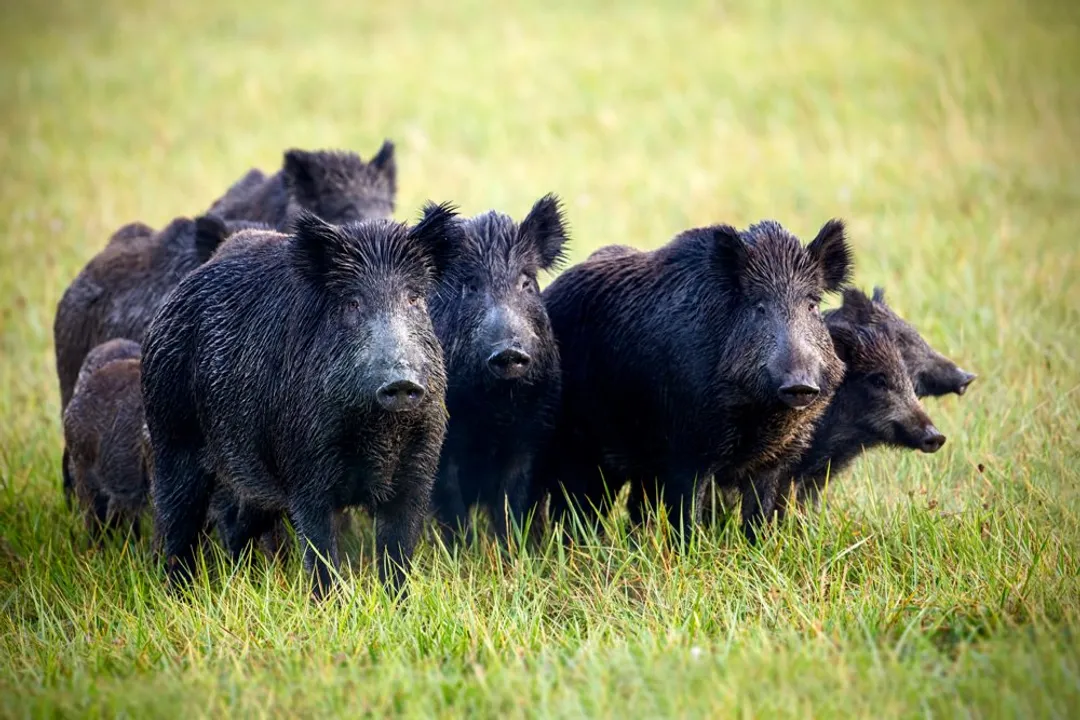
The fundamental body structure of the wild boar—being stocky, powerfully built, and supported by relatively short but extremely strong legs—is an adaptation highly suited to its preferred habitat. This configuration results in a low center of gravity. This physical trait is essential because it grants the animal superior stability and maneuverability when navigating challenging terrains such as dense underbrush, thickets, and uneven woodland floors. This low profile allows the boar to push through thick vegetation effectively while maintaining balance, which is necessary both for foraging and evading predators in cluttered environments.
Related Questions
What structural element supports the wild boar's elongated snout for rooting in the soil?What coat coloration is most characteristic of pure wild boar populations?What specialized hair feature runs along the spine of mature male wild boars?How does the wild boar's eyesight compare to its senses of smell and hearing?What are the tusks of the wild boar, and what is their primary role?How does the wild boar's stocky build and short legs aid its movement?Generally, how does the typical weight range of a mature male boar compare to a sow?What tail characteristic often suggests a strong feral hog influence?How does the hair density typically compare between pure wild boar and feral individuals regarding their coats?In terms of facial profile, how does the head shape of a pure wild boar differ from feral hogs?What typical weight range is associated with a mature female wild boar (sow) in standard conditions?