What practice has significantly increased the frequency of the white coat gene in captive populations?
Answer
Deliberate captive breeding programs seeking the aesthetic trait
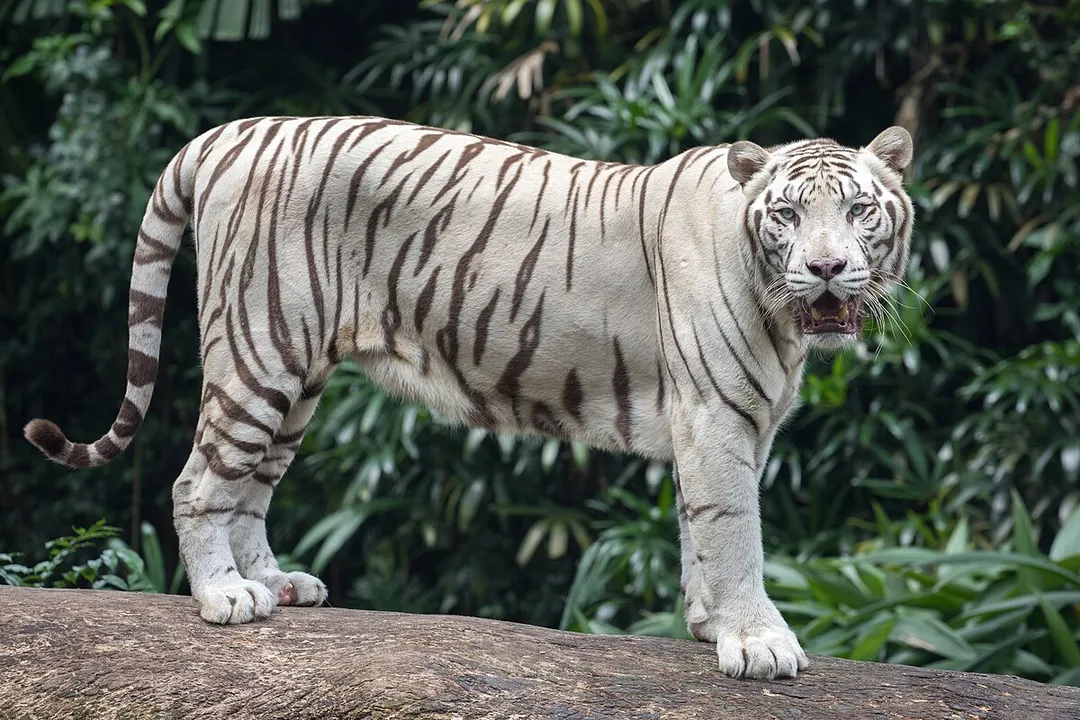
The high concentration of white tigers seen in zoos today is a direct result of human intervention through selective captive breeding. Because the trait is rare, breeders have actively sought out and mated individuals carrying the recessive gene to ensure the color appears reliably. This selective pressure, driven by human aesthetic preference rather than ecological fitness, has dramatically increased the frequency of the *SLC45A2* gene within the captive gene pool by several orders of magnitude compared to the low frequency found in healthy, naturally evolving wild populations.
Related Questions
What is the recognized subspecies category for the white tiger phenotype?What specific health problems are linked to inbreeding in captive white tigers?Which biological gene is identified as responsible for the white coat pattern in tigers?What taxonomic rank defines the group containing lions, leopards, jaguars, and tigers?What is the key characteristic distinguishing the white tiger from a true albino?What frequency was the white coat recessive gene estimated to have in wild Bengal tigers?Which major taxonomic classification level denotes multicellular, eukaryotic organisms that ingest nutrition?What practice has significantly increased the frequency of the white coat gene in captive populations?Why did wild sightings of white tigers decline significantly by the mid-20th century?What order classification includes animals adapted primarily for eating meat, like the white tiger?What practices necessitate mating closely related animals when maintaining white tigers in captivity?