What specialized dental structure located in the rear section of the wolf eel's mouth is used for crushing favored prey items?
Answer
Broad molars.
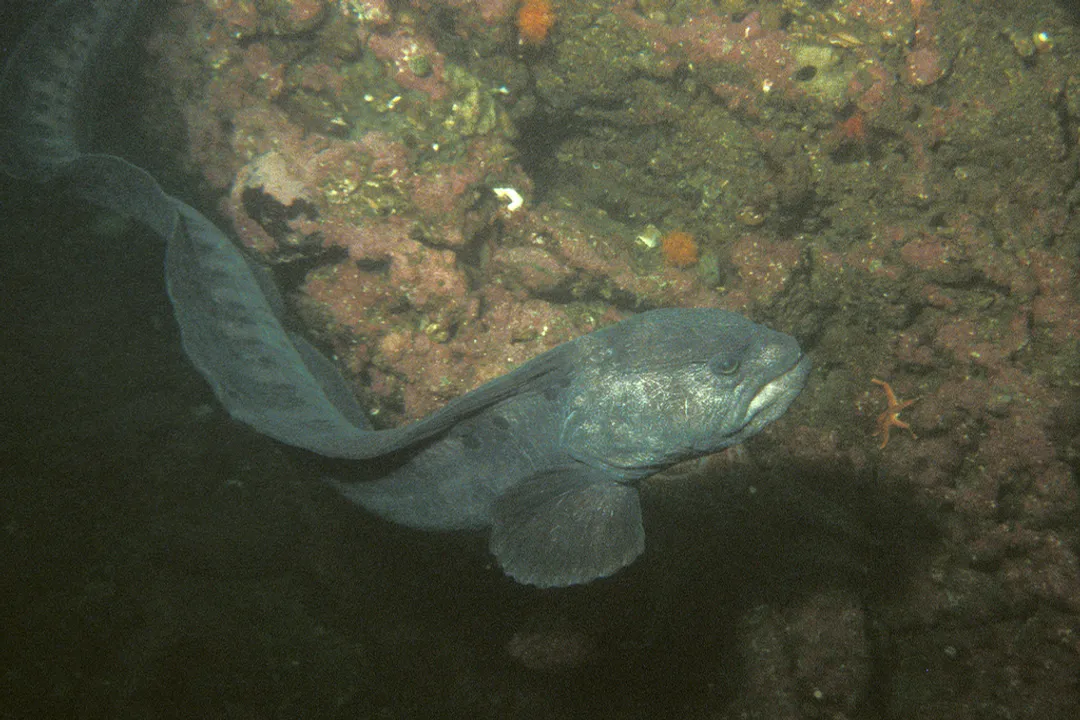
The adult wolf eel possesses a highly specialized dental architecture perfectly suited to its diet of hard-shelled invertebrates such as crabs, sea urchins, and snails. This dentition is divided functionally: the front teeth are sharp canines, optimized for grasping and seizing prey. In contrast, the rear section of the mouth is equipped with broad molars. These molars function specifically as crushing tools, allowing the fish to generate the necessary force to break open tough shells and extract the edible contents within, effectively making them biological nutcrackers.
Related Questions
What anatomical feature separates the wolf eel, Anarrhichthys ocellatus, from true marine eels like the moray?What coloration defines the appearance of newly hatched larvae and juveniles of the wolf eel?What feature on adult wolf eels develops a pattern unique to each individual, similar to a fingerprint?What anatomical features related to movement and lateral sensing does the adult wolf eel structurally lack?Where do adult wolf eels, creatures of the benthos, primarily establish their preferred residences?What specialized dental structure located in the rear section of the wolf eel's mouth is used for crushing favored prey items?For how many weeks do both parents fiercely guard the substantial egg mass of the wolf eel before hatching occurs?What specific large marine mammal has been documented preying on fully grown adult wolf eels?What specific title, signifying deep cultural respect, was the wolf eel given by indigenous peoples of the Northwest coast?What crucial instruction must aquarists follow regarding soft meals like squid if they are feeding adult wolf eels?