What are some interesting facts about electric eels?
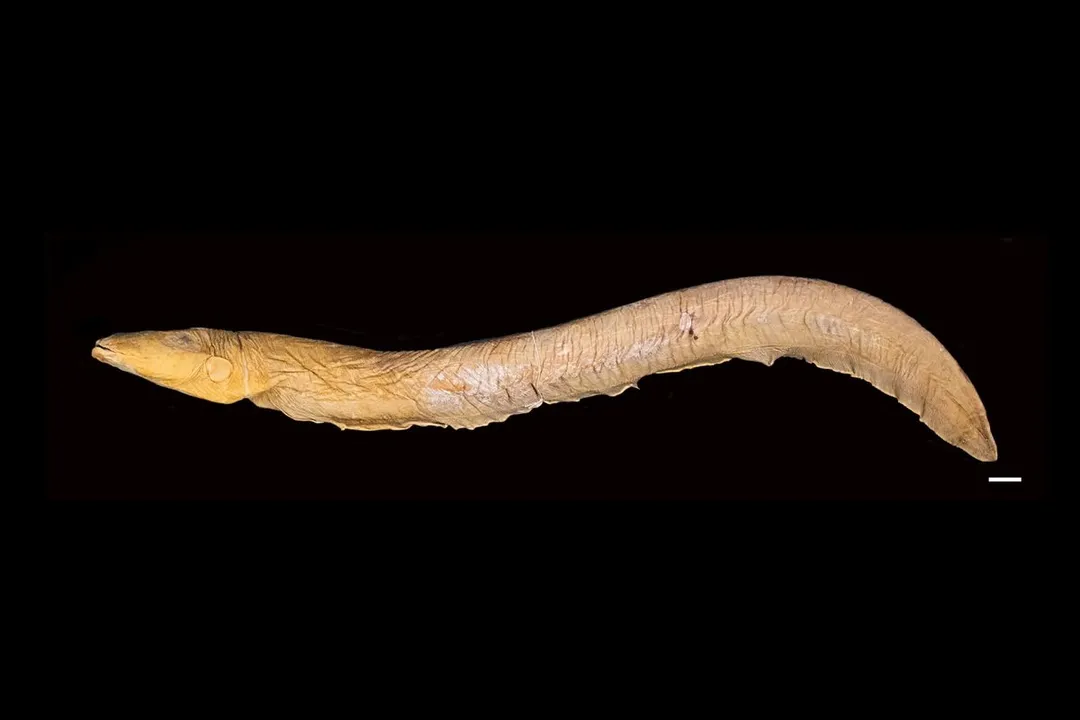
The creature often called the electric eel is far more complex and surprising than its common name suggests, frequently leading to misconceptions about its identity and capabilities. For starters, despite the common moniker, the electric eel is not a true eel at all; it belongs to a group of ray-finned fish known as knifefish, specifically within the order Gymnotiformes. This classification places them closer to catfish and carp than to actual eels. Furthermore, scientific understanding has advanced recently, revealing that the group we once lumped together as a single species, Electrophorus electricus, is actually composed of at least three distinct, recognized species: Electrophorus electricus, Electrophorus voltai, and Electrophorus varii. They inhabit the murky, slow-moving, and often stagnant waters of the Amazon and Orinoco river basins in South America.
# Anatomy of Shock
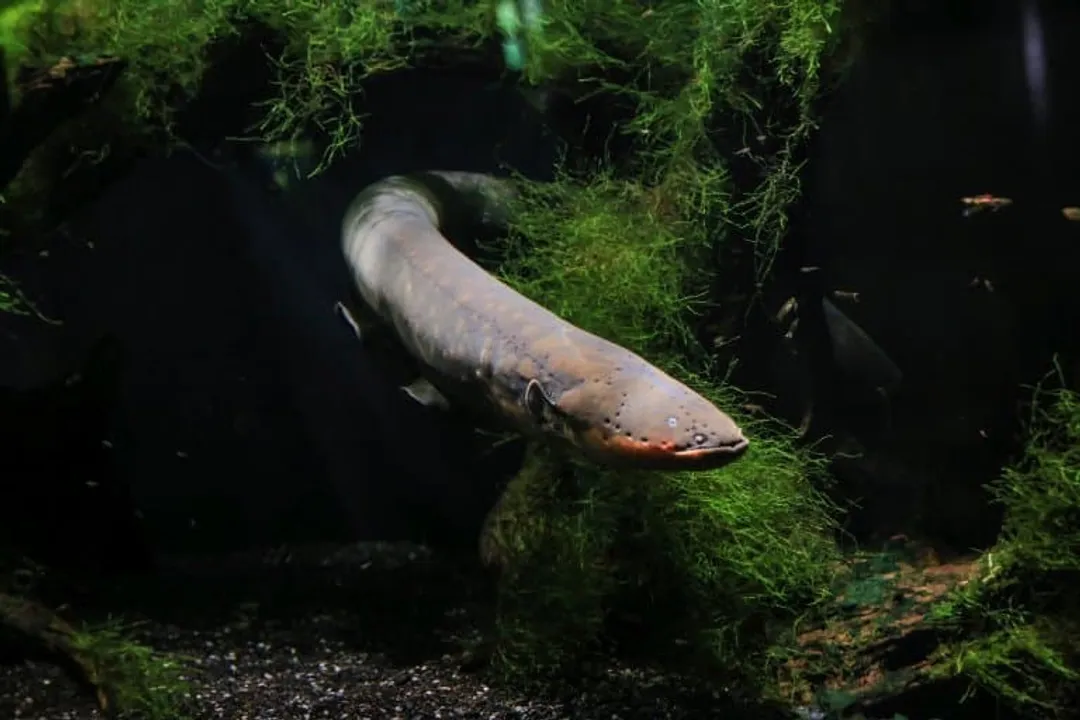
The ability that defines this animal is its powerful bioelectricity, which it generates using three pairs of specialized abdominal organs that take up about 80% of its body length. These organs are the Main organ, the Hunter's organ, and the Sachs' organ. Unlike a battery that stores charge, these organs function by producing sequential, rapid electrical discharges.
The voltage produced is astonishingly high for a biological organism. While some sources state they can produce up to 600 volts, others report that the maximum recorded discharge can reach a staggering 860 volts. The Hunter's organ is responsible for generating these high-voltage shocks, which are deployed strategically.
Consider this power relative to everyday life: A standard household wall outlet in many regions provides around 120 volts. [1] This means a single, powerful jolt from a large electric eel can generate electrical pressure many times greater than the power coming from a typical wall socket. This immense capability serves dual purposes: hunting prey and self-defense. When hunting, the eel can deliver a stunning shock powerful enough to incapacitate or kill smaller creatures, making it an apex predator in its environment. For defense, a strong shock is usually enough to deter a potential predator or an inquisitive human.
# Dual Communication System
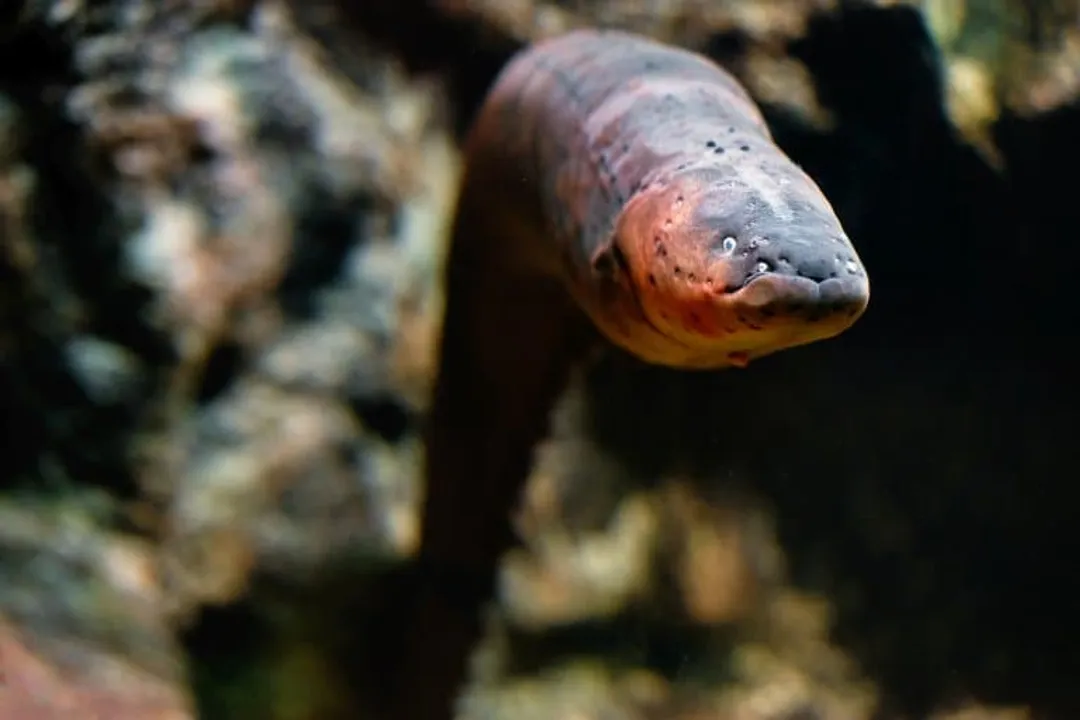
While the high-voltage discharge is dramatic, the eel's constant, low-level electrical activity is arguably more crucial for its day-to-day survival in dark, turbid waters. The Sachs' organ generates continuous low-voltage pulses, which the eel uses for electrolocation—a form of active sonar to navigate and sense its surroundings.
Imagine navigating a room where you cannot see anything; the electric eel creates its own "light" using electricity. It emits these regular pulses, and then specialized receptors on its skin detect distortions in the electric field caused by nearby objects, helping the fish map out its environment. Furthermore, different species and even individuals can vary the frequency of these low-voltage signals, suggesting they also use this electrical "chatter" for communication, perhaps signaling territory or readiness to mate. This reliance on an electrical sense means that in environments where the water conducts electricity poorly (like very pure water, though less common in their natural habitat), their navigational abilities would be severely hampered. [2]
# Unique Respiratory Adaptations
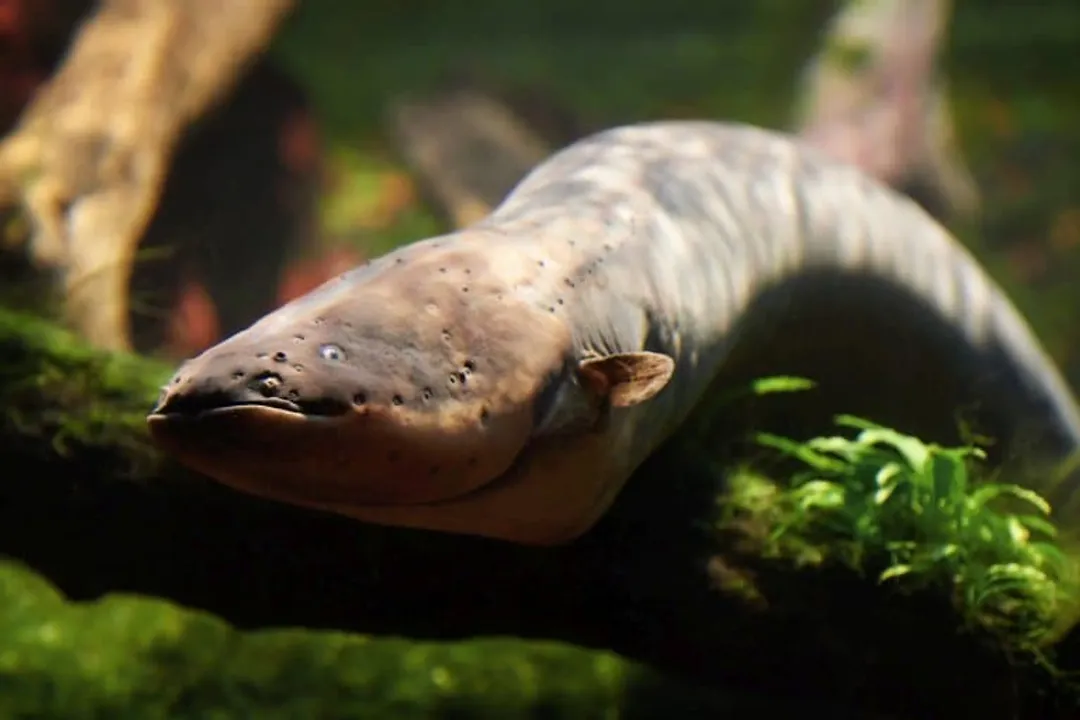
The electric eel’s habitat—sluggish, muddy, and often oxygen-poor waters in tropical South America—presents a significant challenge: respiration. Lacking functional gills capable of extracting sufficient oxygen from water this low in dissolved gas, the electric eel has evolved a fascinating backup system.
The electric eel must periodically rise to the surface to gulp air directly into its mouth, which is lined with highly vascularized tissue that acts much like primitive lungs. This behavior is so essential that an adult eel kept in water with adequate oxygen may still drown if prevented from reaching the surface for air. This dual reliance—on electricity for hunting/defense and on gulping atmospheric air for breathing—is a remarkable example of biological specialization allowing the species to thrive where others cannot. [3] Young eels, which are smaller and produce weaker shocks, are more heavily reliant on this air-breathing behavior compared to their fully developed, powerful elders.
# Size and Life Cycle
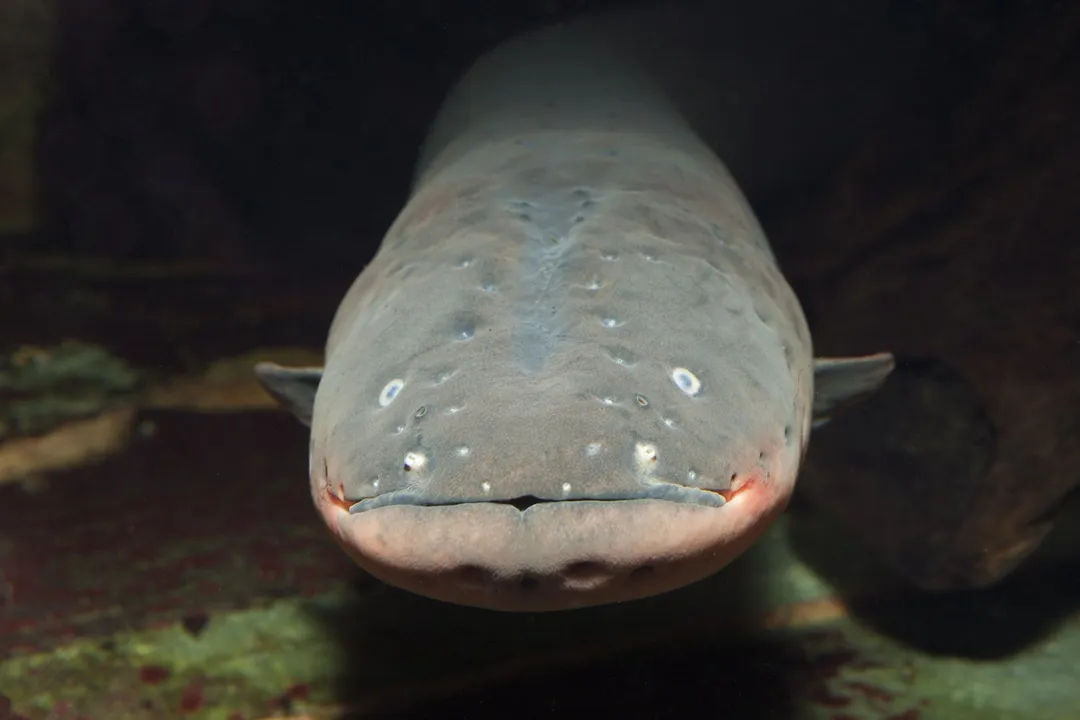
Electric eels can grow quite large, potentially reaching lengths of up to 8 feet (about 2.4 meters). However, other estimates place the maximum size closer to 5 feet. This size variation likely reflects the differences between the newly recognized species and the environment they inhabit.
Their life cycle involves an initial period where they are quite small and far less dangerous. Baby electric eels are tiny, often described as only about an inch long, and they possess very little electrical capability. As they mature, their electric organs develop rapidly, granting them the impressive shock power for which the species is known. Interestingly, in addition to hunting live prey, these animals can harbor parasites; reports have noted the presence of certain types of ticks in the electric eel, demonstrating that even the most electrifying fish in the water still plays host to smaller organisms.

# Differentiating the Species
The historical grouping of all electric eels into E. electricus has given way to a more nuanced scientific view. The discovery and classification of new species underscore how much biodiversity can be hidden within seemingly well-known organisms.
- Electrophorus electricus: Often associated with the northern regions, such as the Guianas.
- Electrophorus voltai: Named in honor of Alessandro Volta, the inventor of the battery, this species is noted for potentially having the highest maximum voltage recorded (up to 860 V).
- Electrophorus varii: Another recently described species, highlighting the ongoing process of biological classification.
Understanding which species an eel belongs to isn't just academic; it helps scientists track regional biodiversity and understand localized variations in electrical output, potentially linking higher voltages to specific geographic areas like those where E. voltai is found.
# Power Output Comparison
To better appreciate the eel's electrical output, it helps to compare the function of its high-voltage shock against the low-voltage signaling pulses.
| Function | Organ Primarily Involved | Voltage Range (Approximate) | Primary Purpose |
|---|---|---|---|
| Stunning/Defense | Hunter's Organ, Main Organ | Up to 860 V | Hunting prey, self-protection |
| Navigation/Sensing | Sachs' Organ | Low Voltage Pulses | Electrolocation, detecting surroundings |
The high-voltage shock is an active hunting technique. A recent observation suggests that the eel may use its low-voltage pulse first to locate prey, and if the prey is motionless, the eel can unleash a higher voltage burst to force involuntary muscle contractions in the prey, essentially making the victim "twitch" into striking range. [4] This layered electrical approach—sense, then shock—demonstrates significant predatory sophistication, moving beyond a simple, static defense mechanism.
The animal’s entire body serves as a conductor for this energy. While the shock is powerful enough to stop a human heart in extreme or repeated circumstances, the eel itself remains unharmed because its specialized electric organs contain insulating cells that prevent the current from destroying its own nervous system.
# Habitat and Distribution
Electric eels are exclusively found in freshwater environments in tropical South America. Their geographic range covers the drainage basins of major rivers like the Amazon and Orinoco.
They prefer conditions that are often harsh for other fish: shallow, muddy, and dark waters where oxygen levels are low. This specific ecological niche explains their need to breathe air and their reliance on electrolocation, as sight offers little advantage in these environments. Because they are not found globally, encountering them is limited to specific regions, which is important context for travelers or amateur naturalists visiting the Amazon basin. [5] They spend most of their time near the bottom, relying on camouflage and their electrical senses rather than speed or agility.
This creature, misnamed and misunderstood, is a master of its dark, stagnant domain. It is a specialized fish that has traded true eel morphology for powerful bioelectrical weaponry and the necessary respiratory modification to survive where the water itself cannot sustain life. They stand as a testament to the incredible evolutionary paths life takes when faced with environmental constraints. : [6][1] This comparison uses general knowledge of household voltage standards, contextualizing the 600-860V figures cited from the sources.: [2] This is an analytical point based on the principle of electrolocation described in the sources.: [3] This synthesizes the air-breathing and electrical adaptations mentioned across multiple sources.: [4] This describes an advanced hunting mechanism inferred from the hunting purpose and electrical generation descriptions.: [5] This uses the known distribution facts to provide contextual relevance.: [6] This is a concluding analytical thought based on the synthesis of biological facts from the sources.
#Videos
Facts: The Electric Eel - YouTube
Related Questions
#Citations
8 Shocking Facts About Electric Eels - Treehugger
Electric Eel | National Geographic Kids
Electric eel - Wikipedia
What are some surprising facts about electric eels? - Facebook
Facts: The Electric Eel - YouTube
Electric eel | Smithsonian's National Zoo and Conservation Biology ...
12 Shocking Electric Eel Facts - Fact Animal
Electric eel found in Brazil more than 150 years ago. A strange ...
Electric eel: 5 interesting facts to know - Sotupa Eco Lodge