What sensory perception mechanism is noted as being relatively poor in *A. aurantia*?
Answer
Vision
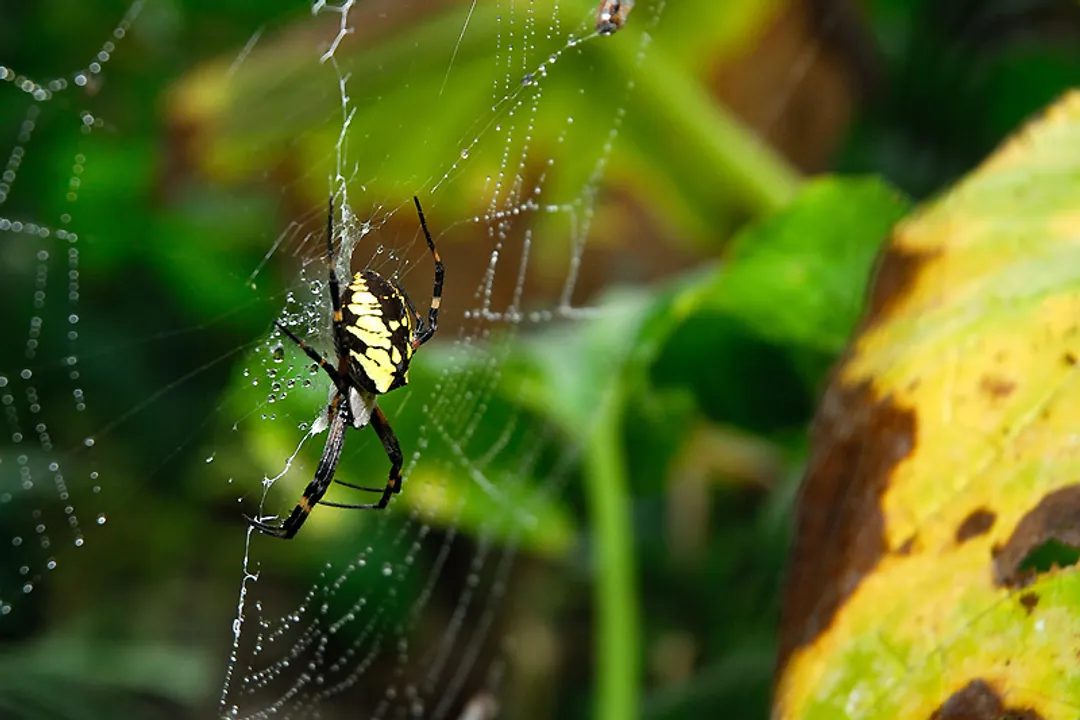
Despite their arresting visual appearance, the spiders classified as *Argiope aurantia* possess relatively poor vision. Their sensory apparatus is primarily adapted to detect vibration. The eyes, which are arranged beneath the characteristic silvery hairs on the cephalothorax, do not provide sharp visual acuity. Consequently, the spider relies heavily on tactile sensations transmitted through the silken mesh of its web, along with air currents, to accurately perceive the presence of trapped prey or potential threats in their immediate environment.
#Videos
The YELLOW GARDEN SPIDER 🕷️ Animal Fact Files - YouTube
Related Questions
Who formally described the species *Argiope aurantia* in 1833?What body feature does the Latin translation of *Argiope* refer to?What is the maximum body length range specified for the adult female *A. aurantia*?What function is attributed to the vivid yellow or gold bands on the female *A. aurantia* abdomen?As members of the Araneidae family, how many claws do *A. aurantia* possess on each foot?How do the leg colorations of juvenile *Argiope aurantia* contrast with those of mature adults?What sensory perception mechanism is noted as being relatively poor in *A. aurantia*?What specific type of environment do *A. aurantia* favor for establishing their webs?What is the structural characteristic of the dense, opaque silk pattern found vertically in the center of the orb web?What dispersal method is employed by juvenile *Argiope aurantia* that adults cannot use?