Yellow Sac Spider Physical Characteristics
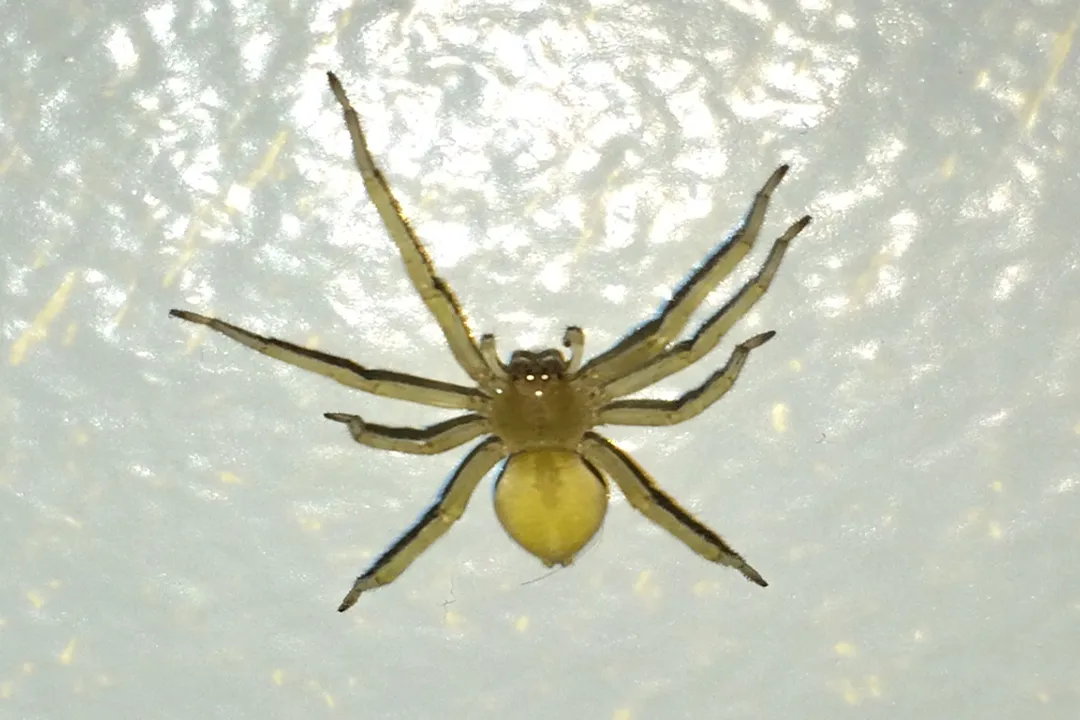
The identification of a spider often hinges on subtle details, and the Yellow Sac Spider, belonging primarily to the genus Cheiracanthium—most commonly C. inclusum or C. punctorium in some contexts—presents a distinctive, albeit sometimes variable, physical profile. These spiders are frequently encountered across North America and are notable not for their intricate webs, but for the small silken retreats they spin, which give them their common name. [1][4] Understanding what sets them apart visually is key to recognizing them, especially given their small stature. [2][5]
# Size Range
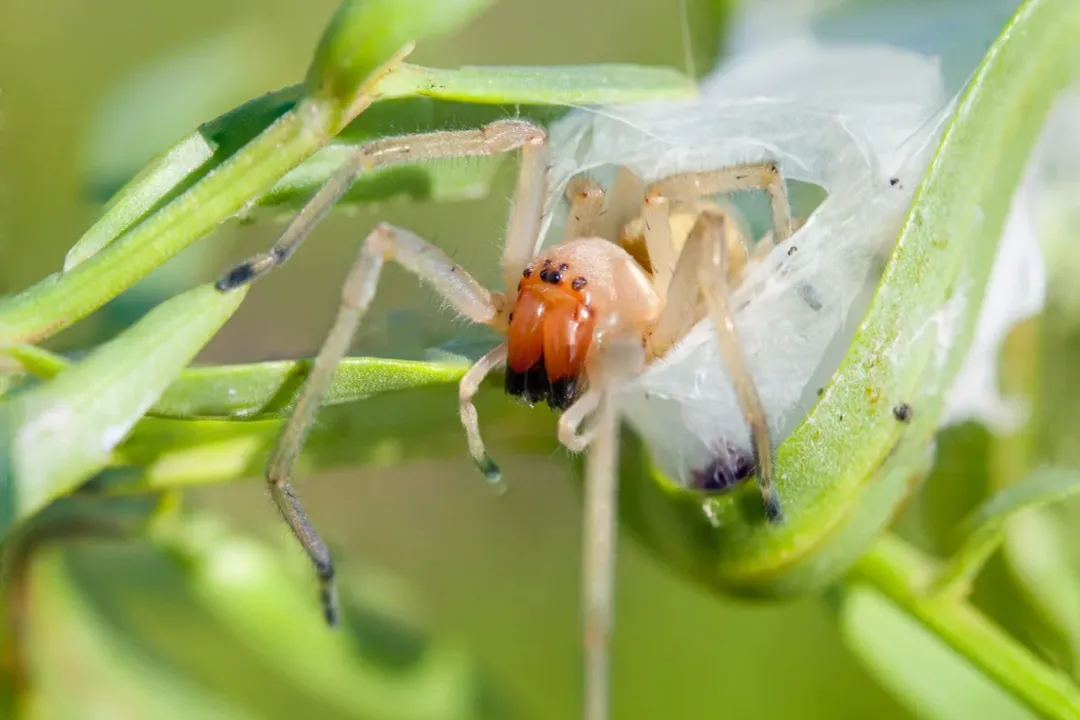
When assessing a potential Yellow Sac Spider, size is one of the first indicators, though it can vary significantly based on maturity and gender. [3] Adult female body lengths typically fall between 5 to 10 millimeters. [2][3] In comparison, the males are generally a bit smaller, usually measuring around 4 to 8 millimeters in body length. [3] These dimensions place them firmly in the category of small to medium spiders, easily missed unless one is actively looking closely or they are found inside a structure. [5] If you encounter a spider whose body length exceeds 10 mm, it is likely not Cheiracanthium inclusum, although other sac spider species might approach or slightly exceed this range. [2] Considering their leg span, which can make them appear larger than their body size suggests, the overall profile remains relatively compact. [7]
# Body Coloration
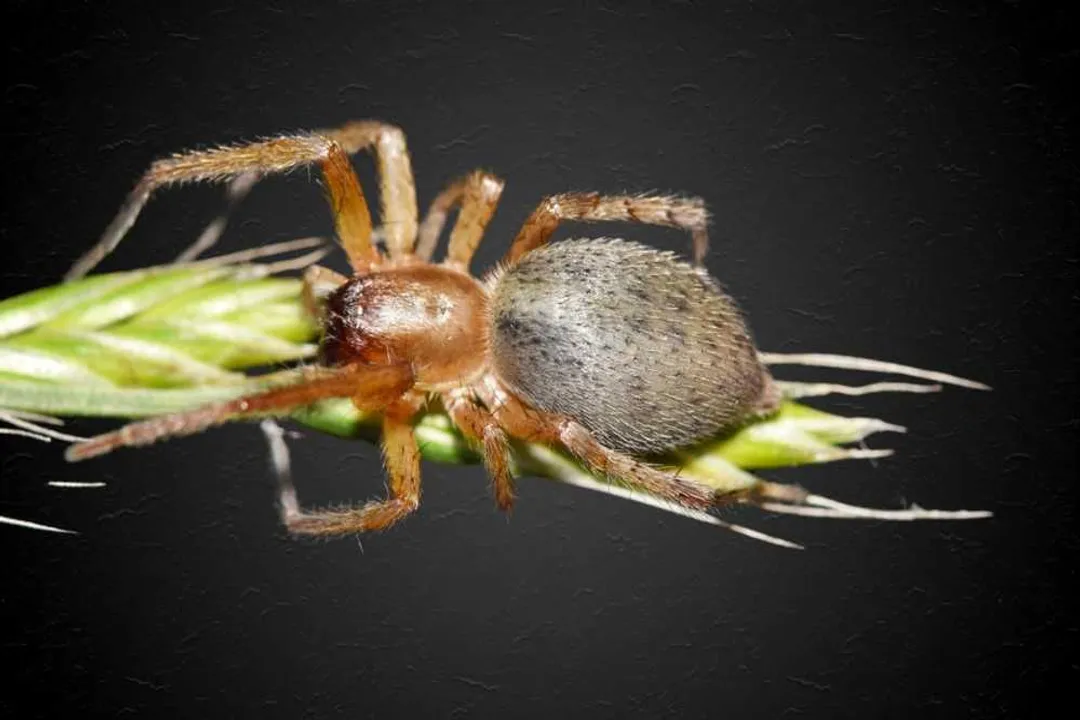
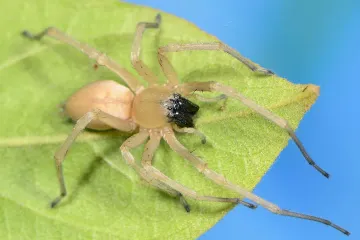
The most striking characteristic, and the one that lends them their name, is their color, though this feature itself requires careful observation as it is not monolithic across the species or even within a single specimen. [1][8] The abdomen, the rear section of the body, is often a pale yellow or a greenish-yellow hue. [4][9] However, color can shift depending on the spider's age, recent feeding, or even the local environment. [3] Some descriptions note the body as being a uniform pale color. [7] The cephalothorax, the front section where the legs attach, usually mirrors the abdomen's coloration, frequently presenting as a light yellow or sometimes a translucent, pale cream color. [2][4]
A key point of variation that often confuses identification is the presence or absence of markings or darkening on the abdomen. While some individuals are quite plain, others exhibit subtle discolorations. [1] The greenish tinge, for instance, is often more pronounced in specimens found outdoors or in specific regional populations. [4] If you find a spider that is decidedly dark brown or black, it is almost certainly a different species, as the Cheiracanthium group remains predominantly light-colored. [7]
# Leg and Appendage Details
The legs of the Yellow Sac Spider are slender and appear somewhat elongated relative to the body size, which contributes to their agile movement. [5] The legs are typically the same pale yellow or straw-colored shade as the body, although subtle differences in hue between the leg segments or the joints might be present. [2] Importantly, while the body is pale, the tips of the legs are often described as having a slightly darker appearance, sometimes tending towards a pale brown or amber shade, particularly the tarsi (the final segments). [4]
When examining the chelicerae—the structures housing the fangs—one finds another consistent physical trait. These structures are usually a slightly darker shade than the rest of the cephalothorax, often appearing reddish, amber, or light brown. [2][7] This contrast is a valuable identification marker; a pale yellow body with noticeable reddish fangs strongly suggests a Yellow Sac Spider. [4][9] The fangs themselves are relatively small but capable of penetrating human skin. [6] For local practitioners dealing with multiple small, pale spiders in, say, the Pacific Northwest or California, noting this reddish tint on the mouthparts versus a uniformly pale spider can be a quick differentiator when paired with eye counts. [8]
# Ocular Arrangement
Spider identification relies heavily on the arrangement of their eyes, and Yellow Sac Spiders belong to the family Cheiracanthiidae, which has a specific eye pattern. [3] They possess eight eyes, arranged in two rows of four across the front of the cephalothorax. [2][4] This arrangement is often described as having the anterior median eyes (the two central front eyes) separated by a greater distance than the distance between the anterior median and anterior lateral eyes (the two outer eyes in the front row). [3][6] In a simplified visual, it looks like a slightly elongated trapezoid or a narrow rectangle, depending on how you group them, but the key is the clear distinction between the front pair and the second pair in each row. [2] This feature distinguishes them from many common household spiders, such as the common cellar spider, which has a very different eye layout. [1]
# Sexual Differences
As is common across many arachnid species, there are distinct physical differences between the mature male and female Yellow Sac Spiders, known as sexual dimorphism. [3] While the size difference, with females generally being larger, is the most obvious morphological distinction, there are subtle differences in build. [3][7] Males tend to be slightly more slender or gracile than the females. [3] Furthermore, the pedipalps (the small, leg-like appendages near the mouthparts, used for feeding and in reproduction) are often more prominent in males. [2] In reproductive males, these pedipalps become specialized structures used to transfer sperm, often appearing enlarged or club-like at the tips when compared to the female's generally smaller, more uniform pedipalps. [3]
# Markings and Dorsal Features
While we have discussed general coloration, it is crucial to detail the markings, or lack thereof, on the dorsal (top) side of the abdomen, as this is where many superficially similar spiders might show distinguishing features. [8] The Yellow Sac Spider Cheiracanthium inclusum is generally characterized by having a relatively unmarked abdomen. [2][4] However, some sources indicate that some individuals may possess faint, dusky lines or spots running longitudinally down the back of the abdomen. [1][4] These markings, if present, are never bold or intricate; they are subtle shading variations that might only be visible under good lighting or magnification. [1] If you observe strong chevron patterns, dark bands, or distinct speckling, you are likely looking at a different genus, perhaps a type of sac spider known as the Long-legged Sac Spider (Cheiracanthus), which can sometimes be confused with C. inclusum based on common parlance. [7][8] The overall visual impression should be one of uniformity and paleness, not intricate patterning. [9]
# The Silk Sac Structure
Though their name derives from this physical feature, the sac itself is a product of the spider's body, woven from silk extruded through the spinnerets located at the rear of the abdomen. [4] The physical characteristic here is the form of the retreat, not just its existence. Unlike orb-weavers that build large capture webs, Yellow Sac Spiders create small, silken tubes or sacs. [4][7] These sacs are typically spun in sheltered locations—under rocks, in leaf litter, or in corners of window frames. [6] The silk itself is dense and opaque enough to hide the spider completely during the day when it rests, offering significant camouflage from predators above. [4] The size of the sac correlates with the size of the spider; a mature female's day retreat will be noticeably larger than that constructed by a juvenile, often measuring about half an inch in length, just enough space for the spider to curl up inside. [1][6]
If you are inspecting an area for these spiders, looking for these pale, often slightly irregularly shaped silk retreats is much easier than spotting the spider itself, which is nocturnal. [5][7] In a home setting, paying attention to the very top corner where two walls meet, or the tight crease between an window frame and the sash, often reveals these small, pale, silken envelopes, which might feel slightly papery to the touch due to the density of the silk construction. [1][5] This construction habit explains why they are often found indoors near the ceiling line, seeking protection from disturbances.
# Comparison with Similar Species
To truly understand the physical characteristics of Cheiracanthium inclusum, it helps to contrast it with its look-alikes. The most common confusion arises with the Yellow Sac Spider's close relatives, particularly the Cheiracanthium mildei, often called the Long-legged Yellow Sac Spider. [7] While both are pale yellow, C. mildei tends to have a more pronounced pale brown or grayish stripe running down the middle of its abdomen. [1][7] Furthermore, C. mildei is often cited as being slightly more delicate or elongated in body structure compared to C. inclusum. [2][3] Another source of confusion comes from spiders in the Clubionidae family, the "sac spiders" in a broader sense. However, the eye arrangement, as noted earlier, is a reliable, albeit microscopic, differentiator. [6] If the eight eyes are arranged in two neat, almost perfectly straight rows of four, it leans towards Cheiracanthium; other sac spiders might have eyes more staggered or clustered differently. [2] When evaluating a specimen, if the primary feature is its general paleness combined with reddish chelicerae and a specific eight-eye layout, the identification is strongly supported by morphology alone. [4][9]
# Integrating Color and Habitat
The spider's coloration appears to be an adaptation for blending into the environments where they rest during daylight hours. Since they often rest in pale, dry vegetation, leaf litter, or the light-colored crevices within human dwellings, their straw-yellow or greenish-yellow bodies provide excellent crypsis. [4][6] This lack of dark, conspicuous markings is a physical trait that directly serves their survival strategy of hiding in plain sight within their silk day-retreats. [5] For instance, a spider discovered on a dark piece of wood indoors is less likely to be a Yellow Sac Spider than one found resting against a pale window sill or tucked into a roll of light-colored plastic sheeting. [7] This interdependence between physical appearance and microhabitat preference underscores why paying attention to minute color details is essential for accurate identification. [1]
Related Questions
#Citations
Yellow Sac Spiders: Facts And Bites - Western Exterminator
Cheiracanthium inclusum - Wikipedia
Cheiracanthium inclusum | INFORMATION - Animal Diversity Web
Yellow sac spiders - Plant & Pest Diagnostics
Yellow Sac Spider: Facts & Identification Guide
[PDF] Yellow Sac Spiders - Utah State University Extension
Yellow Sac Spider - Veseris
Yellow Sac Spiders in California: Facts & Identification
Sac Spiders on Long Island - Arrow Exterminating