What protects the warthog's front knees during their distinctive foraging posture?
Answer
Thick, hardened calluses
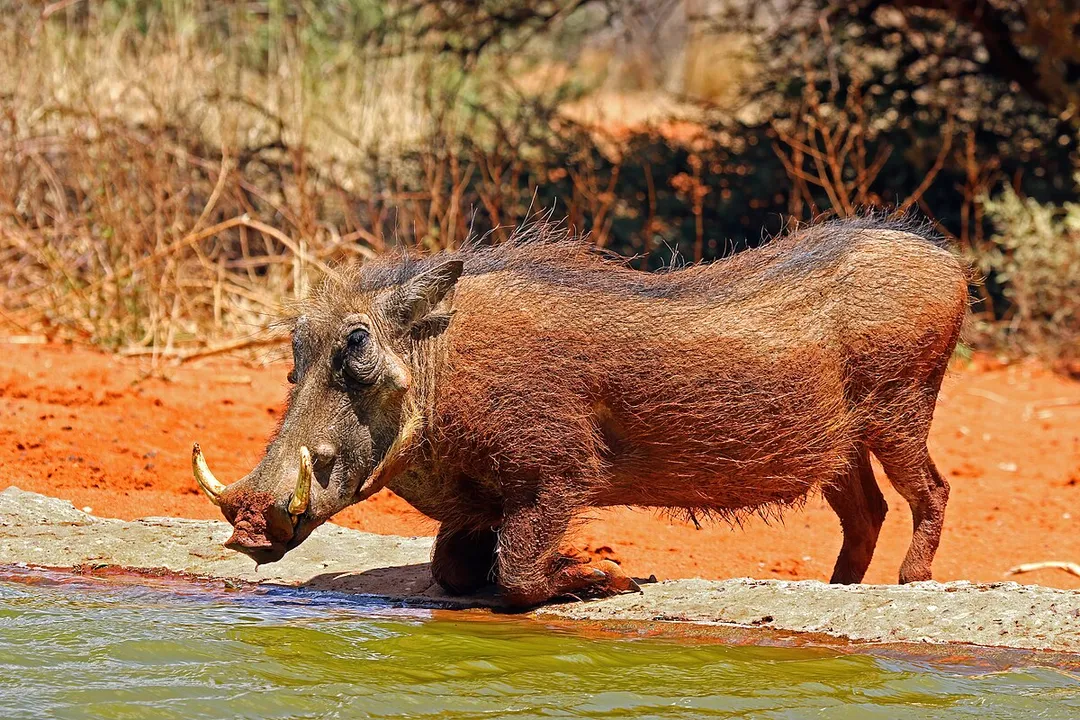
The ability of the warthog to drop onto its front knees for extended periods while grazing or rooting is enabled by a specific anatomical adaptation: thick, hardened calluses developed on the knees. These calluses provide substantial physical protection, cushioning the joint against the abrasive ground surface, which is necessary for maintaining this low-profile feeding position close to the soil. Without this durable protection, the repeated pressure and friction involved in their preferred method of consuming short grasses or investigating shallow surface food would quickly lead to injury and prevent them from utilizing this efficient foraging strategy.
Related Questions
What forms the overwhelming foundation of the common warthog's sustenance?What specialized posture do warthogs adopt when clipping short grass shoots?What specific underground storage organs do warthogs unearth using their snouts?What opportunistic consumption behavior places warthogs on the line between herbivore and omnivore?What protects the warthog's front knees during their distinctive foraging posture?How does the warthog's kneeling grazing method grant niche separation from wildebeest?What crucial mineral intake do warthogs seek out through visiting natural salt licks?What characterizes the warthog's diet shift when water bodies recede during the dry season?How does the warthog's snout-based digging compare to true subterranean root-eaters?Besides hay and chow, what material is important to provide captive warthogs for natural behaviors?