How does the warthog's snout-based digging compare to true subterranean root-eaters?
Answer
Less destructive to soil structure, focusing on specific patches
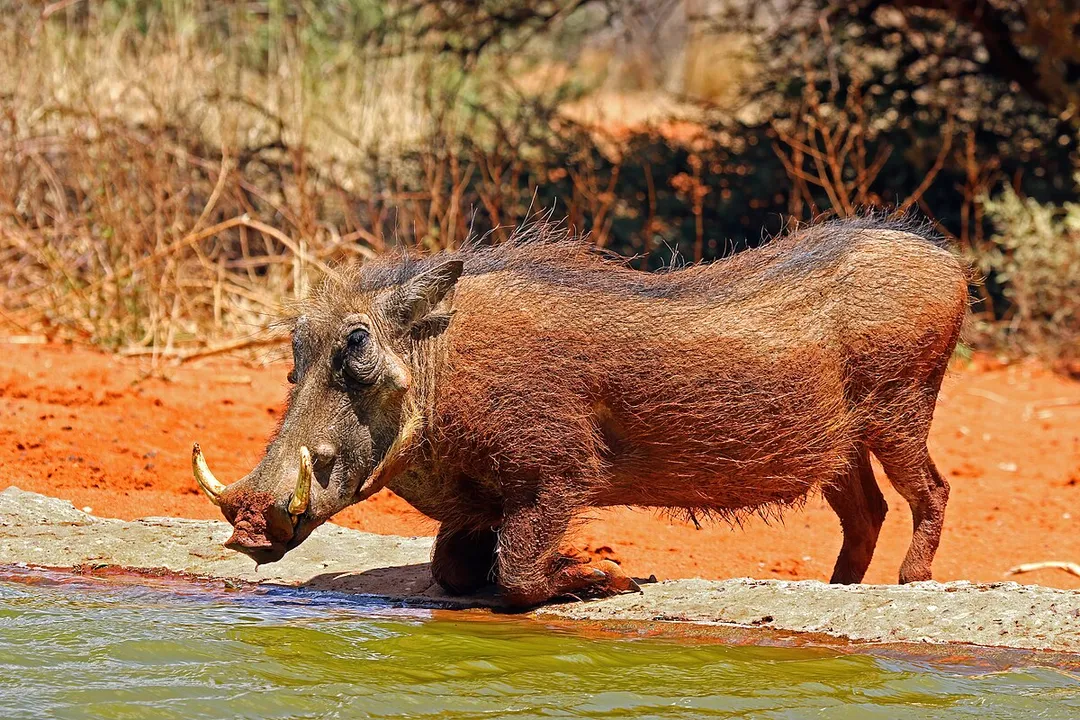
Although warthogs utilize their snout and jaw muscles to dig for underground food like tubers and bulbs, their method differs significantly from pigs specialized for deep rooting. The warthog's approach is typically characterized as being less aggressive and less destructive regarding overall soil structure. Instead of broad-scale overturning of the soil, their activity tends to be concentrated in specific, localized patches where they perceive food resources to be present. This more targeted excavation requires softer or moist soil to minimize effort, contrasting with the widespread soil disruption caused by other, more powerful rooting swine.
Related Questions
What forms the overwhelming foundation of the common warthog's sustenance?What specialized posture do warthogs adopt when clipping short grass shoots?What specific underground storage organs do warthogs unearth using their snouts?What opportunistic consumption behavior places warthogs on the line between herbivore and omnivore?What protects the warthog's front knees during their distinctive foraging posture?How does the warthog's kneeling grazing method grant niche separation from wildebeest?What crucial mineral intake do warthogs seek out through visiting natural salt licks?What characterizes the warthog's diet shift when water bodies recede during the dry season?How does the warthog's snout-based digging compare to true subterranean root-eaters?Besides hay and chow, what material is important to provide captive warthogs for natural behaviors?