What characterizes the warthog's diet shift when water bodies recede during the dry season?
Answer
Transitioning to drier, tougher plant parts like bark and dry stems
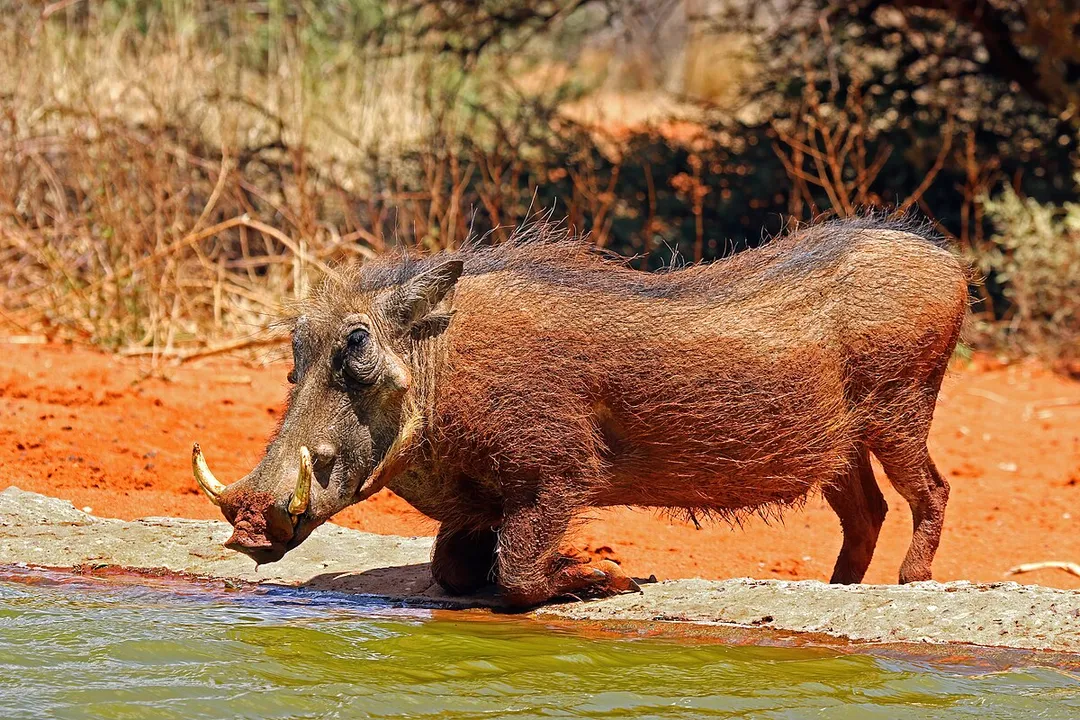
The seasonal availability of water directly dictates foraging patterns. When the dry season causes water bodies to recede, forcing warthogs to travel further to drink, their diet must correspondingly change. Since fresh, palatable grasses decline, they are compelled to rely on less desirable, tougher forage options. This shift involves increased consumption of structural plant components such as bark, dry stems, and roots that remain available. This transition is stressful on their digestive systems, which are inherently better adapted for the succulence of grass found during wetter periods.
Related Questions
What forms the overwhelming foundation of the common warthog's sustenance?What specialized posture do warthogs adopt when clipping short grass shoots?What specific underground storage organs do warthogs unearth using their snouts?What opportunistic consumption behavior places warthogs on the line between herbivore and omnivore?What protects the warthog's front knees during their distinctive foraging posture?How does the warthog's kneeling grazing method grant niche separation from wildebeest?What crucial mineral intake do warthogs seek out through visiting natural salt licks?What characterizes the warthog's diet shift when water bodies recede during the dry season?How does the warthog's snout-based digging compare to true subterranean root-eaters?Besides hay and chow, what material is important to provide captive warthogs for natural behaviors?