What opportunistic consumption behavior places warthogs on the line between herbivore and omnivore?
Answer
Eating insects, carrion, and small animal young
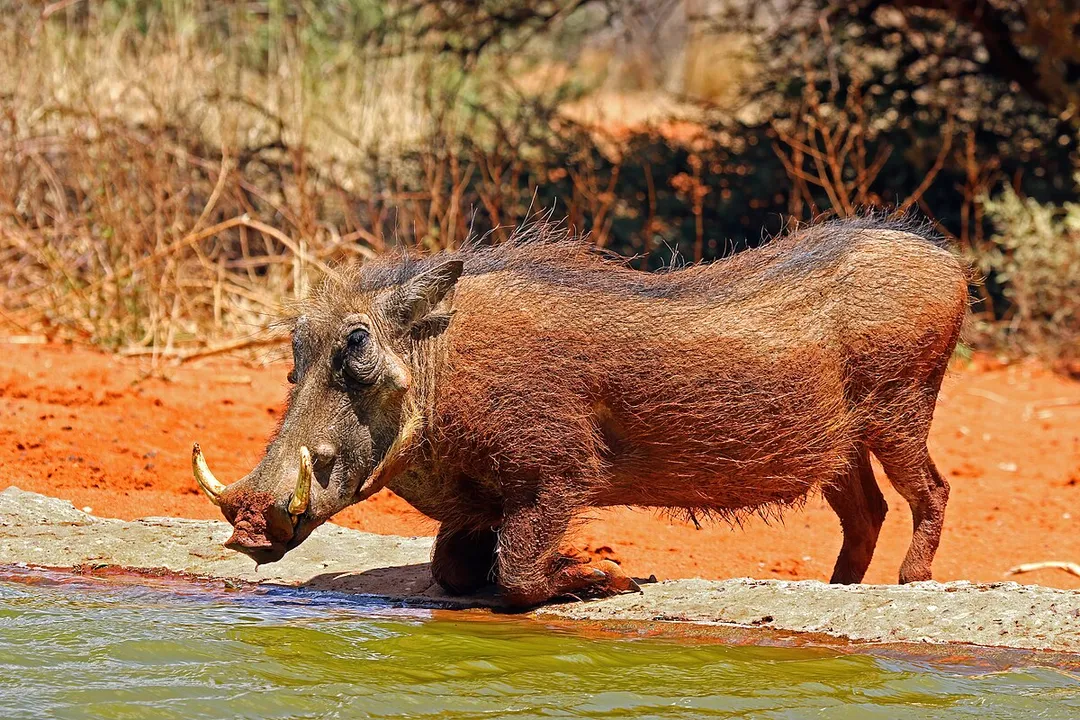
The distinction between calling the warthog a strict herbivore or a facultative omnivore arises because they will occasionally supplement their plant-based diet with animal protein. This opportunistic scavenging behavior includes the consumption of insects, such as grasshoppers or larval insects, carrion, and even the offspring of other small animals if the opportunity arises. While this carnivorous activity is secondary and employed mainly during scarcity or when a high-protein meal is easily obtained, its occurrence confirms their practical flexibility and moves them away from a purely herbivorous classification in the wild context.
Related Questions
What forms the overwhelming foundation of the common warthog's sustenance?What specialized posture do warthogs adopt when clipping short grass shoots?What specific underground storage organs do warthogs unearth using their snouts?What opportunistic consumption behavior places warthogs on the line between herbivore and omnivore?What protects the warthog's front knees during their distinctive foraging posture?How does the warthog's kneeling grazing method grant niche separation from wildebeest?What crucial mineral intake do warthogs seek out through visiting natural salt licks?What characterizes the warthog's diet shift when water bodies recede during the dry season?How does the warthog's snout-based digging compare to true subterranean root-eaters?Besides hay and chow, what material is important to provide captive warthogs for natural behaviors?