Besides hay and chow, what material is important to provide captive warthogs for natural behaviors?
Answer
Browse material like branches and leaves
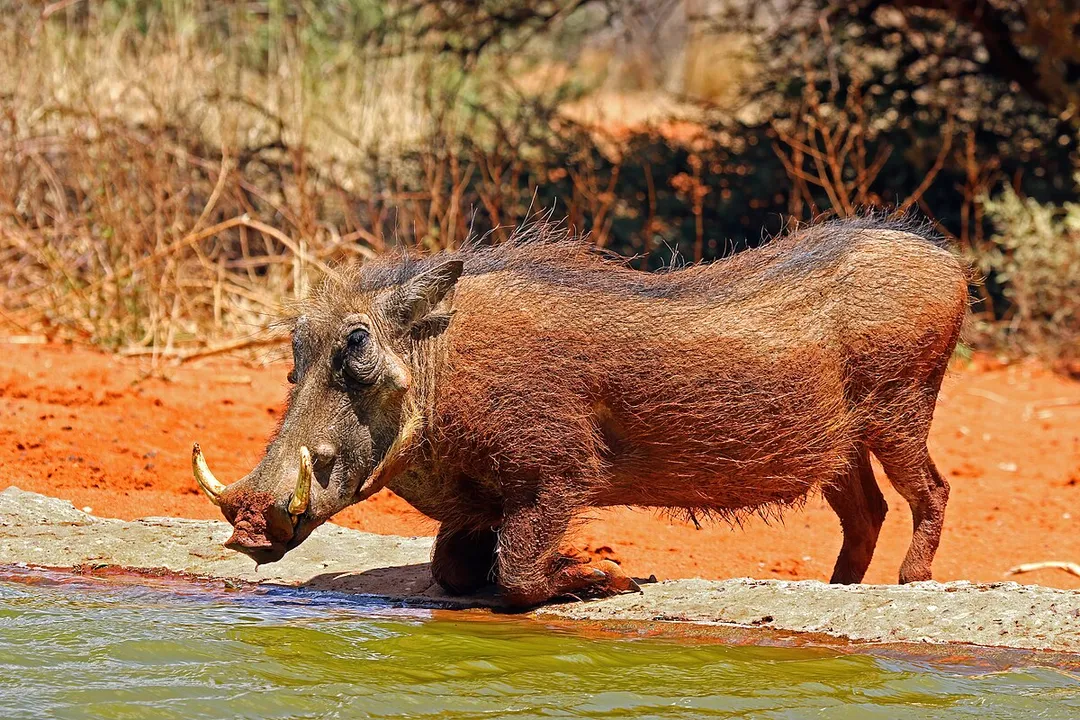
In controlled zoo settings, diet planning must go beyond merely meeting basic nutritional needs to ensure the captive animals maintain natural behaviors and physical health. While the staple diet centers on hay and specialized herbivore chow supplemented with greens and vegetables for vitamins and roughage, it is important to include browse material, such as branches and leaves. Providing browse serves a dual purpose: it mimics aspects of their wild foraging diversity and is specifically noted as being important for maintaining proper dental health, ensuring the longevity and well-being of the captive warthog population.
Related Questions
What forms the overwhelming foundation of the common warthog's sustenance?What specialized posture do warthogs adopt when clipping short grass shoots?What specific underground storage organs do warthogs unearth using their snouts?What opportunistic consumption behavior places warthogs on the line between herbivore and omnivore?What protects the warthog's front knees during their distinctive foraging posture?How does the warthog's kneeling grazing method grant niche separation from wildebeest?What crucial mineral intake do warthogs seek out through visiting natural salt licks?What characterizes the warthog's diet shift when water bodies recede during the dry season?How does the warthog's snout-based digging compare to true subterranean root-eaters?Besides hay and chow, what material is important to provide captive warthogs for natural behaviors?