What primary mechanism is responsible for creating and maintaining the genetic drift and selection that underlies population differences in *Ocyurus chrysurus*?
Answer
Geographic isolation
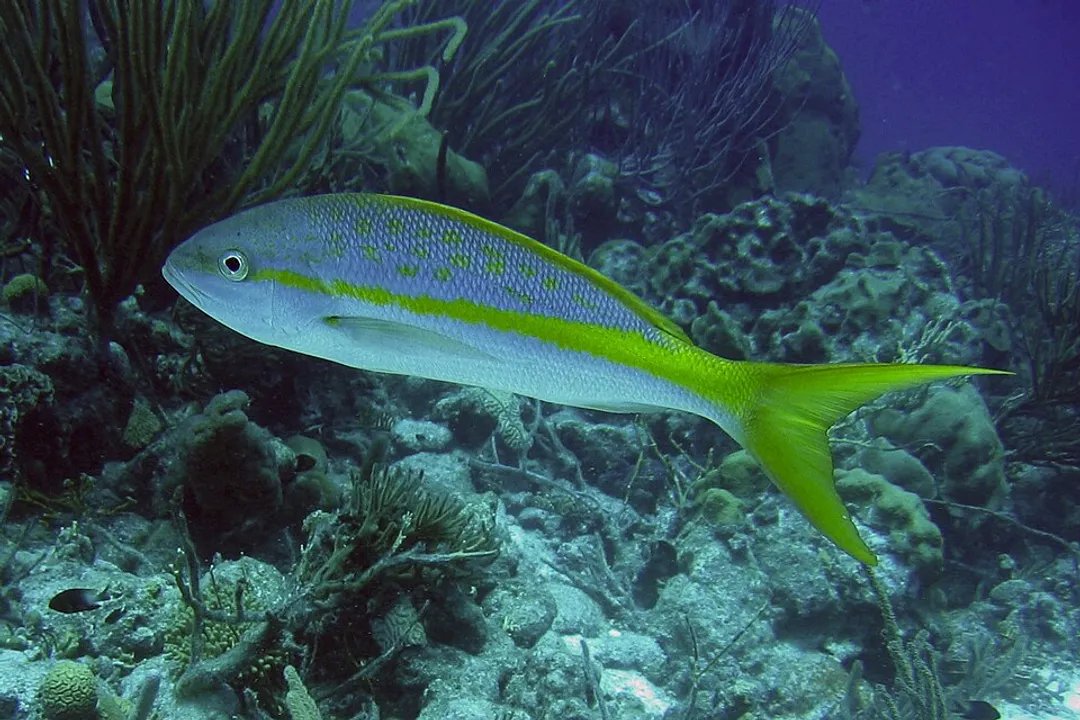
The underlying foundation for the evolutionary divergence observed among yellowtail snapper populations is geographic isolation. When physical barriers, such as deep channels or strong ocean currents, effectively separate sub-groups, gene flow between them becomes significantly limited. This isolation allows genetic drift—random changes in gene frequency—and natural selection, driven by local conditions, to act independently on each separated sub-group. Over time, these independent evolutionary pressures result in distinct genetic profiles, confirming that the species is not a single, freely mixing unit.
Related Questions
What specific physical trait makes the yellowtail snapper, *Ocyurus chrysurus*, instantly recognizable in tropical waters?What is the maximum potential lifespan documented for the yellowtail snapper species?What specific method provided initial scientific evidence suggesting biochemical differences between geographically separated yellowtail snapper populations?What family classification does the yellowtail snapper, *Ocyurus chrysurus*, belong to?What major risk does applying uniform conservation efforts pose when managing genetically distinct yellowtail snapper stocks?What key life history traits in the Caribbean basin population of yellowtail snapper often differ from their counterparts elsewhere?What potential maximum size and weight have been recorded for individuals of the yellowtail snapper species?What environmental factor, acting upon genetic potential, drives differences like faster metabolic rates or altered growth curves in distinct yellowtail snapper populations?What primary mechanism is responsible for creating and maintaining the genetic drift and selection that underlies population differences in *Ocyurus chrysurus*?What do minimum harvest size differences between areas like the Florida Keys and the Dry Tortugas often reflect concerning localized biological adaptation?