Yellowtail Snapper Facts
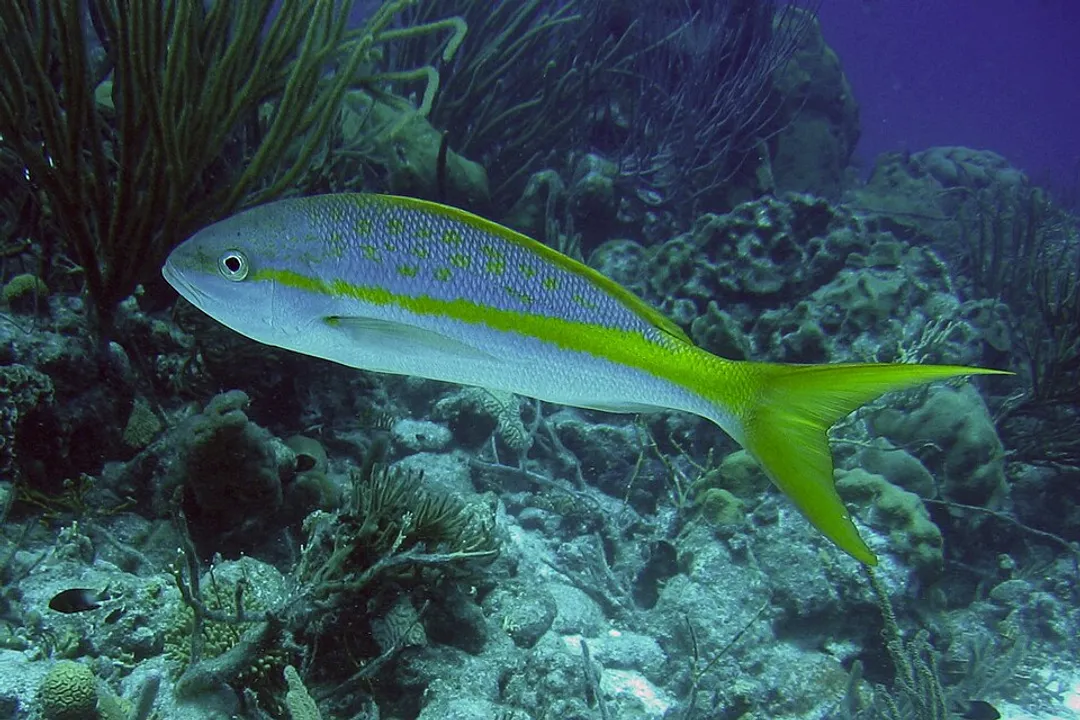
The Yellowtail Snapper, scientifically named Ocyurus chrysurus, is instantly recognizable by its striking beauty and highly prized meat, making it a favorite target for anglers across its range. [3][4] It is often noted for its slender, somewhat elongated body shape and the vivid coloration that gives it its name. [4] While often found mixed in with other snapper species, the features that distinguish the yellowtail are quite specific and help observers identify it quickly, whether it's spotted on a reef or displayed on a dinner plate. [1]
# Color Markings
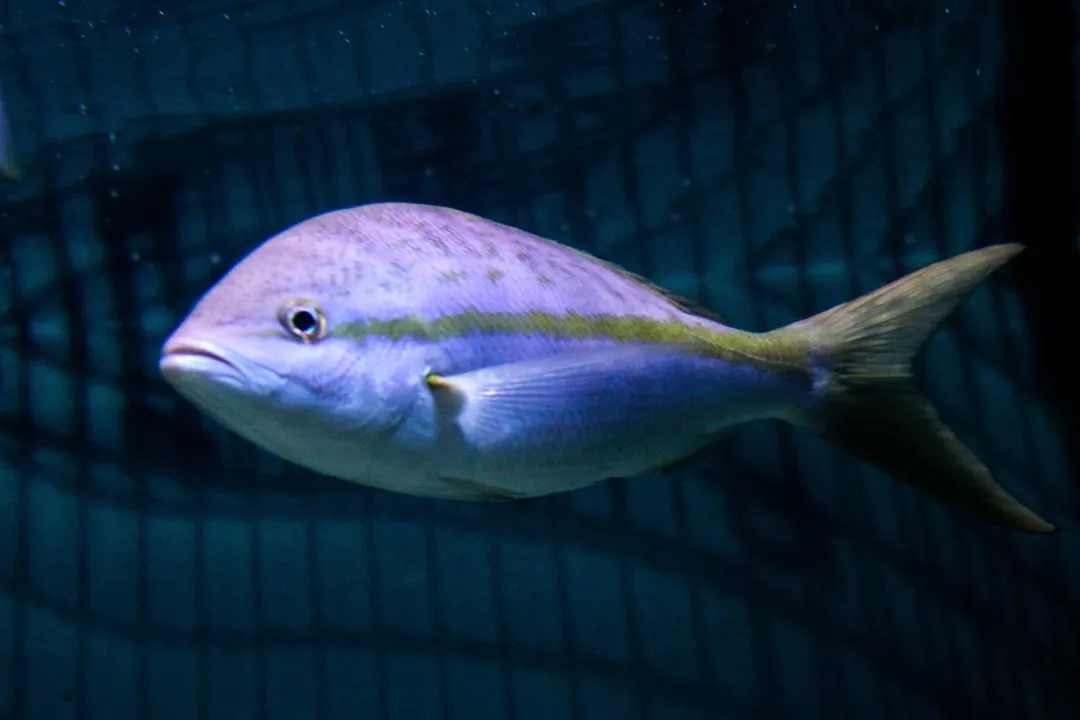
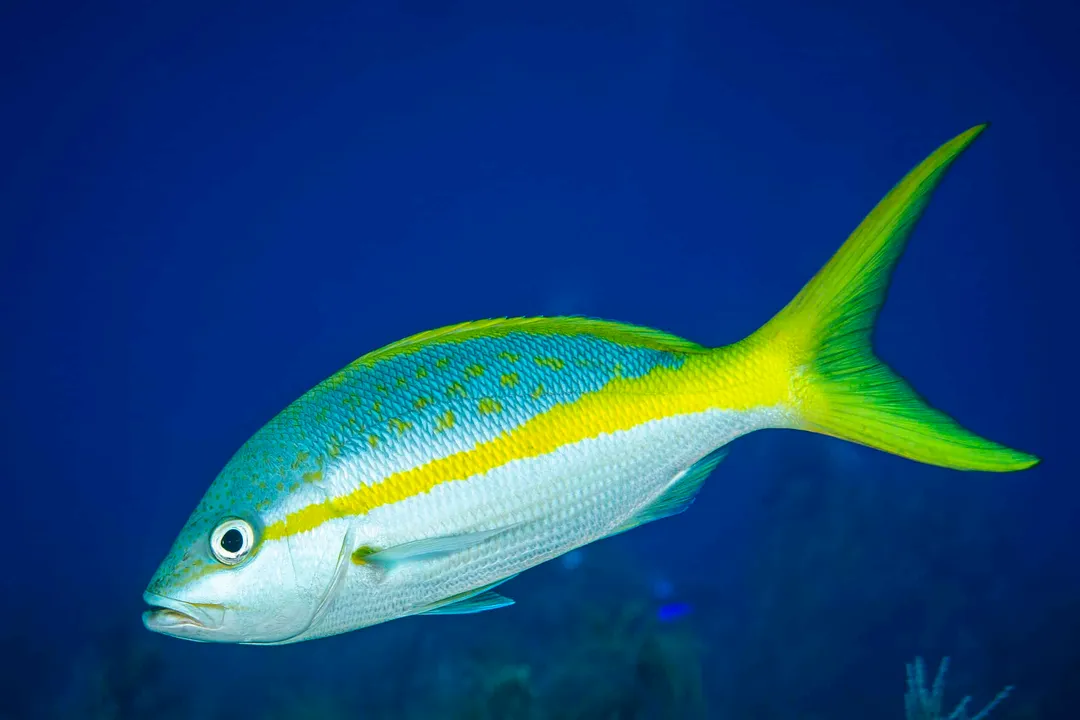
The most defining characteristic of the Yellowtail Snapper is the bright, golden-yellow hue that dominates its fins—the tail, pectoral, pelvic, and anal fins all share this brilliant shade. [1][3] Complementing this vibrancy is a distinctive horizontal stripe running the length of the body, stretching from the snout right through the eye and down to the base of the tail fin. [1][8] This stripe is typically bright yellow or blue-yellow against a darker body background, which is generally silvery-white or olive-gray on the sides, fading to white on the belly. [3][4] The body itself is streamlined, sometimes described as having a somewhat compressed shape, which aids in its agility among reef structures. [4] Interestingly, while its appearance is generally consistent, color intensity can sometimes shift based on mood, stress, or the immediate environment, showing the fish’s adaptive camouflage capabilities. [1]
# Size Metrics
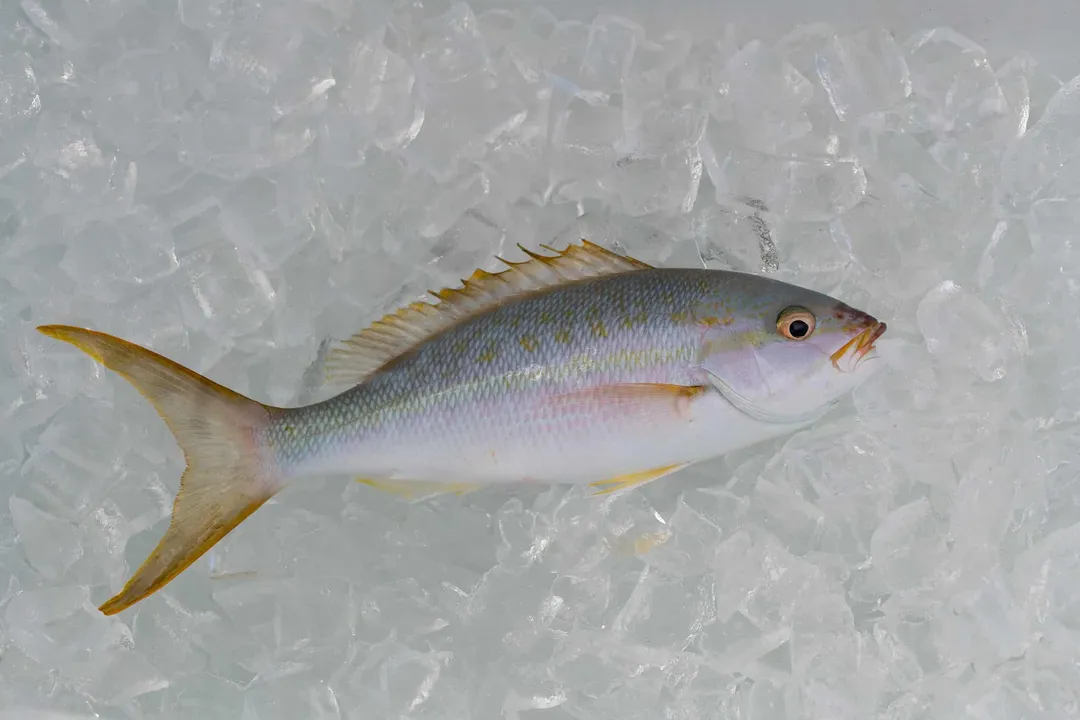
When discussing the dimensions of this species, it is helpful to distinguish between the average catch and the absolute maximum recorded sizes, as Yellowtail Snappers have the potential to grow considerably larger than what most recreational anglers encounter. [6] While many catches in popular fishing grounds like the Florida Keys commonly fall in the one- to three-pound range, providing excellent eating size, the species is capable of much greater development. [6] Maximum reported lengths can approach 40 inches, though they are more typically observed at lengths under three feet. [2][3] Correspondingly, while a common weight might be just a couple of pounds, historical records indicate weights nearing 20 pounds have been documented. [3] Their lifespan is also significant, with some individuals recorded as living past two decades. [3]
| Measurement | Typical Range (Observed) | Maximum Reported |
|---|---|---|
| Length | Varies, often 1–3 lbs in recreational catches | Up to 40 inches [2][3] |
| Weight | Common catches are small | Approaching 20 lbs [3] |
| Lifespan | Unknown average | Over 20 years [3] |
Considering the typical longevity and potential size, anglers seeking larger specimens might note that the fish reaching the upper limits of their size potential often spend more time in deeper, less frequently fished waters, where feeding opportunities and protection from heavy fishing pressure allow for longer growth periods. [7]
# Geographic Distribution
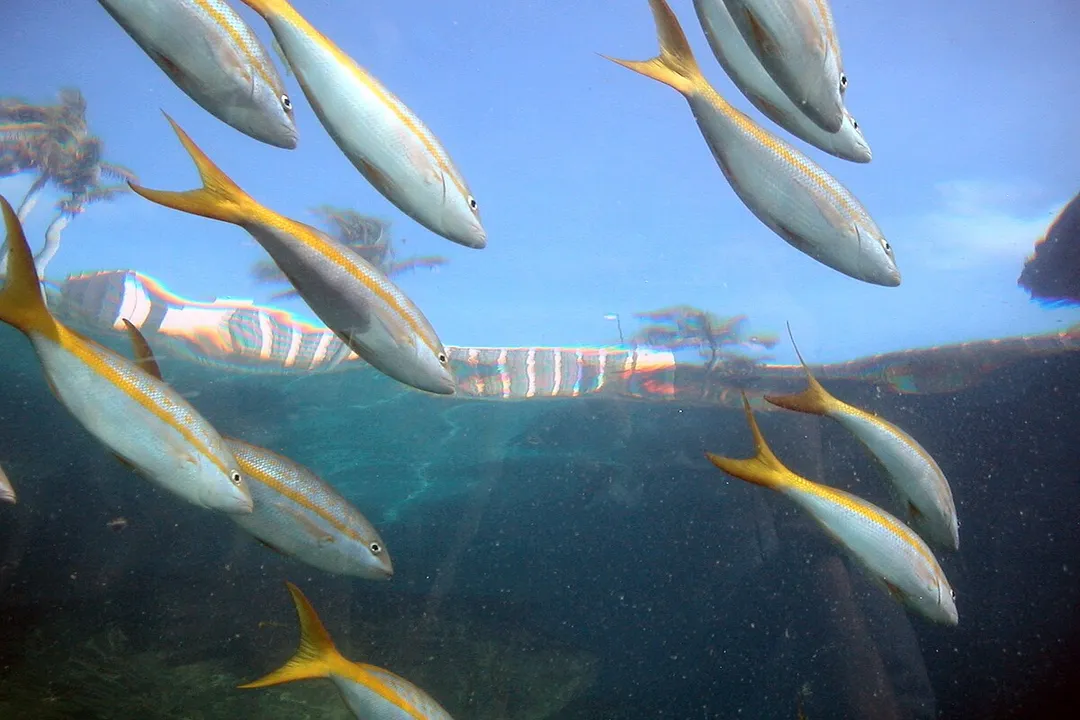
The Yellowtail Snapper inhabits waters across a significant portion of the Western Atlantic Ocean and the Gulf of Mexico. [3] Its range extends south from the waters off South Carolina, down the entire Florida peninsula, throughout the Gulf of Mexico, and continues along the coast down to Brazil. [3] In Texas waters, for example, they are present, though perhaps less numerous than in the southeastern US regions. [9] They show a preference for bottoms characterized by structure, such as rocky ledges, reefs, and wrecks. [7][9]
Habitat preference seems to shift slightly based on the fish's age and water temperature. Younger, smaller snappers are often found in shallower, clear water environments, sometimes near seagrass beds or patch reefs. [1] As they mature, they tend to move into deeper offshore environments, favoring the hard bottoms and complex structures of offshore reefs where they can find better protection and different food sources. [1][7] This tendency to move to deeper structure as they age influences where fishermen focus their efforts depending on the size of fish they are targeting. [7]
# Feeding Habits
The diet of the Yellowtail Snapper is varied, reflecting its opportunistic nature as a predator inhabiting diverse reef environments. [1] Their primary food sources consist of small, bottom-dwelling creatures. [2] This menu usually includes small crustaceans, which are essential for their diet, along with small fish and various marine worms. [1]
Understanding what they consume is directly related to how one approaches catching them. Because they rely heavily on smaller invertebrates and fish, the baits that mimic these natural food items tend to be the most successful. [6] For instance, while larger baits might attract other reef fish, smaller live shrimp, small pilchards, or small cut strips of squid or fish often prove irresistible to the yellowtail due to their natural foraging preferences. [6] This dependency on smaller prey means that a Yellowtail Snapper's feeding behavior is often characterized by precise, quick strikes rather than the aggressive, sweeping bites common among some larger predatory reef fish. [4]
# Reproductive Cycle
Reproduction in Yellowtail Snapper populations is synchronized, typically occurring during the warmer months, which coincides with their preference for certain depths and locations. [1] Spawning usually takes place during the summer months, though the exact timing can vary slightly by latitude. [3]
During this critical time, large aggregations of mature fish move to specific offshore locations to participate in mass spawning events. [1] These areas are often over deep reefs or specific bottom features. [1] The females release their eggs into the water column, where fertilization occurs externally. [1] The resulting larvae are pelagic, meaning they drift in the open water currents before settling onto appropriate juvenile habitats, often in shallower, protected areas, where they continue their development. [1] The structure of these offshore spawning sites is vital, acting as recognized meeting grounds for the species generation after generation. [7]
# Culinary Profile
Among saltwater fish, the Yellowtail Snapper holds a high rank in the culinary world, often commanding premium prices in markets due to the quality of its flesh. [4] The meat is generally described as having a firm texture that flakes nicely when cooked, similar to other premium white-fleshed fish. [4] The flavor profile is highly desirable—it is consistently noted as being mild, slightly sweet, and very clean-tasting. [4] This characteristic makes it versatile for many preparations, from simple grilling or broiling to more complex recipes. [4] Because its texture holds up well, it is often favored for dishes where the fish needs to maintain its integrity, such as whole roasted preparations or in ceviche, provided it is caught fresh. [4] Commercially, they are an important part of the finfish catch in many of their native regions. [4]
# Fishing Tactics
Anglers pursuing Yellowtail Snapper often focus on techniques that place bait accurately near known structure or along reef edges. [7][9] Success in landing these fish frequently relies on stealth and patience, as they can be easily spooked by excessive noise or heavy boat activity. [6]
When fishing in areas known to hold them, keeping the boat positioned correctly over drop-offs or reef crests is essential. [7] Using lighter tackle than one might use for a large Grouper allows the angler to present the bait more naturally, which can be the difference between a bite and being ignored. [6] While drift fishing over reefs is a common method, anchoring and dropping directly onto a ledge or wreck can also be highly productive, especially if the current is carrying scent plumes of natural prey past the structure. [9] For those fishing in deeper offshore reefs, vertical jigging with smaller metal jigs or using slow-trolling techniques near the bottom structure can also entice a strike from these beautiful reef dwellers. [7]
#Videos
Facts: The Yellowtail Snapper - YouTube
Related Questions
#Citations
Yellowtail Snapper - Florida Museum of Natural History
Yellowtail Snapper Fish Facts - Ocyurus chrysurus - A-Z Animals
Yellowtail snapper - Wikipedia
Snapper, Yellowtail - Finfish - Fortune Fish & Gourmet
Facts: The Yellowtail Snapper - YouTube
Facts About Florida Keys Yellowtail - Main Attraction Fishing Charters
Yellowtail snapper | Mote Marine Laboratory & Aquarium
Yellowtail Snapper - FWC
Yellowtail Snapper — Texas Parks & Wildlife Department