Yellowtail Snapper Evolution
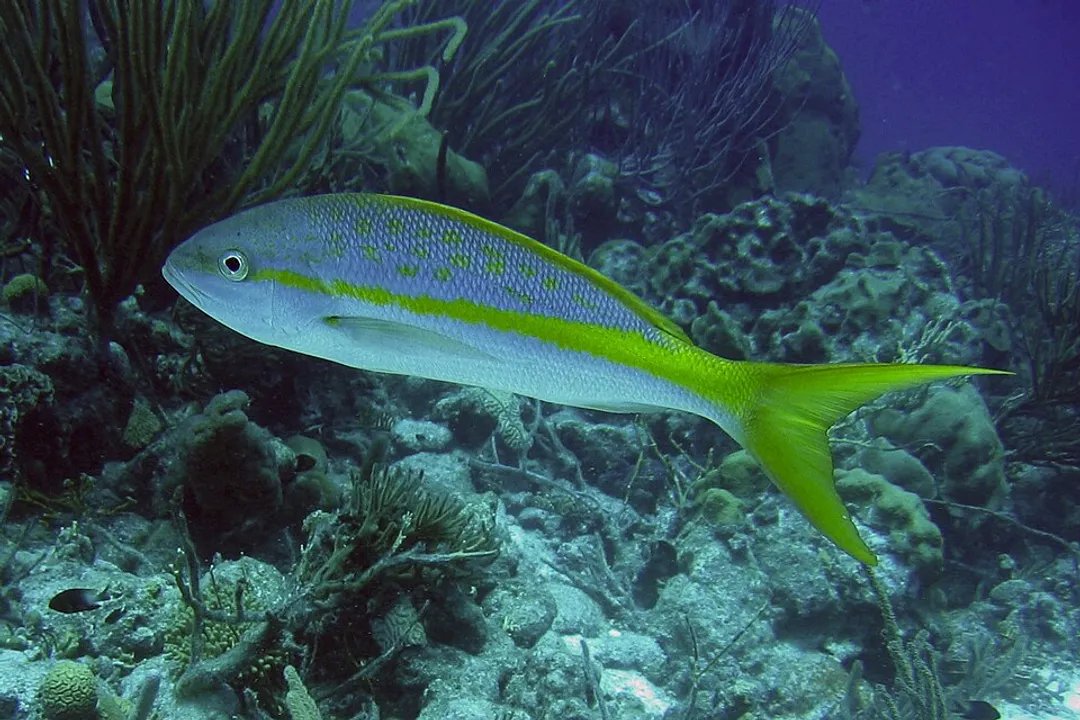
The bright, distinctive yellow tail of Ocyurus chrysurus makes it instantly recognizable in tropical waters, an iconic member of the snapper family, Lutjanidae. This vibrant fish, common throughout the Western Atlantic, Gulf of Mexico, and the Caribbean Sea, is a highly sought-after species by both commercial and recreational fishers. While its appearance is static in the public eye, the reality of yellowtail snapper populations across this wide range hints at deeper, underlying biological divisions shaped by time and geography—a story of localized adaptation that touches upon evolutionary divergence.
# Physical Traits
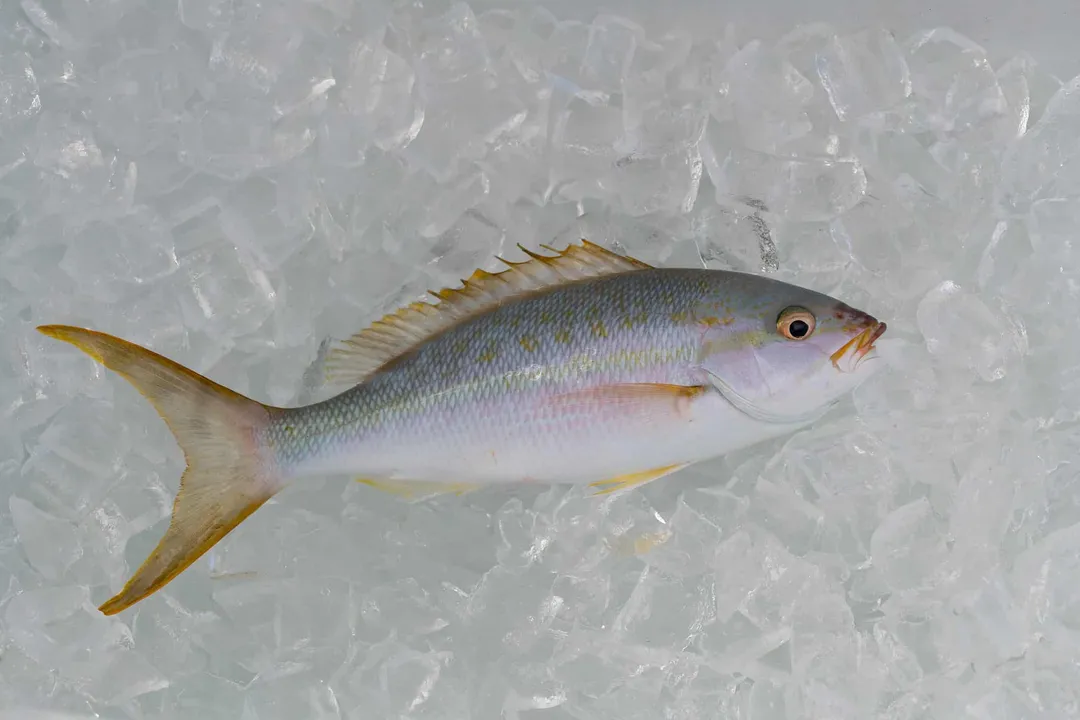
The yellowtail snapper possesses a streamlined body well-suited for its reef-associated lifestyle. Its coloration is striking: a silvery-gray body adorned with yellow streaks along the sides and, most notably, a deeply forked, brilliant yellow caudal fin. These fish are known to grow quite large, with records indicating potential maximum sizes reaching about 1 meter in length and weights approaching 15 kilograms, though individuals encountered in the wild are typically much smaller than these upper limits. Their feeding habits reflect a varied diet; they are opportunistic predators consuming small fish, planktonic organisms, crustaceans, and various mollusks. Furthermore, observations suggest a relatively long lifespan potential for the species, with some individuals documented living for up to two decades.
# Population Structure
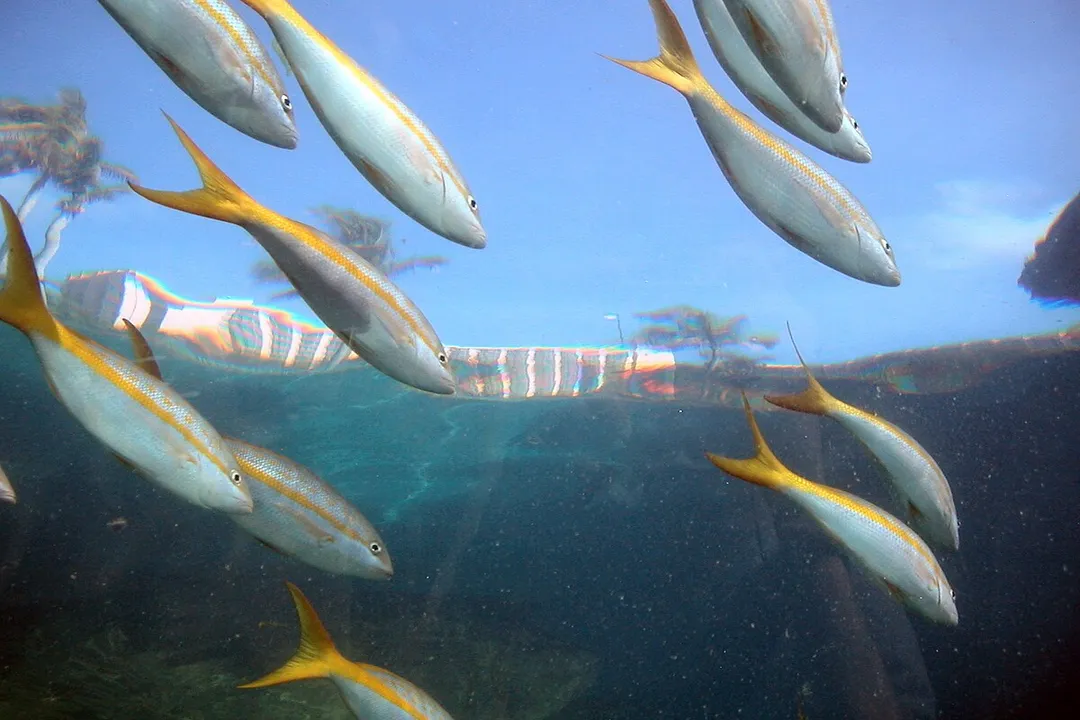
The broad distribution of the yellowtail snapper masks significant separation between groups inhabiting different bodies of water, suggesting that large-scale gene flow is limited. Studies aimed at understanding these differences, often through genetic analysis, reveal distinct population units that require separate management considerations. For instance, research focusing on the Gulf of Mexico has identified separate stocks, particularly in the southern regions, indicating localized dynamics influencing the health and sustainability of these fish groups.
The Caribbean basin presents another area of distinct structuring. Data collected concerning the biology of yellowtail snapper in the Caribbean emphasize that populations there may mature later and at different sizes compared to their counterparts elsewhere. This variation in life history traits—when they begin reproducing and how quickly they grow—is a key indicator of adaptation to local environmental pressures, whether related to food availability, temperature, or fishing intensity.
It is interesting to note that early scientific attempts to delineate these groups involved looking at internal biochemical markers. Analyses performed using electrophoretic techniques on muscle proteins provided initial evidence suggesting that populations separated by geography displayed measurable biochemical differences, supporting the idea of distinct, isolated units rather than a single, freely mixing panmixia. This early work laid the groundwork for modern genetic studies that confirm these biological separations exist in practice.
Considering the life history variations, an observer might note that while the maximum potential lifespan is similar across regions (up to 20 years), the age and size at which maturity is reached can vary significantly. If a population in one area consistently matures at age 3, while a genetically distinct population nearby matures at age 6 while being the same maximum size, this difference in reproductive timing is a strong signal of localized evolutionary pressure favoring different survival strategies. A fishery operating in the region with early maturation might have to adapt its harvest strategies differently than one targeting the later-maturing stock to maintain long-term viability.
# Genetic Differentiation Basis
The mechanism underpinning these population differences is primarily geographic isolation, which leads to genetic drift and selection acting independently on different sub-groups. While the species name Ocyurus chrysurus covers all these fish, the genetic markers used in contemporary research, such as those employed in the Eastern Gulf of Mexico studies, quantify the degree of separation between these groups. These distinct genetic profiles suggest that the "Yellowtail Snapper" is not a single, homogenous breeding unit but rather a collection of interbreeding populations that have diverged sufficiently to warrant separate status for conservation and management.
When comparing the findings from the Gulf of Mexico stock assessments with the general Caribbean biology data, one observes a recurring theme: defining these units is crucial for effective oversight. The genetic evidence acts as the scientific confirmation of what fishery observers might see as different catch rates or growth patterns from one fishing ground to the next.
One valuable perspective arises when comparing the physiological data hints we have. If a population shows evidence of faster metabolic rates or altered growth curves, as suggested by some physiological study abstracts, these changes are driven by the environment acting upon the inherent genetic potential. The slight differences in dietary composition—whether leaning more toward plankton or small crustaceans depending on the local habitat structure—will select for slightly different physiological efficiencies over generations, reinforcing the genetic separation already established by physical barriers like deep channels or strong currents separating the main management areas.
# Adaptation and Management
The evolutionary divergence seen in population structure has direct, practical ramifications for how these fish are managed by regional authorities. If conservation efforts are applied uniformly across a large area where genetically distinct stocks exist, there is a real risk of overfishing a locally vulnerable stock while believing the overall regional population is stable. The data indicating distinct Gulf stocks underscore the need for site-specific management protocols.
For instance, if the southern Gulf stock exhibits lower recruitment success than the northern stock, a catch limit set based on the combined average could mask the decline of the southern group until it is severely depleted. Effective management must, therefore, account for the distinct biological realities of each genetically defined unit, recognizing that they have evolved—or diverged—along separate trajectories, even within the same overarching species designation.
A point for local fishers to consider, which relates directly to this biological reality, involves understanding the nuances of local regulations concerning size limits. If management bodies have set different minimum harvest sizes between, say, the Florida Keys and the Dry Tortugas, it is often a direct reflection of the observed maturation schedules in those specific areas, which in turn reflect long-term environmental selection pressures. Adhering to these context-specific rules is supporting the maintenance of that localized biological adaptation.
Another consideration involves understanding that even within a single management area, like the Eastern Gulf, genetic variability exists, meaning a one-size-fits-all approach might still miss smaller, localized pockets of unique genetic makeup. This continuous, fine-scale differentiation is the essence of how populations adapt over time, showcasing evolution in motion, albeit on a scale visible primarily through molecular markers rather than dramatic morphological change. The Yellowtail Snapper serves as an excellent, visually simple example of how complex population dynamics operate beneath the surface of a single, well-known species name.
# Future Outlook
The ongoing study of the yellowtail snapper focuses not just on what exists now, but why these populations separated and how they will fare under changing environmental conditions. Research into their genetics and life history continues to refine the boundaries of these stocks, ensuring that conservation science can keep pace with the biological realities shaped by millennia of adaptation and isolation. Understanding the structure of the Yellowtail Snapper is a case study in recognizing that a species label often contains a mosaic of distinct, localized evolutionary narratives.
Related Questions
#Citations
Yellowtail snapper - Wikipedia
[PDF] SEDAR 8-DW-4 The biology of yellowtail snapper, Ocyurus ...
Yellowtail Snapper Fish Facts - Ocyurus chrysurus - A-Z Animals
Age and growth of yellowtail snapper and queen triggerfish ...
Age and Growth of Yellowtail Snapper from South Florida
Population structure of yellowtail snapper using age-based life ...
Yellowtail Rockfish | NOAA Fisheries
Structure and dynamics of southern Gulf of Mexico yellowtail ...
Population structure of yellowtail snapper using age-based life ...