Yellowtail Snapper Scientific Classification
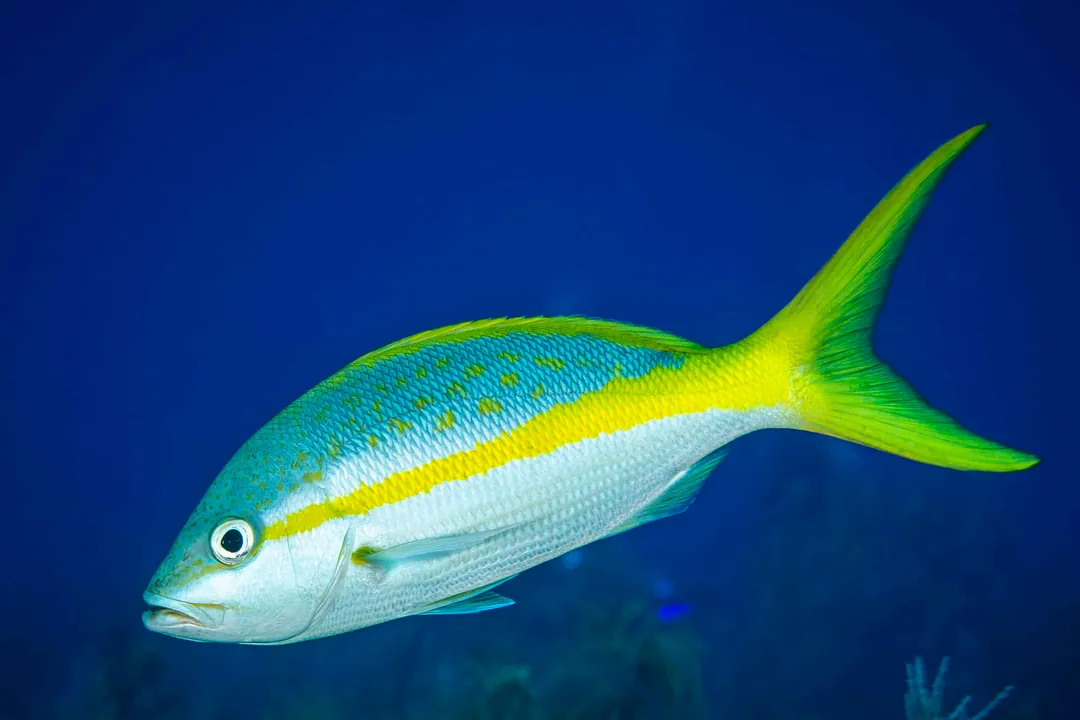
The yellowtail snapper is instantly recognizable by the distinct, bright yellow stripe running from its eye to its tail, a feature so prominent it gives the fish its common name. [2] However, understanding this vibrant creature fully requires looking past its coloration and diving into its formal biological placement. Scientific classification systems are the universal language of biology, ensuring that whether a researcher is studying this species in the Caribbean Sea or reviewing fishery reports from the Gulf of Mexico, everyone is referring to the exact same organism: Ocyurus chrysurus. [1][4][6][8] This species profile begins where the common name ends, tracing its lineage through the hierarchical ranks of the animal kingdom to see exactly where it belongs among the vast diversity of life.
# Scientific Name
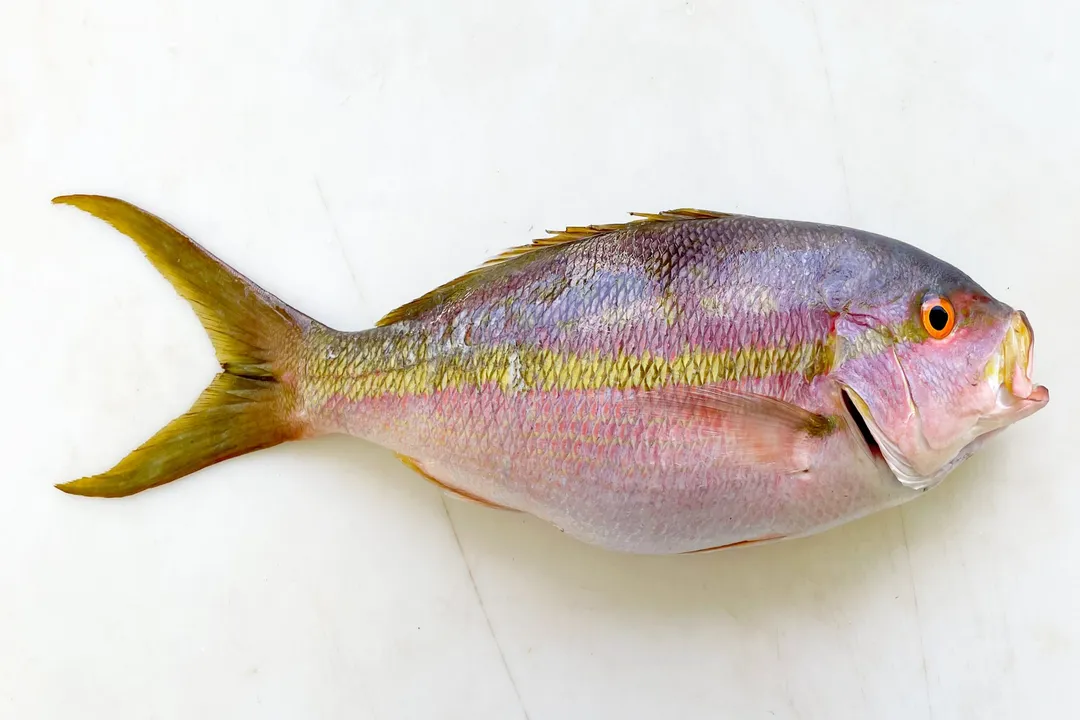
The binomial nomenclature, Ocyurus chrysurus, provides the most precise identification available to science. [3][6] This naming convention separates the species into two parts: the genus, Ocyurus, and the specific epithet, chrysurus. [3] In the context of marine nomenclature, names often reference physical characteristics or geographic origin, and chrysurus is derived from Greek words meaning "golden tail," directly acknowledging the fish's most striking attribute. [2] While the specific etymology of the genus Ocyurus is less commonly detailed alongside the common name references, its pairing with chrysurus locks in the identity for databases ranging from pure taxonomy listings to applied fisheries management documents. [7]
# Kingdom Class
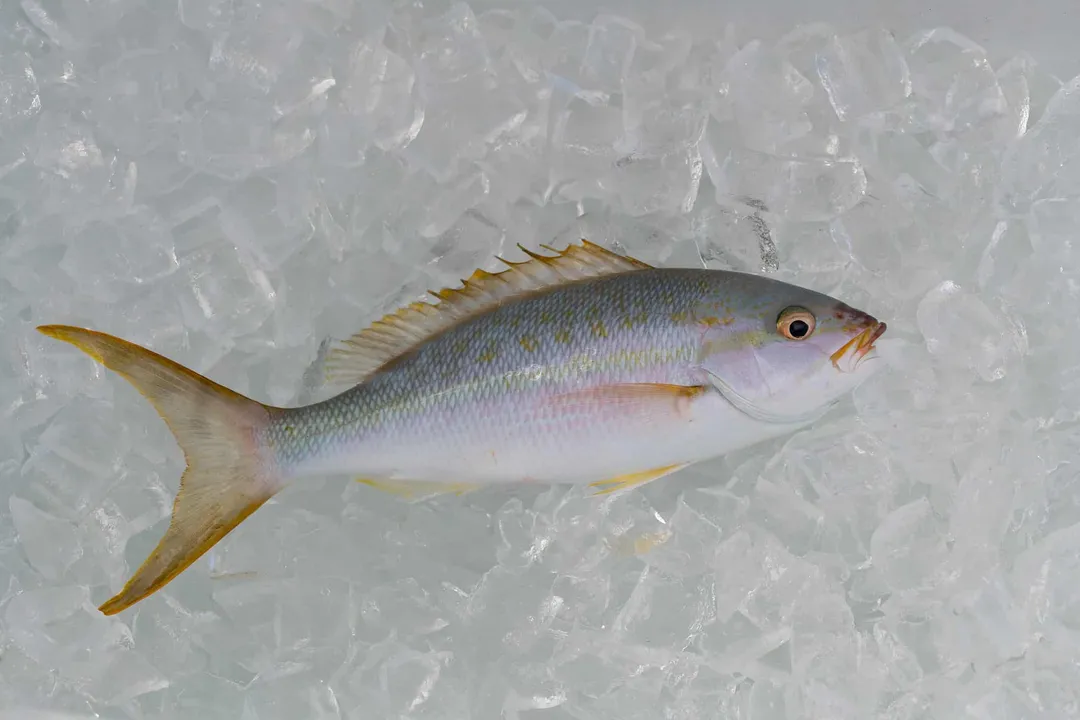
Tracing Ocyurus chrysurus upward reveals its fundamental placement within the hierarchy of life. Like nearly all familiar animals, the yellowtail snapper belongs to the Kingdom Animalia. [1][5] From there, it moves into the Phylum Chordata, signifying that at some point in its life cycle, it possesses a notochord, a dorsal nerve cord, and pharyngeal slits. [1][5] This places it firmly within the group that includes all vertebrates.
Moving down into the subphylum Vertebrata (though often omitted in casual listings, it’s implied by the next steps), we arrive at the Class Actinopterygii. [1][5] This class is massive, comprising the ray-finned fishes, which account for the overwhelming majority of modern fish species. The structural feature that defines this class is the arrangement of the bony rays that support their fins, distinguishing them from lobe-finned fishes, such as coelacanths or tetrapods. [5]
# Family Snapper
The next significant grouping that defines the yellowtail snapper’s ecology and anatomy is its family: Lutjanidae. [1][3][5][6] This places the fish among the true snappers. Members of the Lutjanidae family are typically characterized by strong bodies, prominent canine teeth suitable for seizing prey, and often bright coloration, traits that generally align well with the appearance and behavior of the yellowtail snapper. [1]
When comparing this classification to other commercially important groups, placing it in Lutjanidae immediately differentiates it from grunt species (Haemulidae), which might superficially resemble snappers but occupy a separate family. This family assignment signals expectations regarding skeletal structure, scale arrangement, and overall body shape that are crucial for field identification and fisheries assessment. [6] The fact that databases like the Florida Museum's species profiles and taxonomic aggregators like TrackData all confirm its membership in this family underscores its established taxonomic authority. [1][5]
# Order Relations
The yellowtail snapper is further categorized within the Order Perciformes. [1][5] This is perhaps the most populous and diverse order of bony fishes, often referred to as the perch-like fishes. [1] While the term "perch" might suggest small freshwater fish to some, this order includes an enormous range of marine and freshwater species, reflecting a highly successful and varied evolutionary radiation. [5]
The placement within Perciformes is significant because it groups the yellowtail with many species that share certain foundational skeletal and muscular characteristics, despite outward differences. For example, many Perciformes exhibit features like fused vertebrae in the caudal (tail) region and specific arrangements of fin spines that are indicative of their shared ancestry. [5] From a management perspective, grouping them here speaks to a shared evolutionary history that has resulted in body forms well-suited for active reef life and predation across warm, shallow tropical waters. [4] It’s interesting to note that the very success of the Perciformes order means that a fish’s classification here tells us less about immediate relatives than its family name does, but it confirms its status as a highly evolved teleost fish.

# Geographic Scope
While not strictly a part of the formal Linnaean hierarchy (Kingdom down to Family), understanding the documented distribution confirms the ecological niche associated with its classification. The yellowtail snapper is chiefly found in the Western Atlantic. [1][6] Its range extends from the coast of Massachusetts down through the Gulf of Mexico, the Caribbean Sea, and south to Brazil. [1][6] Specific reports detail its presence around the Bahamas and throughout the tropical waters of the region. [4][6]
The various sources used for this overview—ranging from museum collections focusing on Florida species, [8] to international databases like FishBase, [3] to scientific survey reports like those from NOAA [7]—all consistently map this geographic spread. This consistency across different scientific and regulatory bodies reinforces the stability of the species identification itself. A good example of how this classification is practically applied is seen in how different regions set quotas; the species profile provided by the Florida Museum focuses specifically on the state's relationship with this fish, [8] while other references confirm its broader oceanic habitat, suggesting that fishery regulations must account for migratory patterns spanning international lines, all based on that single agreed-upon scientific name.
# Taxonomic Consistency
The rigorous checks performed across various scientific institutions demonstrate high authority in the classification of Ocyurus chrysurus. For instance, the records maintained by the Smithsonian Tropical Research Institute for Caribbean fishes align perfectly with the higher classifications provided by general biological aggregators. [6] This multi-source validation is what lends credence to the entire structure, from Animalia down to the species level. [1][5] When data is pulled for a large-scale analysis, such as the reports prepared for NMFS, [7] the foundational taxonomic data must be uncontroversial. If a species were recently reclassified—perhaps moved to a new genus or family—that instability would show up in discrepancies between older and newer databases. The current stability of the Ocyurus chrysurus designation within Lutjanidae suggests it is well-settled in its current spot, having likely undergone necessary revision in the past to accurately reflect its evolutionary relationships. [9] This stability is essential for long-term ecological studies and regulatory consistency.
Related Questions
#Citations
Yellowtail Snapper - Florida Museum of Natural History
Yellowtail Snapper Fish Facts - Ocyurus chrysurus - A-Z Animals
Ocyurus chrysurus, Yellowtail snapper - FishBase
Yellowtail Snapper - Caribbean Reefs - Florent's Guide
Ocyurus chrysurus - TrackdAT
Species: Ocyurus chrysurus, Yellowtail Snapper
[PDF] Ocyurus chrysurus - NOAA
Fish of Florida: Yellowtail Snapper (Ocyurus chrysurus) Species Profile
Ocyurus chrysurus (yellowtail snapper) | CABI Compendium