What posture does the Yeti Crab adopt to maximize its chemosensory surface area?
Answer
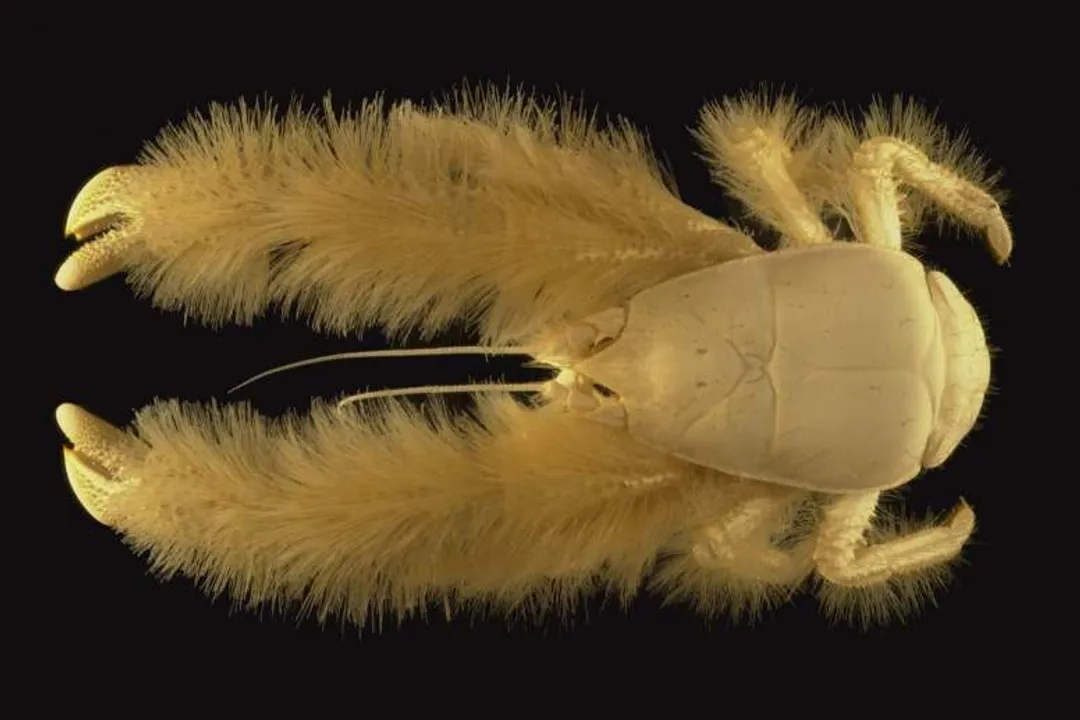
Holding its arms out and upward, presenting its "hairy chest"
To maximize the effectiveness of its highly specialized sensory apparatus, the Yeti Crab adopts a distinct posture when near the vent plumes. It frequently holds its claws and front legs extended outward and elevated, essentially presenting the dense field of its hairy structures—its "hairy chest"—to the surrounding water. This orientation ensures the greatest possible surface area is exposed to the flowing currents, allowing for optimal chemical detection and continuous interaction with the bacterial mats cultivated on those limbs.
#Videos
What Exactly Is: Yeti Crab | The Crabominable Deep-Sea Crustacean
Related Questions
What does the Latin species name hirsuta directly describe about Kiwa hirsuta?Near which geological features was the Yeti Crab discovered in 2005?What adaptation suggests chemical sensing is overwhelmingly vital for Kiwa hirsuta survival?What specialized feeding strategy defines how the Yeti Crab obtains sustenance?What specialized structures fill the long, elaborate setae covering the Yeti Crab's claws?Why does the Yeti Crab exhibit notably pale coloration ranging from whitish-yellow to cream?What is the typical documented length measurement for adult Yeti Crabs?What inorganic chemical do the symbiotic chemoautotrophic bacteria metabolize near the vents?What posture does the Yeti Crab adopt to maximize its chemosensory surface area?What concept inspired the selection of Kiwa as the genus name for the Yeti Crab?