What physical impact do water voles' burrowing activities have on riverbank soil composition and regulation?
Answer
Their burrowing helps to dry out the soil and promotes microbial activity that assists in regulating nitrogen levels
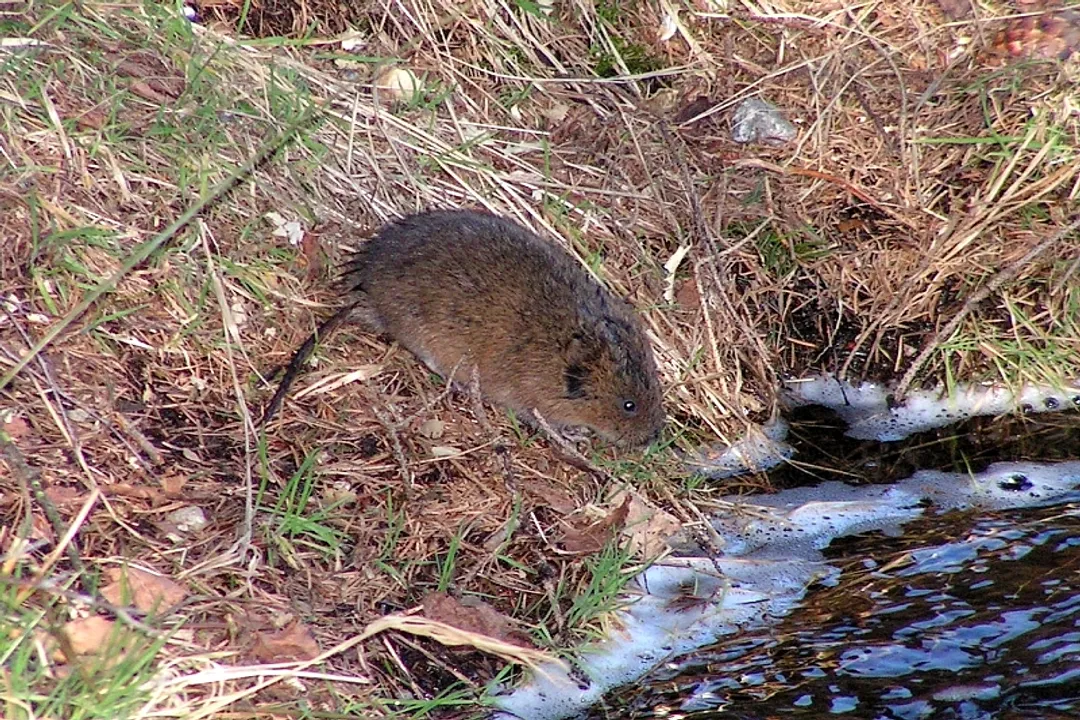
The creation of complex burrows, often featuring critical underwater entrances for escape, has significant physical and biochemical consequences for the riverbank environment. This digging action aerates the soil matrix, which contributes to drying out overly saturated areas. More importantly, this environment change stimulates specific microbial communities. These microbes are essential because they actively participate in regulating the nitrogen levels within the riverbank soil, suggesting that the physical structure created by the voles is intrinsically linked to the chemical health of their habitat.
Related Questions
To which scientific family does the water vole, genus Arvicola, belong?Which IUCN recognized Arvicola species inhabits European mountain systems like the Alps?What specific aquatic feature do water voles lack that hinders perfect adaptation for water movement?What geological feature allowed the second water vole wave (Clade 2) to reach Britain before its inundation?What is the genetic origin source for the majority of modern English and Welsh water vole populations (Clade 2)?How do water voles' constant consumption of vegetation influence local biodiversity as ecosystem engineers?What physical impact do water voles' burrowing activities have on riverbank soil composition and regulation?What distinguished the American mink (*Neovison vison*) from native predators regarding water vole defense mechanisms?What unusual finding regarding genetic diversity did water voles display during the Pleistocene-Holocene transition?What anomaly in Northumberland clustered with the Scottish Clade 1 lineage despite proximity to the south?