What physical constraint creates a significant challenge regarding water loss for the Sphaerodactylus parthenopion?
Answer
An immense surface-area-to-volume ratio
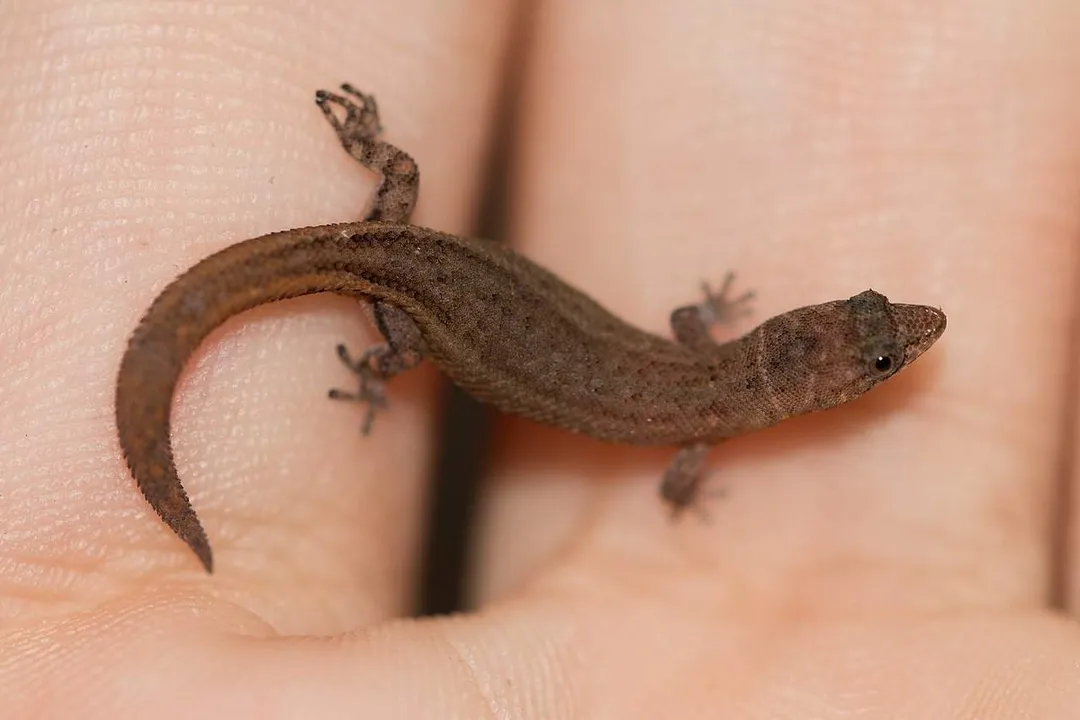
The small body size of the Sphaerodactylus parthenopion results in a very high surface-area-to-volume ratio. Because volume represents the animal's mass and surface area represents the boundary across which water is lost, this ratio means the gecko has a large amount of exposed area relative to its internal mass. Consequently, it faces a constant risk of rapid desiccation. This physical reality forces the species to rely on behavioral adaptations, such as seeking out humid environments, to manage water retention.
Related Questions
What is the typical average snout-to-vent length of an adult Sphaerodactylus parthenopion?How does the physical size of a male Sphaerodactylus parthenopion compare to a female?What physical constraint creates a significant challenge regarding water loss for the Sphaerodactylus parthenopion?Where is the distinctive dark-edged, yellow-brown stripe located on the body of the Sphaerodactylus parthenopion?What is the specific texture of the scales located on the head and anterior neck of the Sphaerodactylus parthenopion?How can the ventral scales of the Sphaerodactylus parthenopion be characterized?What unique feature characterizes the eyes of the Sphaerodactylus parthenopion?What is the purpose of autotomy in the Sphaerodactylus parthenopion?Why does the Sphaerodactylus parthenopion prefer to hide under moist rocks?Which environment does the Sphaerodactylus parthenopion typically avoid compared to other geckos like Sphaerodactylus macrolepis?