Virgin Islands Dwarf Gecko Physical Characteristics
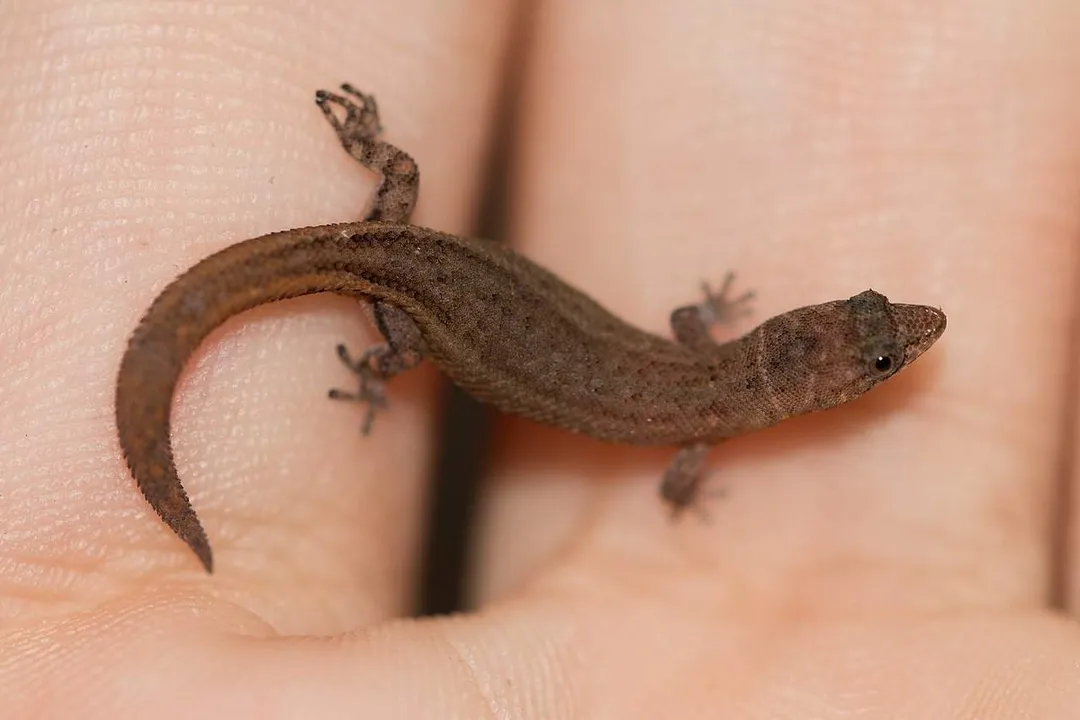
The Virgin Islands Dwarf Gecko, scientifically known as Sphaerodactylus parthenopion, holds a remarkable position among the world’s fauna, often cited as one of the absolute smallest terrestrial animals possessing a backbone. [1][3][4] Belonging to the genus Sphaerodactylus, which translates roughly to "round finger" in Greek and comprises numerous small geckos across the Caribbean and Central America, this species showcases miniaturization to an extreme degree. [3][4] Its physical characteristics are precisely tuned to its specific, limited island environment, leading to a suite of features defined primarily by its minute scale. [1][3]
# Extreme Dimensions
The sheer tininess of S. parthenopion is perhaps its most defining physical trait. Adults rarely exceed an average snout-to-vent length (SVL) of 18 millimeters (0.71 inches). [1][3][6] To put this measurement into context, several sources note that this diminutive lizard is nearly the size of a standard United States dime. [1][4][6] Its maximum registered body mass hovers around a scant 0.15 grams (0.0053 ounces). [1][3][4] This places it in an elite category, contested only by Sphaerodactylus ariasae, which is slightly smaller at an average of 16 mm SVL. [1][3]
A closer look at the size distribution reveals a slight sexual dimorphism, though not in coloration. Females generally exhibit a marginally larger average size than the males of the species. [1][3] While males average around 16 mm SVL, females average closer to the 18 mm mark. [3] This slight size difference is a subtle physical distinction that one would need precise measurement to confirm, as visually, they appear quite similar. [3] Considering this extreme lack of mass, one can readily infer that the gecko’s surface-area-to-volume ratio is immense. This ratio is a critical physical constraint, meaning that for every unit of volume (mass), there is a massive area through which water can be lost, a major challenge in its semi-arid habitat. [1][3][6] The body structure appears dedicated to minimizing exposed area when hiding, while the tail itself is nearly as long as the body, suggesting a possible area for fat storage, though scientific observation on this point is limited. [4]
# Coloration and Markings
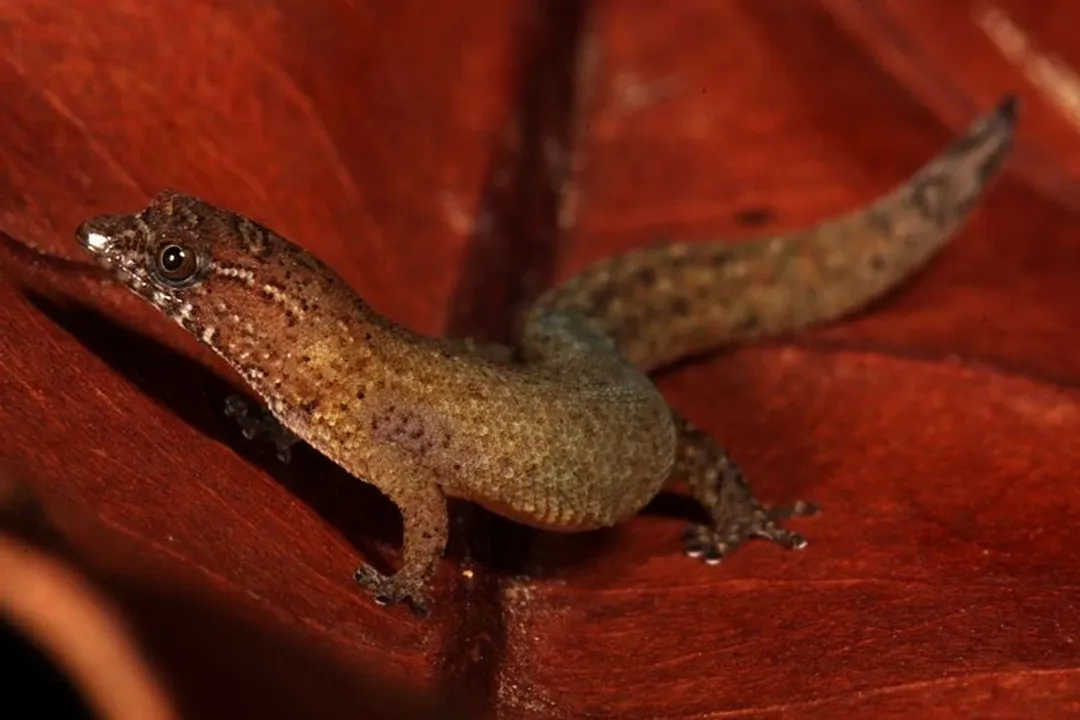
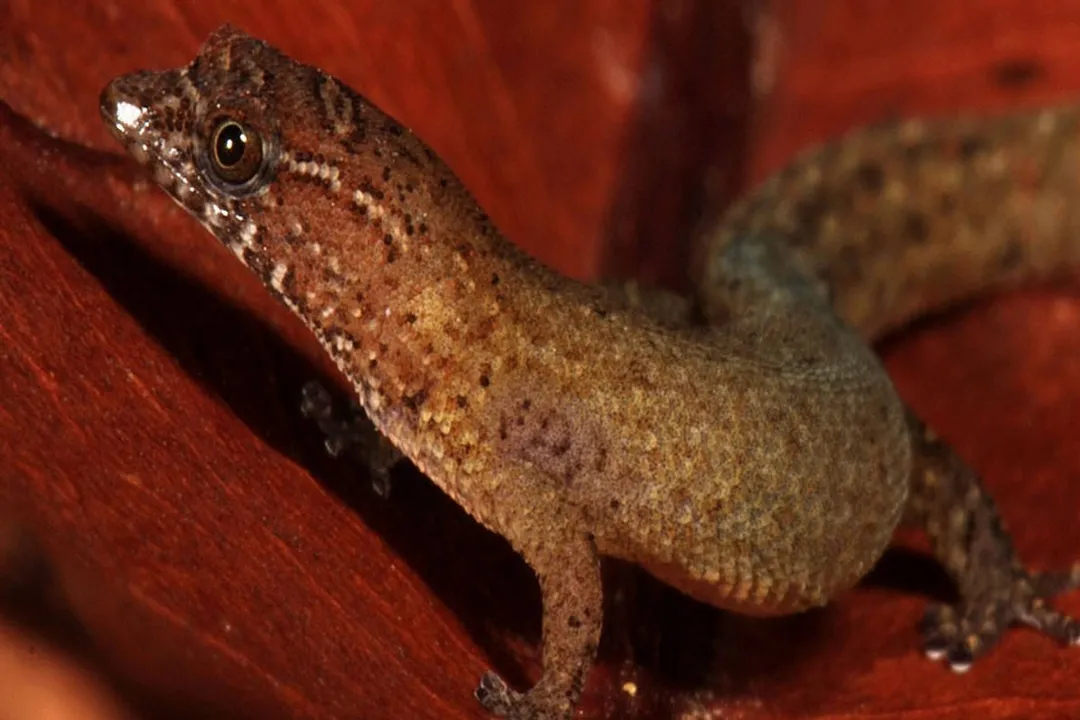
The visual appearance of the Virgin Islands Dwarf Gecko relies on a cryptic, earthy palette that aids its survival in dry, rocky terrain. [1][4] The dorsal side—the back and legs—is typically characterized by a deep brown coloration. [1][3][6] This base color is rarely uniform; instead, it is often adorned with a fine scattering or pattern of darker scales. [3][6]
The key features that allow identification, which are often subtle, involve specific light-colored markings on the head and neck region. [1][3][6] A narrow, dark-edged, yellow-brown stripe runs along each side, starting behind the eye, crossing the temple area, and gradually fading out toward the base of the head. [1][3][6] Furthermore, across the top of the head, situated behind the eyes in the occipital region, is another distinctive marking: an almost oval-shaped, dark-edged, yellow-brown bar. [1][3] In some individuals, this transverse bar can physically connect with the stripes extending from the eyes. [1] There is also mention of a faint preocular transverse bar—a line of colored scales directly in front of the eyes at the snout base—though this can be difficult to discern in certain individuals. [1][3]
Moving ventrally, the dark brown scales from the back extend downward but begin to fade, resulting in a light grey or cream-colored belly. [1][3] The throat region, or gular area, presents its own pattern, described as having faint to bold lines of lighter scales running laterally across it. [1][3] The tail itself maintains the brownish theme but is generally yellowish-brown, sometimes featuring short lines or small clusters of darker scales. [1][3] Since there is no sexual dichromatism, both males and females share this exact color scheme. [3]
# Scale Architecture
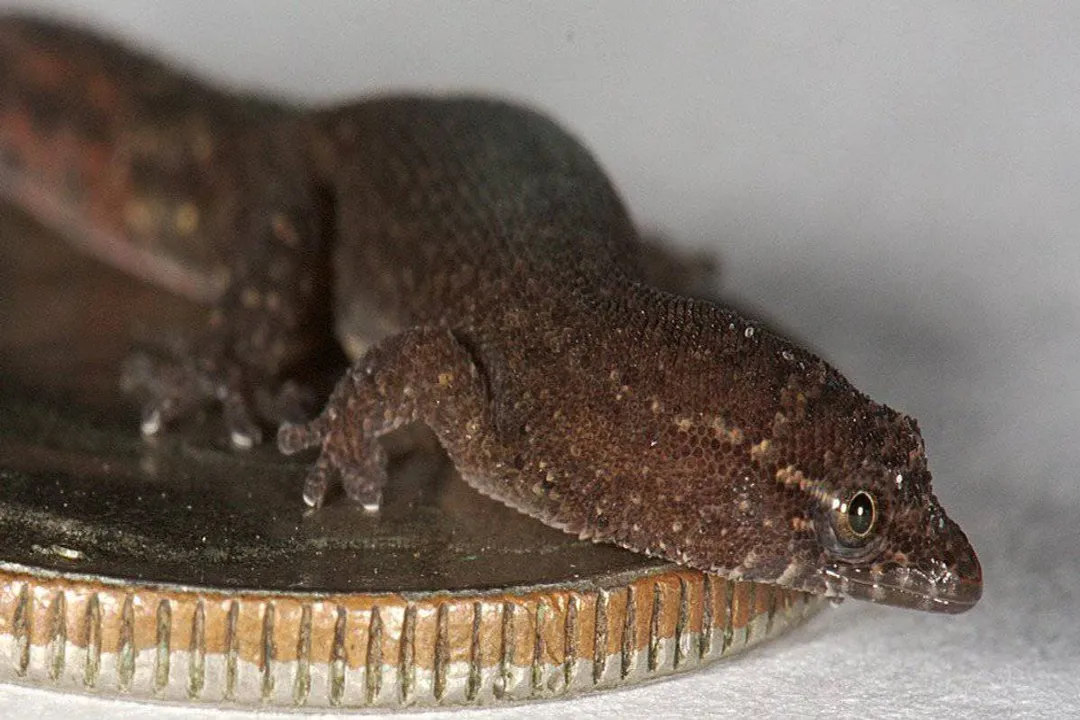
The texture and arrangement of the scales are critical physical identifiers for this species within the genus Sphaerodactylus. [3] The scales across the back (dorsal surface) are generally uniform, described as small, acute (pointed), keeled (ridged), and flattened, displaying an imbricate arrangement, meaning they overlap like roof tiles. [1][3] This overlapping nature is characteristic of many reptiles that need to shed water efficiently or provide structural protection without heavy plating. [3]
However, there are variations across the body surface that are noteworthy for classification: [3]
- Head and Neck: The scales on the top of the head and the anterior (front) neck possess a granular, or bumpy, texture. [1][3]
- Mid-Back: Interestingly, the scales in the middle of the back do not possess this granular quality; instead, they exhibit some crowding and size reduction. [1][3]
- Chest and Throat: The scales on the pectoral (chest) and gular (throat) regions are described as keeled. [1][3]
- Ventral: The scales covering the underside (belly) are distinctly different: they are rounded, smooth, and cycloid (having a smooth outer edge), and they overlap. [1][3]
- Tail: The scales on the top of the tail retain the ridged, flattened structure seen on the back, but the scales on the underside of the tail are smooth, rounded, and noticeably enlarged toward the center (mid-ventrally). [1][3]
The fine arrangement of these scales directly impacts its interaction with the environment. For example, the smooth, rounded ventral scales allow for efficient sliding over surfaces, while the keeled dorsal scales might aid in gripping rough rock crevices. The adhesive structures on the feet—round adhesive scales—are what allow it to cling to surfaces, much like other geckos, though the information here is less detailed than for larger, more widely studied species. [2][4]
# Sensory Structures and Appendages
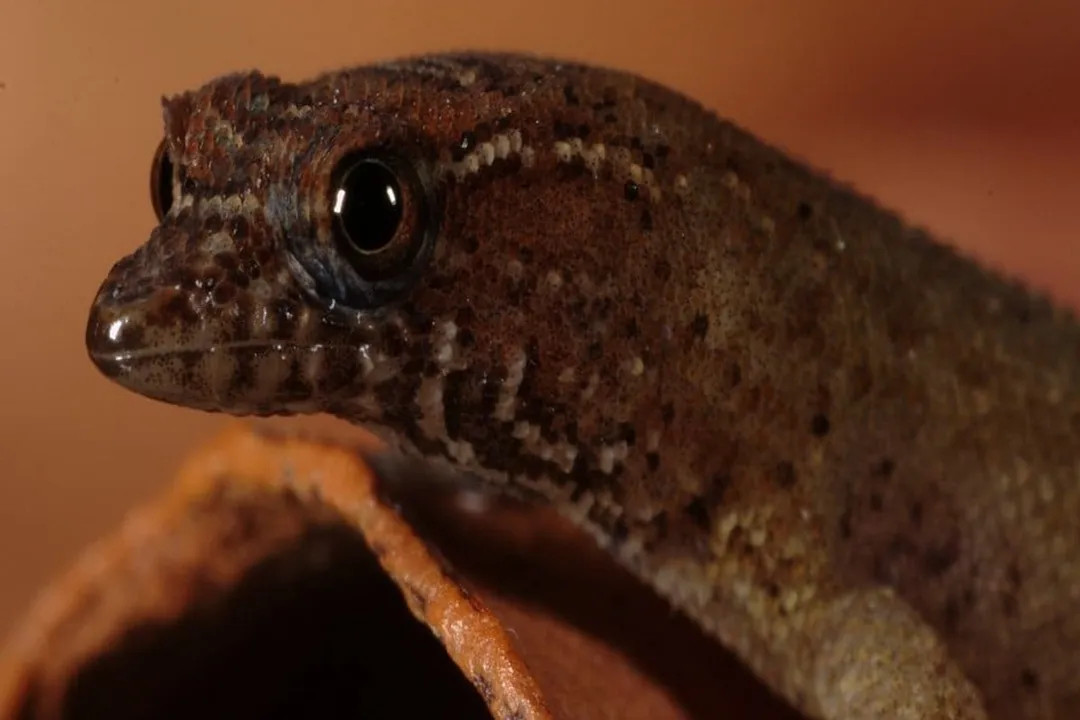
Beyond the primary body covering, other physical features govern how the dwarf gecko perceives and interacts with its small world. The snout is noted as being moderate in length and blunt. [1][3] While specific information on the tongue's length is scant, its diet of small insects implies an adaptation for rapid capture. [4]
The eyes present a fascinating departure from nocturnal lizards. The Virgin Islands Dwarf Gecko lacks eyelids entirely, instead possessing a transparent protective membrane covering the eyeball. [4] To maintain clarity and moisture, the gecko must lick this membrane with its tongue—a common, if unusual, habit among geckos lacking movable lids. [4] Furthermore, its pupils are round rather than vertical slits, a physical adaptation that suggests better visual acuity during daylight and evening hours, rather than specializing purely in pitch blackness. [4] An additional subtle point supporting its non-nocturnal niche is that, unlike many geckos, this species is known to sleep in hidden spots during the day to conserve water and avoid excessive heat, suggesting peak activity might align with lower daytime temperatures or twilight periods. [2]
Another critical physical capability shared by this gecko, though not unique, is autotomy, the ability to shed its tail as a defense mechanism against predators. [1][4][6] The physical structure is such that the tail can regenerate if detached. [1][3][4] When studying physical conservation limits, it's interesting to consider that despite being found in dry areas, this tiny reptile lacks the specialized scale structures or physiological adaptations found in true desert lizards to actively prevent water loss. [3] It relies instead on behavioral modifications, such as hiding under moist rocks—its preferred mesic microhabitat—to counter the inherent physical drawback of its high surface area-to-volume ratio. [1][3] This highlights a fundamental trade-off: while its scale pattern offers effective camouflage and some grip, its overall body architecture predisposes it to rapid desiccation, demanding a constant search for humid spaces within an otherwise xeric environment. [3]
# Differentiation from Relatives
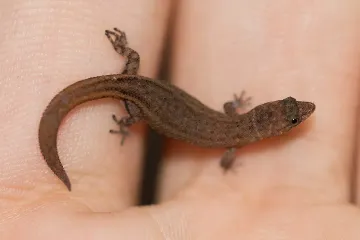
When considering the physical aspects of S. parthenopion, it is helpful to compare it with its suspected relative, S. nicholsi from Puerto Rico. [1][3][6] While the relationship suggests a recent divergence from a common ancestor, the physical differences—including body size and coloration patterns—are significant enough to warrant separate species status. [1][4] The fact that S. parthenopion is not found on beaches or in rotting palm debris, unlike its sympatric neighbor, the bigger-scaled least gecko (S. macrolepis), further defines its morphology by the habitat it avoids. [3] Its preference for dry, thorny scrub on rocky hillsides suggests its scale morphology and color scheme are optimized for that specific substrate, contrasting with the leaf-litter dwellers. [1][3] If one were to create a comparative morphological index for the Sphaerodactylus genus in this region, the combination of scale texture (granular on the head, ridged/keeled on the back), round pupils, and the specific yellow-brown striping would serve as the defining physical signature for S. parthenopion. [1][3][4] This level of specific physical distinction in such a tiny organism underscores the evolutionary pressures within the isolated island habitats of the British Virgin Islands. [1]
Related Questions
#Citations
Virgin Islands Dwarf Gecko - A-Z Animals
Virgin Islands dwarf sphaero - Facts, Diet, Habitat & Pictures on ...
Virgin Islands Dwarf Sphaero - Wild Kratts Wiki - Fandom
Virgin Islands Dwarf Gecko Facts & Photos - Wowzerful
Virgin Islands dwarf sphaero Facts for Kids
Virgin Islands dwarf gecko : r/reptiles - Reddit