What key morphological feature defines members of the Loricariidae family, earning them their common designation?
Answer
Being covered in overlapping bony plates, or scutes
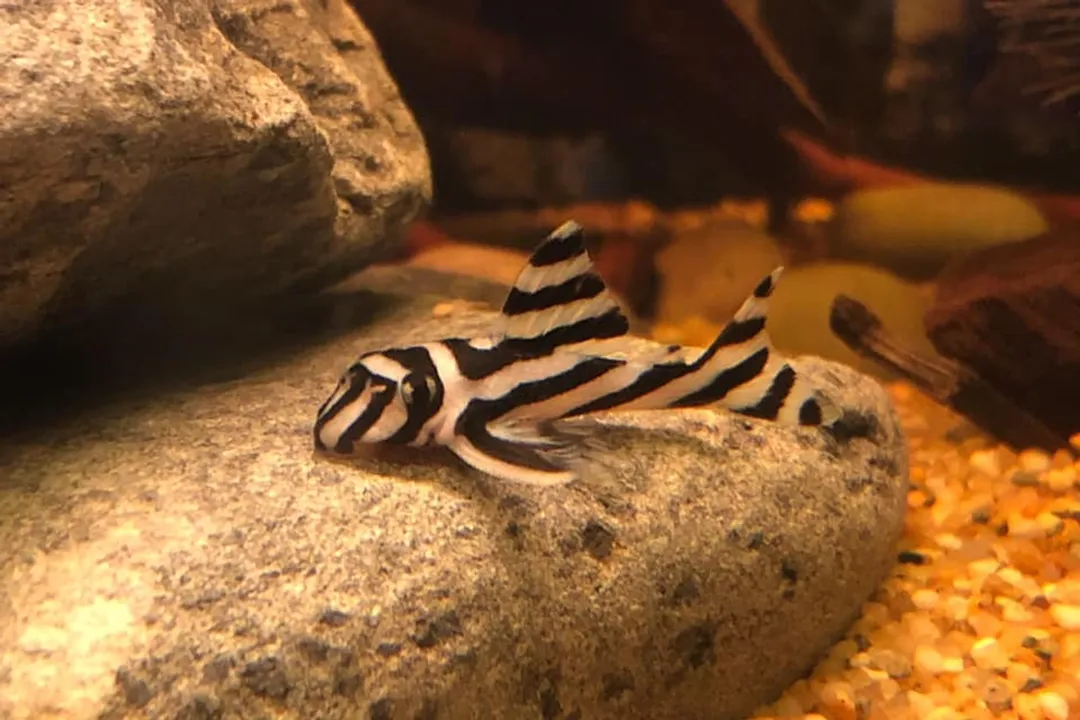
The defining characteristic that grants the Loricariidae family the descriptor 'armored catfish' is the presence of overlapping bony plates, known as scutes, covering their bodies. These scutes provide a robust defensive structure, contrasting with fish that rely solely on scales or soft skin. Although many fish in this family are recognized for their specialized suckermouths used for feeding, it is these bony plates that solidify their armored classification.
Related Questions
What family groups *Hypancistrus zebra* with other armored suckermouth catfish species?What does the genus name *Hypancistrus* roughly translate to, referencing the fish's behavior?Who developed the L046 or L46 identification code system used for many Loricariids?What visual feature inspired the species epithet *zebra* in the scientific name *Hypancistrus zebra*?Which specific river system basin confines the entire known wild population of *Hypancistrus zebra*?Which Order places *H. zebra* within the larger group that includes all catfishes?What Class designation identifies *H. zebra* as belonging to the group dominated by ray-finned fishes?What dietary preference is suggested for *H. zebra* based on its placement in the *Hypancistrus* genus?In the informal designation L046, what biological group does the letter 'L' signify for this catfish?What key morphological feature defines members of the Loricariidae family, earning them their common designation?