What dietary preference is suggested for *H. zebra* based on its placement in the *Hypancistrus* genus?
Answer
A carnivorous or omnivorous diet favoring protein
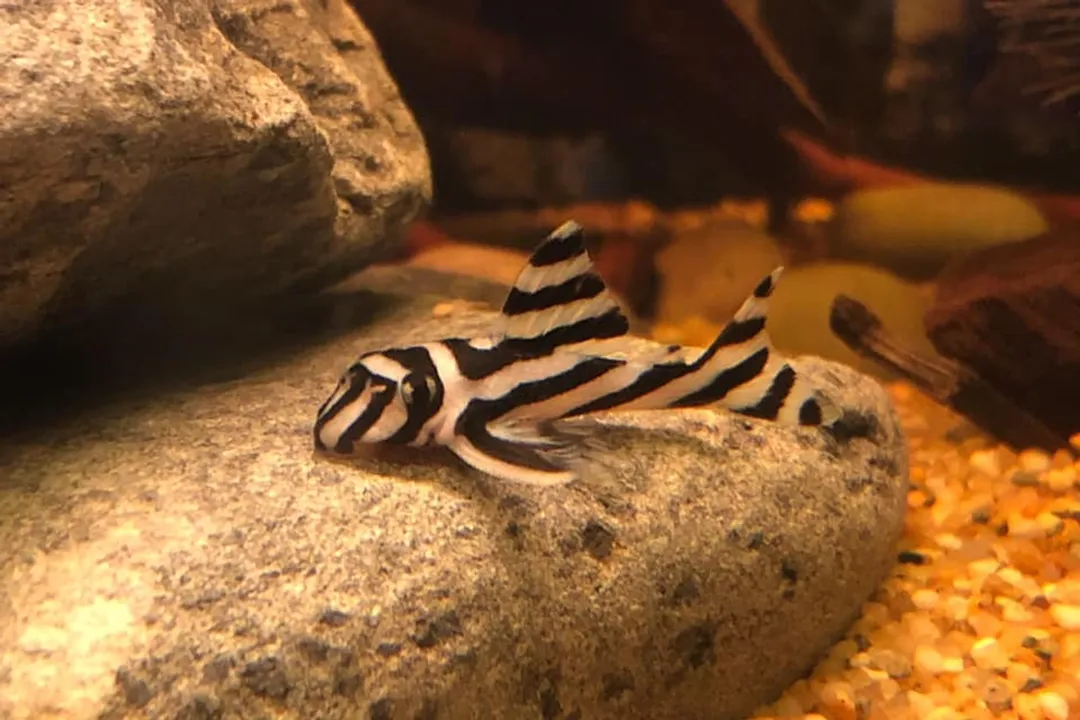
Evolutionary placement within the genus *Hypancistrus* indicates a distinct dietary shift away from the stereotypical algae-scraping habits often associated with many Loricariids. Species in this genus are known to lean toward a carnivorous or omnivorous diet, meaning they require high-quality protein sources, such as insect larvae and small invertebrates, to meet their nutritional needs and thrive in an aquarium setting. This contrasts sharply with the morphology of other plecos evolved for specialized grinding plates suited for biofilm consumption.
Related Questions
What family groups *Hypancistrus zebra* with other armored suckermouth catfish species?What does the genus name *Hypancistrus* roughly translate to, referencing the fish's behavior?Who developed the L046 or L46 identification code system used for many Loricariids?What visual feature inspired the species epithet *zebra* in the scientific name *Hypancistrus zebra*?Which specific river system basin confines the entire known wild population of *Hypancistrus zebra*?Which Order places *H. zebra* within the larger group that includes all catfishes?What Class designation identifies *H. zebra* as belonging to the group dominated by ray-finned fishes?What dietary preference is suggested for *H. zebra* based on its placement in the *Hypancistrus* genus?In the informal designation L046, what biological group does the letter 'L' signify for this catfish?What key morphological feature defines members of the Loricariidae family, earning them their common designation?