What is the primary reason that the species classification of the Vermilion Flycatcher remains subject to review?
Answer
Its extremely broad geographic distribution
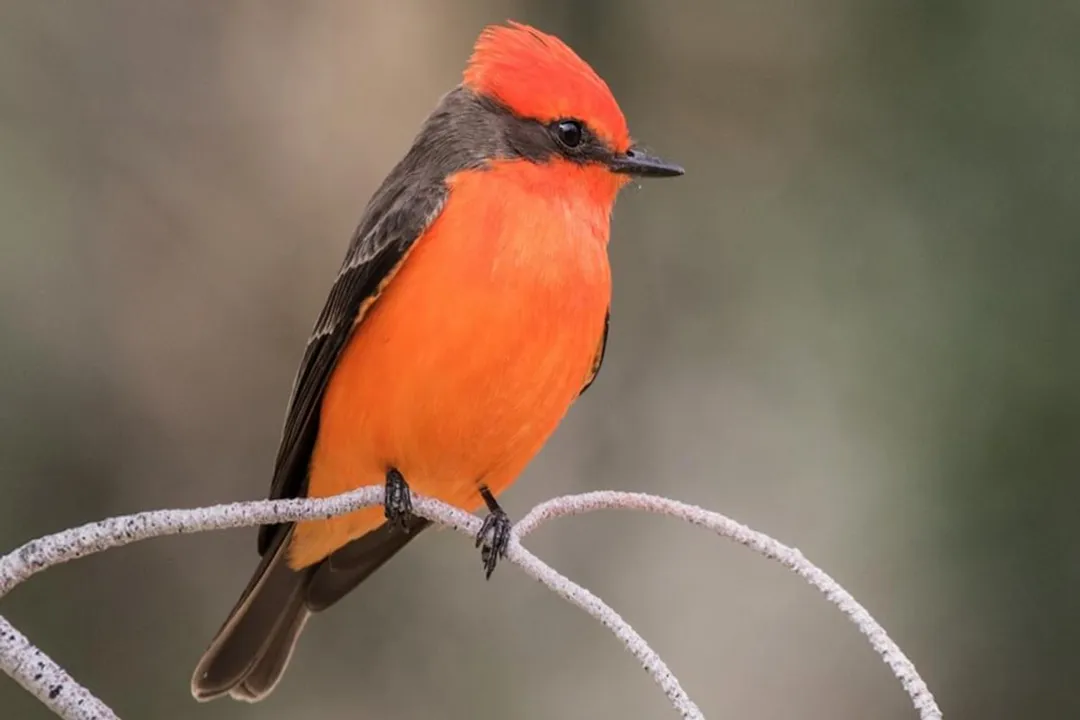
The Vermilion Flycatcher's massive range, which extends from the southwestern United States through Mexico and across South America, is the primary driver behind its taxonomic complexities. Because the species inhabits such a wide array of ecosystems—from arid deserts to tropical environments—different regional populations have developed morphological or genetic differences. Taxonomists analyze these differences to determine if specific populations warrant classification as separate species or subspecies, leading to ongoing debates about the most accurate binomial name.
Related Questions
To which taxonomic order does the Vermilion Flycatcher belong which classifies it as a perching bird?What is the meaning of the Greek roots from which the genus name Pyrocephalus is derived?What specific feeding behavior is characteristic of the family Tyrannidae to which the Vermilion Flycatcher belongs?Which two scientific species epithets are the subject of taxonomic debate concerning the Vermilion Flycatcher?The comparison between the family Tyrannidae and the family Monarchidae is an example of what evolutionary phenomenon?In which major geographic region is the family Tyrannidae overwhelmingly the most dominant group of birds?What visual trait of the male Vermilion Flycatcher makes it a notable exception within the Tyrannidae family?The Vermilion Flycatcher is classified in the phylum Chordata due to which specific developmental characteristic?Which genus contains the Vermilion Flycatcher and helps distinguish it from other groups like Myiarchus?What is the primary reason that the species classification of the Vermilion Flycatcher remains subject to review?