What is the primary chemical defense mechanism flicked by the *A. seemanni* when threatened by a non-venomous attacker?
Answer
Barbed urticating hairs flicked from the abdomen
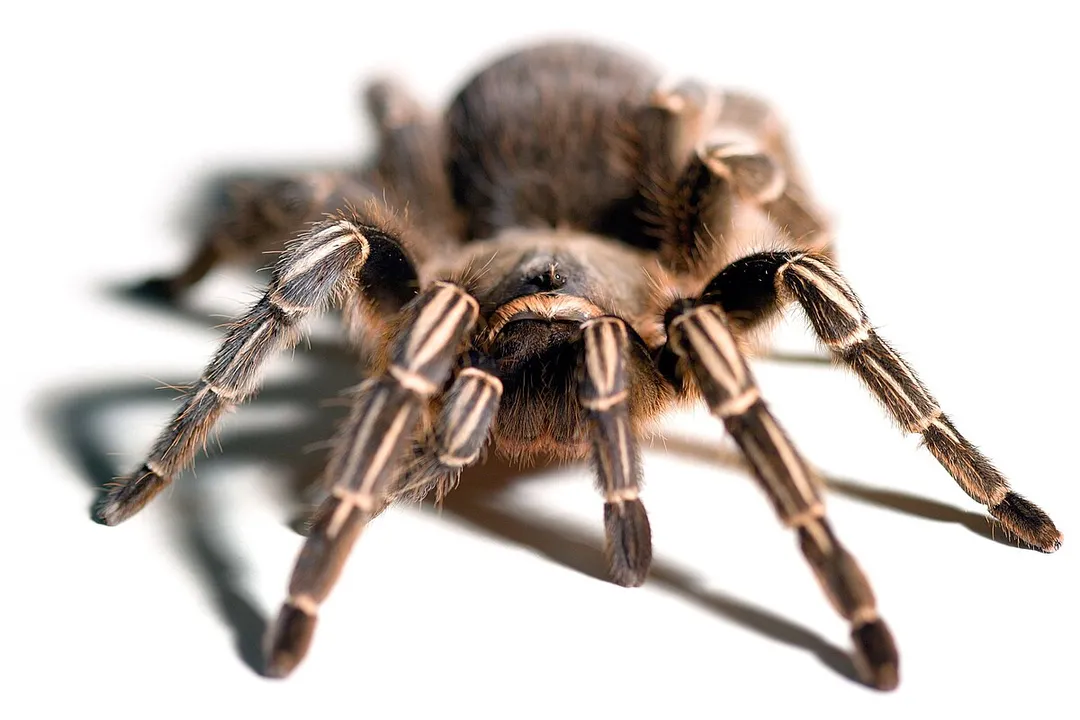
The most crucial chemical defense utilized by the *Aphonopelma seemanni* involves its abdominal covering. The abdomen is densely covered in short hairs that are barbed, known as urticating hairs. When the spider perceives a threat, particularly from non-venomous predators, it uses its hind legs to rapidly brush or flick these irritating hairs off its body toward the aggressor. These barbed hairs can cause significant discomfort and irritation upon contact with skin, and are particularly dangerous if they enter the eyes or mucous membranes, serving as a highly effective deterrent.
Related Questions
What common names does the *Aphonopelma seemanni* commonly receive in the enthusiast community?What is the typical maximum leg span achieved by a mature female *Aphonopelma seemanni*?Where are the prominent white or cream-colored markings primarily situated on the legs of the *A. seemanni*?What is the primary chemical defense mechanism flicked by the *A. seemanni* when threatened by a non-venomous attacker?What specialized structure do mature male *A. seemanni* possess on their first pair of legs utilized during copulation?How does the typical lifespan of a mature male *A. seemanni* compare to that of a female?How are the pedipalps of mature male *A. seemanni* often visually distinguishable from those of females?What specific color variation, noted in certain captive lines, introduces a blue or purplish tint to the *A. seemanni*?What ecological characteristic is emphasized by the *A. seemanni*'s stocky legs and broad body structure?What term describes the dense, short hairs covering the dark abdomen of the *Aphonopelma seemanni*?