What ecological characteristic is emphasized by the *A. seemanni*'s stocky legs and broad body structure?
Answer
It is generally characterized as terrestrial, built for stability and burrowing
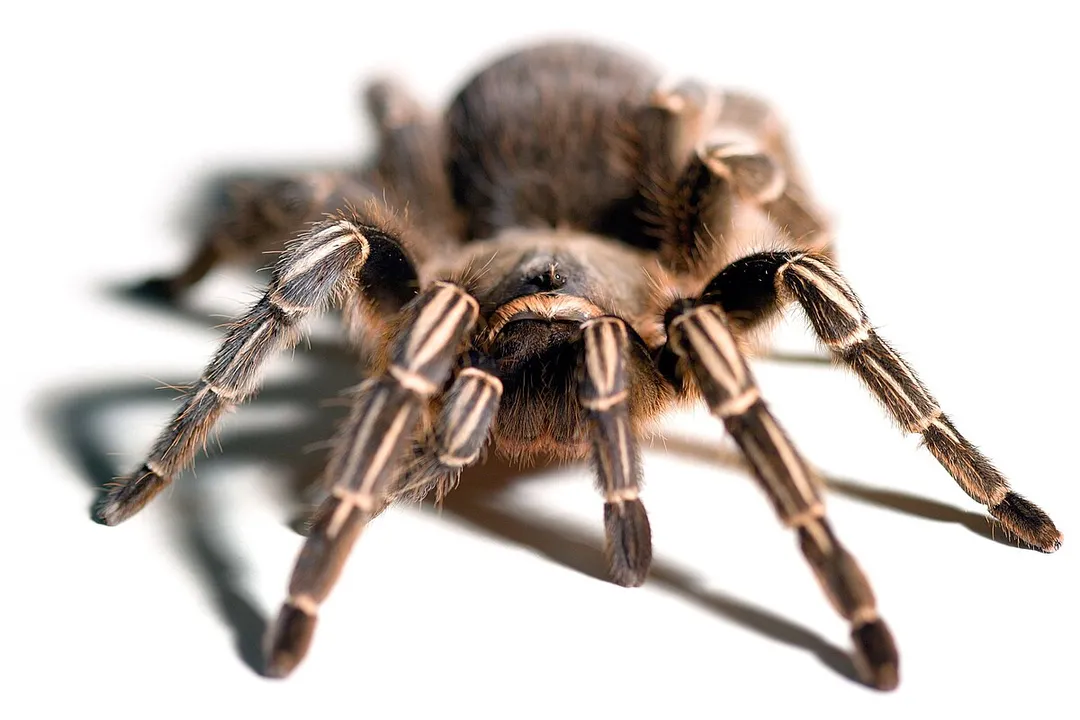
The physical morphology of the Zebra Tarantula directly reflects its lifestyle in its native environment. The species is classified as terrestrial, meaning it spends the majority of its time navigating the ground rather than climbing. This is evident in its physical structure: stocky legs and a broad body optimized for stability. This build allows it to effectively move across the scrubby terrain and, crucially, supports its natural behavior of digging and maintaining burrows for shelter and ambush hunting.
Related Questions
What common names does the *Aphonopelma seemanni* commonly receive in the enthusiast community?What is the typical maximum leg span achieved by a mature female *Aphonopelma seemanni*?Where are the prominent white or cream-colored markings primarily situated on the legs of the *A. seemanni*?What is the primary chemical defense mechanism flicked by the *A. seemanni* when threatened by a non-venomous attacker?What specialized structure do mature male *A. seemanni* possess on their first pair of legs utilized during copulation?How does the typical lifespan of a mature male *A. seemanni* compare to that of a female?How are the pedipalps of mature male *A. seemanni* often visually distinguishable from those of females?What specific color variation, noted in certain captive lines, introduces a blue or purplish tint to the *A. seemanni*?What ecological characteristic is emphasized by the *A. seemanni*'s stocky legs and broad body structure?What term describes the dense, short hairs covering the dark abdomen of the *Aphonopelma seemanni*?