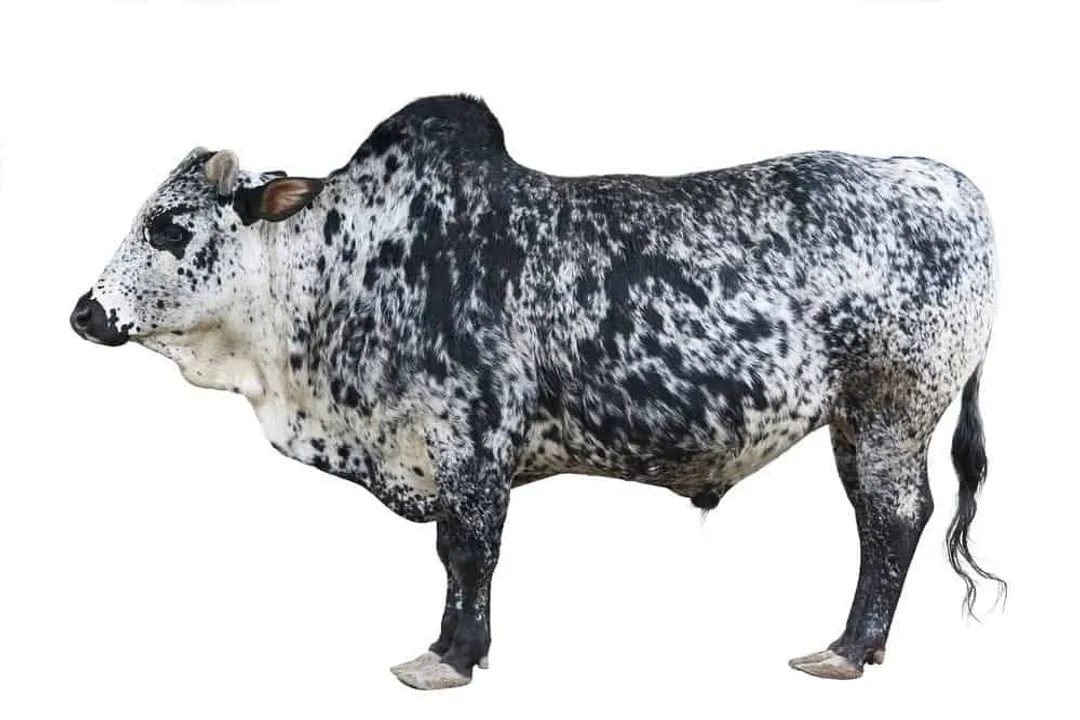
What is the main survival function of the Zebu's large, pendulous dewlap?
Facilitates greater heat exchange with the air
The dewlap, which is the substantial, loose fold of skin extending from the Zebu's lower jaw down towards the brisket, plays a critical role in thermoregulation in hot climates. Its large size and the general looseness of the skin across the Zebu's body work synergistically to maximize the surface area exposed to the surrounding air. This increased surface area is essential because it significantly facilitates greater heat exchange. By maximizing this exchange, the dewlap acts as a highly effective, natural cooling mechanism, allowing the animal to shed excess metabolic heat acquired through constant exposure to high ambient temperatures, which is vital for survival where high temperatures are a persistent condition.