What is the biological term for the size disparity observed between male and female *Dysdera crocata*?
Answer
Sexual dimorphism
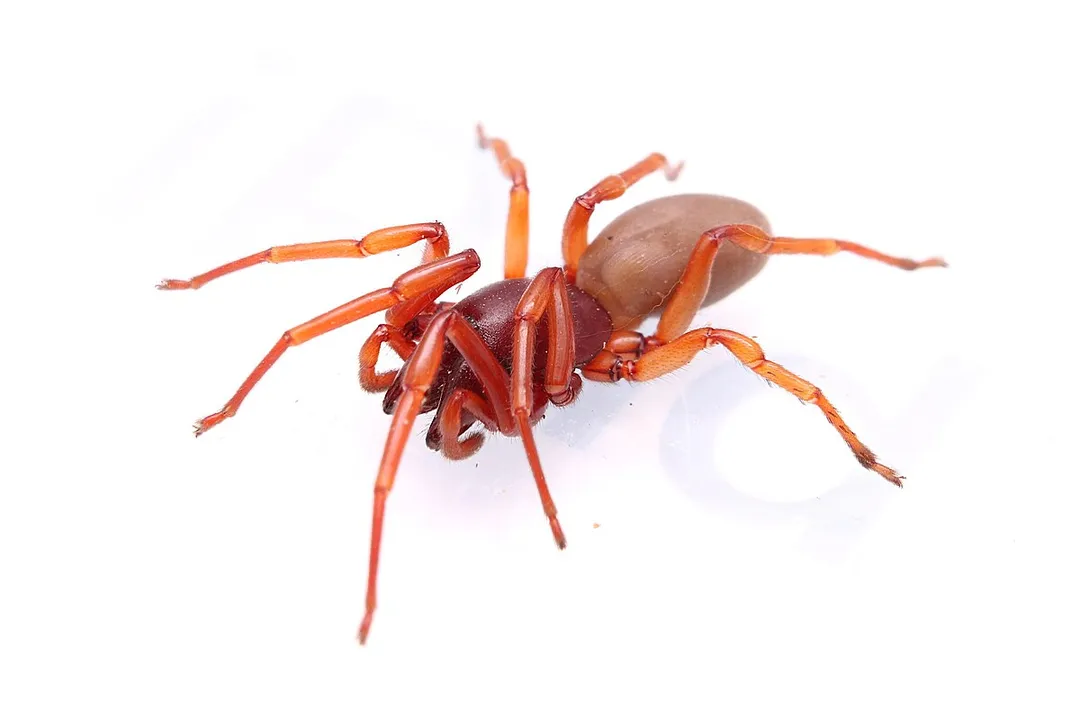
The marked difference in size between adult males (around 5–6 mm body length) and adult females (8–10 mm body length) in the woodlouse spider is an example of a common biological phenomenon in arachnids. This difference, where one sex is visibly larger or distinct from the other, is formally termed sexual dimorphism. In the case of *Dysdera crocata*, the female is notably larger and often bulkier than the male, a trait related to reproductive roles and potentially the energy required to carry eggs.
Related Questions
What is the characteristic finish and color of the *Dysdera crocata* cephalothorax?How does the abdominal color of the woodlouse spider contrast with its front section?What is the typical body length range cited for mature female woodlouse spiders?What is the usual body measurement range for male *Dysdera crocata* individuals?How are the eight eyes of the woodlouse spider specifically arranged?Which particular pair of eyes is noted for being widely spaced apart in *Dysdera crocata*?What type of web structure do woodlouse spiders utilize, as opposed to elaborate capture mechanisms?What is the characteristic color of the woodlouse spider's prominent chelicerae (jaws) against its dark carapace?What is the biological term for the size disparity observed between male and female *Dysdera crocata*?The robust chelicerae of *Dysdera crocata* are an evolutionary adaptation primarily for subduing what sturdy prey?