The robust chelicerae of *Dysdera crocata* are an evolutionary adaptation primarily for subduing what sturdy prey?
Answer
Woodlice
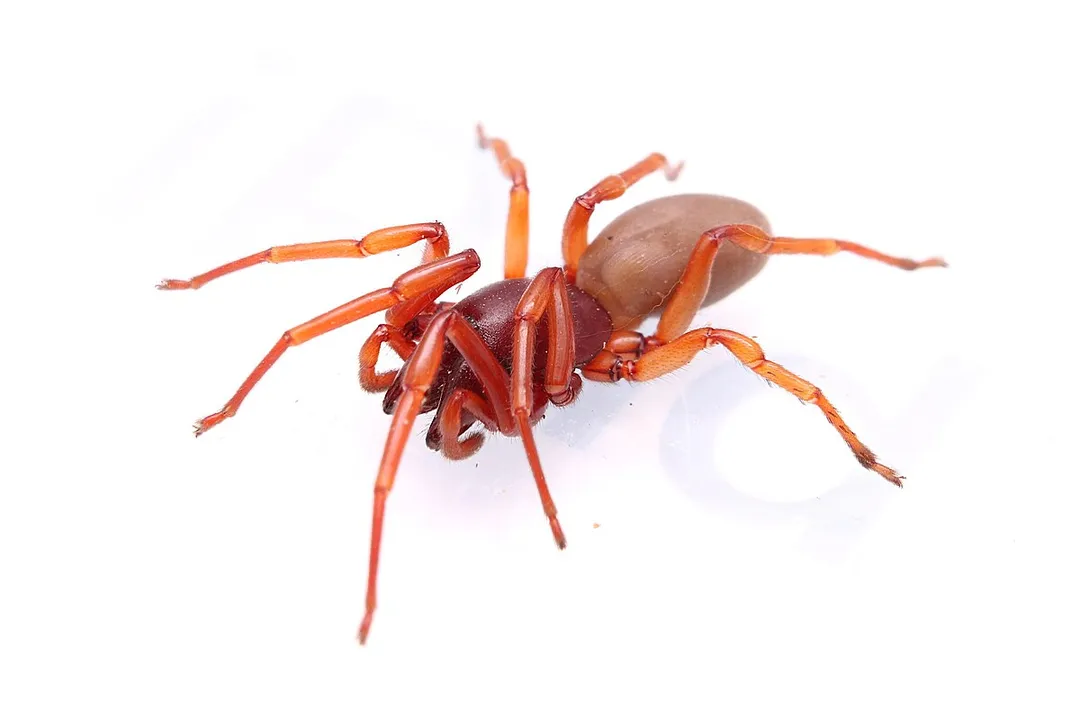
The physical structure of the woodlouse spider, particularly its powerful jaws (chelicerae), is highly specialized to match its preferred diet. Woodlice are known for being relatively sturdy prey items protected by a hard, low-profile exoskeleton. To successfully grapple with and subdue this particular prey, *Dysdera crocata* evolved substantial chelicerae capable of piercing this tough outer casing. This specialization showcases a clear evolutionary adaptation toward securing a reliable food source found in the damp habitats favored by both the spider and its prey.
Related Questions
What is the characteristic finish and color of the *Dysdera crocata* cephalothorax?How does the abdominal color of the woodlouse spider contrast with its front section?What is the typical body length range cited for mature female woodlouse spiders?What is the usual body measurement range for male *Dysdera crocata* individuals?How are the eight eyes of the woodlouse spider specifically arranged?Which particular pair of eyes is noted for being widely spaced apart in *Dysdera crocata*?What type of web structure do woodlouse spiders utilize, as opposed to elaborate capture mechanisms?What is the characteristic color of the woodlouse spider's prominent chelicerae (jaws) against its dark carapace?What is the biological term for the size disparity observed between male and female *Dysdera crocata*?The robust chelicerae of *Dysdera crocata* are an evolutionary adaptation primarily for subduing what sturdy prey?