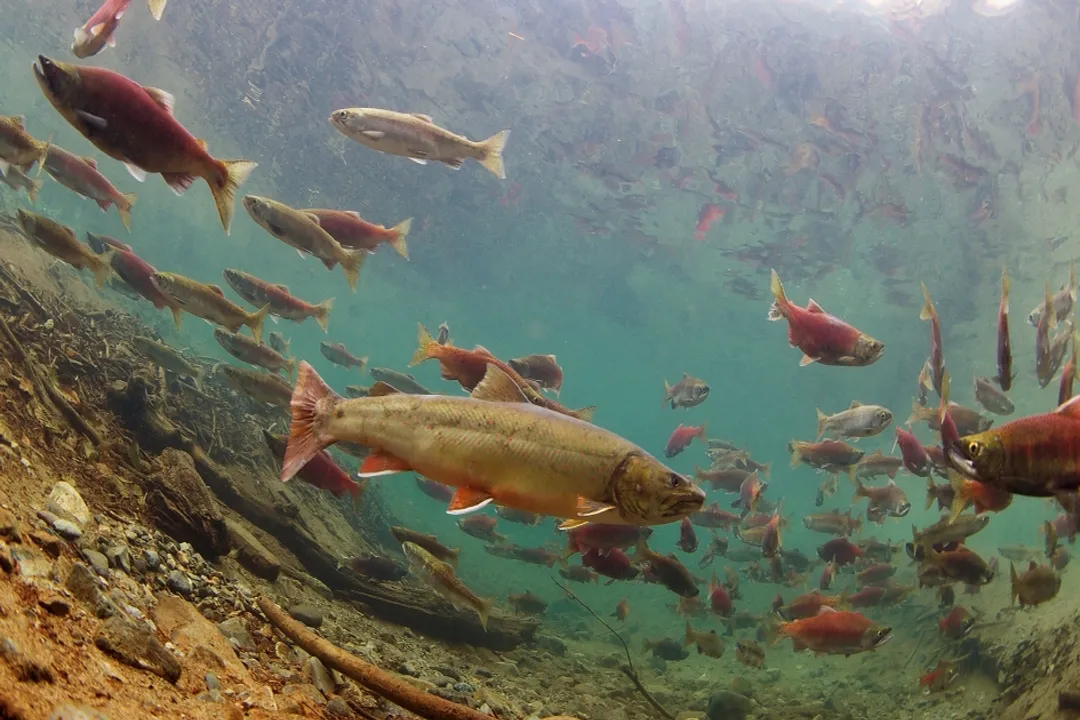
What is a primary negative consequence when dams interrupt the complex migratory routes of bull trout?
Non-spawning adults can starve or spawning groups may fail to reach natal streams
The life cycle of the bull trout involves complex migrations, often traversing long distances between main river channels or large valley lakes used for feeding, and specific high-elevation, cold tributaries designated for spawning. These extensive journeys necessitate the availability of continuous, high-quality migratory corridors. When significant physical structures like dams or major road crossings block these established routes, the migrating fish can become trapped. This trapping can lead to the starvation of adults that were en route to feed or, crucially, the complete failure of an entire spawning group unable to reach the necessary natal streams to reproduce. Given that maturity takes several years, losing just one or two spawning runs due to an impassable barrier constitutes a significant, multi-year setback for overall recovery programs.