What function do the large, backward-curved teeth in Lycodon capucinus primarily serve?
Answer
Grasping and retaining slippery prey like geckos
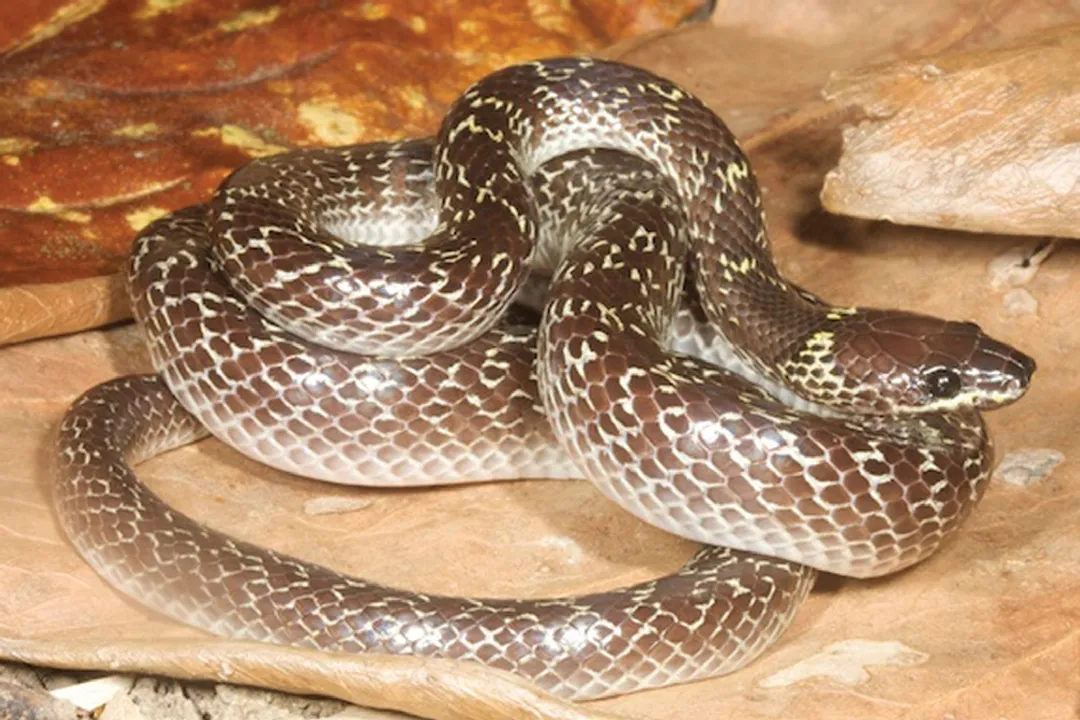
The dentition of the Common Wolf Snake is specialized for mechanical capture rather than venom injection, despite their intimidating appearance. They possess large teeth that are specifically backward-curved. This curvature provides an essential advantage in securing prey that might otherwise be difficult to hold onto. The design of these teeth allows the snake to effectively grasp and maintain retention of slippery food items, such as small lizards or geckos, thus preventing escape once the initial strike and capture have occurred.
Related Questions
What is the exact dorsal scale row count for Lycodon capucinus at midbody?How are the dorsal scales of the Common Wolf Snake described regarding texture?What shape are the pupils of the Lycodon capucinus?Is the Common Wolf Snake, Lycodon capucinus, venomous?What pattern is frequently exhibited by Juvenile Wolf Snakes?How is the head structure of Lycodon capucinus described in relation to the neck?What characterizes the adult pattern of Lycodon capucinus overlaid on its dark base color?What is the typical upper limit length for most encountered Common Wolf Snakes?What function do the large, backward-curved teeth in Lycodon capucinus primarily serve?When viewed from the side, how is the head profile of the Lycodon capucinus often described?