Wolf Snake Physical Characteristics
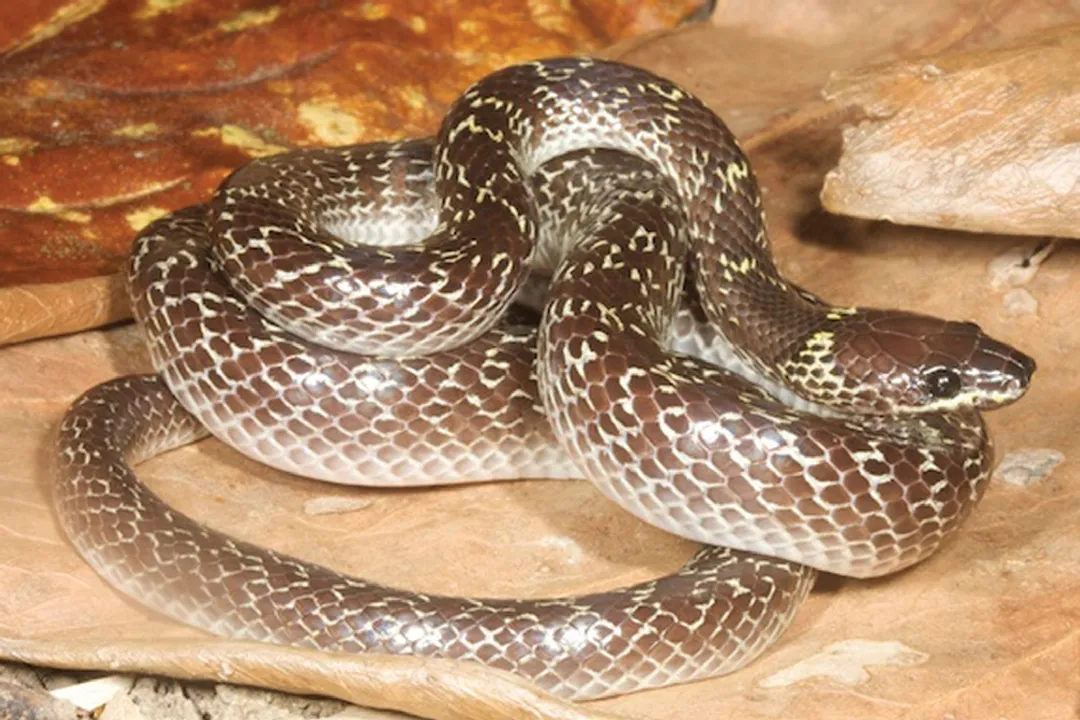
The physical architecture of the Common Wolf Snake, Lycodon capucinus, presents a collection of consistent traits that help distinguish it from many other small nocturnal snakes found across its extensive range. While its common name might evoke images of danger, its physical characteristics reveal a specialized, non-venomous predator of the Asian night. One of the most immediate identifiers is its relatively modest stature. Most individuals encountered will fall into a length range between approximately 50 centimeters and 70 centimeters, though the upper limit can sometimes extend toward 100 centimeters in exceptional cases. [2][3][6] This places it firmly in the category of a small to medium-sized snake, not one that causes alarm due to sheer size. [3]
# Scale Details
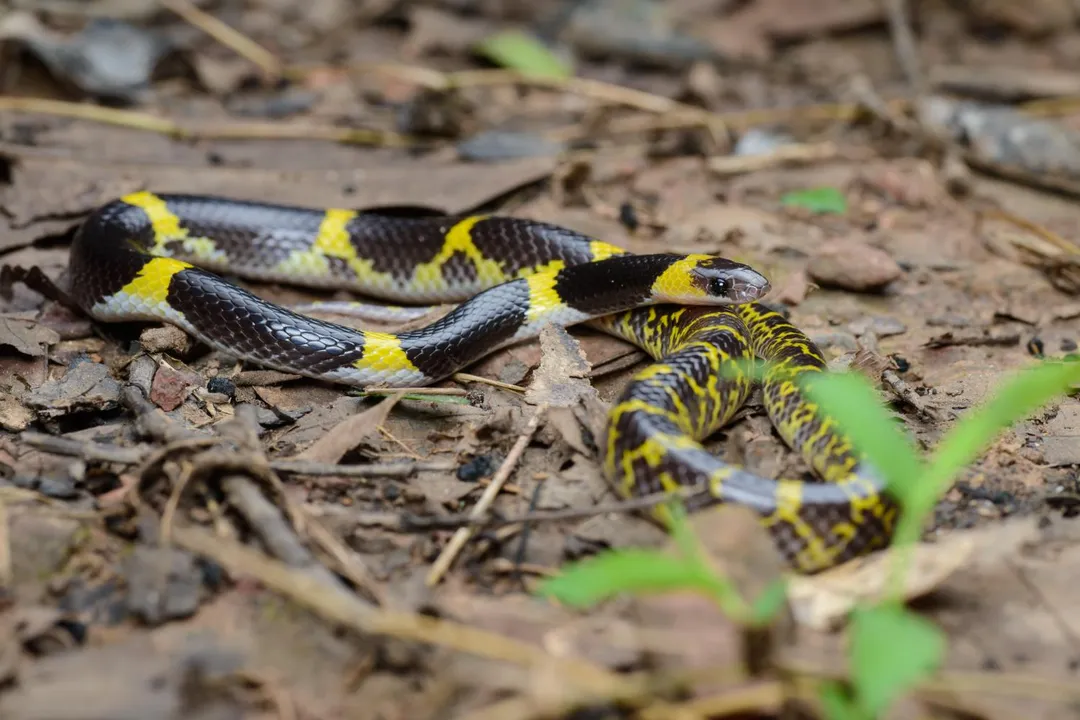
A crucial aspect of snake identification lies in the scales, and the Wolf Snake offers remarkable consistency here, which is highly valuable for those attempting species verification in the field. Across all documented observations, the dorsal scales—those running along the back—are described as being distinctly smooth. [1][2][5][6][7][8] This smooth texture contrasts with the keeled scales found on many other snake families. Even more definitive is the dorsal scale count; virtually all reliable descriptions confirm that the scales are arranged in exactly 19 rows at midbody. [1][2][5][6][7][8] This unwavering count of 19 smooth rows serves as an excellent baseline characteristic, offering a reliable measure that remains stable regardless of the snake's specific color phase or geographic location, a helpful consistency when pattern colors are highly variable. [1][5]
# Head Structure
The head of the Common Wolf Snake is shaped in a manner that immediately sets it apart from many common vipers or cobras. It is clearly distinct from the neck, appearing somewhat set apart rather than smoothly blending into the body. [1][2][5][6][7] Furthermore, the head profile is often described as slightly flattened or depressed when viewed from the side. [1][2][5][6][7] This morphology is characteristic of many nocturnal hunters that may utilize the flattened space for better sensory input or while moving through tight spaces.
Perhaps the most telling feature visible when the snake allows a close look is its eyes. The pupils are vertically elliptical. [1][2][5][6][7] This vertical slit is typical of many nocturnal predators, allowing the pupil to open extremely wide in low light for maximum light capture while contracting to a very thin line in bright conditions, offering superior light control compared to round pupils.
Although the snake possesses teeth, they are not associated with venom delivery. Its dental structure includes large, backward-curved teeth, which aid in grasping and retaining slippery prey like geckos or small lizards, preventing escape once captured. [1] It is important to remember that despite this intimidating dentition, the snake is entirely non-venomous. [1]
# Pattern Variation
The visual presentation of Lycodon capucinus is perhaps its most adaptable physical characteristic, leading to confusion if one relies solely on color for identification. The base color typically ranges from a dark brown to black. [1][2][5][6][7] Overlaying this dark background are light markings that take the form of crossbands or longitudinal stripes. [1][2][5][6][7] The exact width and spacing of these bands, or whether they merge into stripes, can vary significantly between individuals and populations. [7]
# Juvenile Markings
A significant physical divergence occurs between the young and the adults, a phenomenon worth noting for accurate field identification. Juvenile Wolf Snakes frequently exhibit distinct white spots rather than the pronounced banding or striping seen in mature individuals. [1][2][3][5][6] As the snake grows and ages, these spots often become incorporated into the more defined light bands or stripes characteristic of adults. [6] This transformation from a spotted juvenile appearance to a banded adult appearance suggests a potential adaptive advantage linked to different life stages—perhaps the juvenile spotting pattern offers better camouflage against dappled moonlight on leaf litter, whereas the adult banding might suit movements through denser, structured environments like walls or tree bark where distinct lines appear more natural against shadows.
# Comparative Morphology
While the primary focus here is on the Common Wolf Snake (L. capucinus), understanding its physical characteristics is sometimes best achieved by glancing at closely related species, such as the Lao Wolf Snake (Lycodon laoensis), which shares a similar genus. [9] Though not always found in the exact same locales, the physical traits shared across the Lycodon genus—such as the smooth dorsal scales and nocturnal adaptations like vertical pupils—show a general evolutionary trend for this group. However, minor differences in pattern, distribution, and perhaps the extent of head flattening would ultimately separate the species. For instance, while L. capucinus is often cited as having 19 dorsal scale rows, confirmation of scale counts in related species helps confirm L. capucinus's place within the group's general morphology.
For ease of reference, especially when confirming findings against field guides or photographic evidence, a summary of the key, consistent physical markers for the Lycodon capucinus is beneficial:
| Feature | Description | Consistency Level |
|---|---|---|
| Maximum Length | Typically cm, up to $100$ cm max [2][6] | Moderate (Size varies) |
| Dorsal Scales | Smooth texture [1][2][5][6][7][8] | High |
| Scale Count | Exactly 19 rows at midbody [1][2][5][6][7][8] | Very High |
| Pupils | Vertically elliptical [1][2][5][6][7] | High |
| Head Shape | Distinct from neck, slightly flattened [1][2][5][6][7] | High |
| Adult Pattern | Dark base with light crossbands or stripes [1][2][5][6][7] | Moderate (Pattern is variable) |
| Juvenile Pattern | Prominent white spots [1][2][3][5][6] | High (Stage-specific) |
The combination of these physical traits paints a picture of an agile, non-aggressive snake perfectly adapted for its ecological niche. The consistent count of 19 smooth dorsal scales is a hallmark of expertise for identification, proving more reliable than relying on the ever-changing coloration which might, in some isolated instances, reduce to mere scattered spots even in subadults, not just juveniles. [7] Anyone observing a small, non-venomous snake with this specific scale formula and vertically slit pupils in Asia has likely encountered the Common Wolf Snake, regardless of whether it appears striped or speckled at that moment.
Related Questions
#Citations
Lycodon capucinus - Wikipedia
Common Wolf Snake - Lycodon capucinus - Ecology Asia
Common Wolf Snake - African Snakebite Institute
Wolf snake | venomous, nocturnal, colubrid - Britannica
Common Wolf Snake - Lycodon capucinus — HongKongSnakeID.com
common wolf snake ( Lycodon aulicus)
Common Wolf Snake - Reptiles and Amphibians of Thailand
Common Wolf Snake (Lycodon capucinus) - iNaturalist
Laotian wolf snake (Lycodon laoensis) - Thai National Parks