How does the landlocked Kootenai River White Sturgeon population compare in size to others?
Answer
Notably smaller than their anadromous counterparts
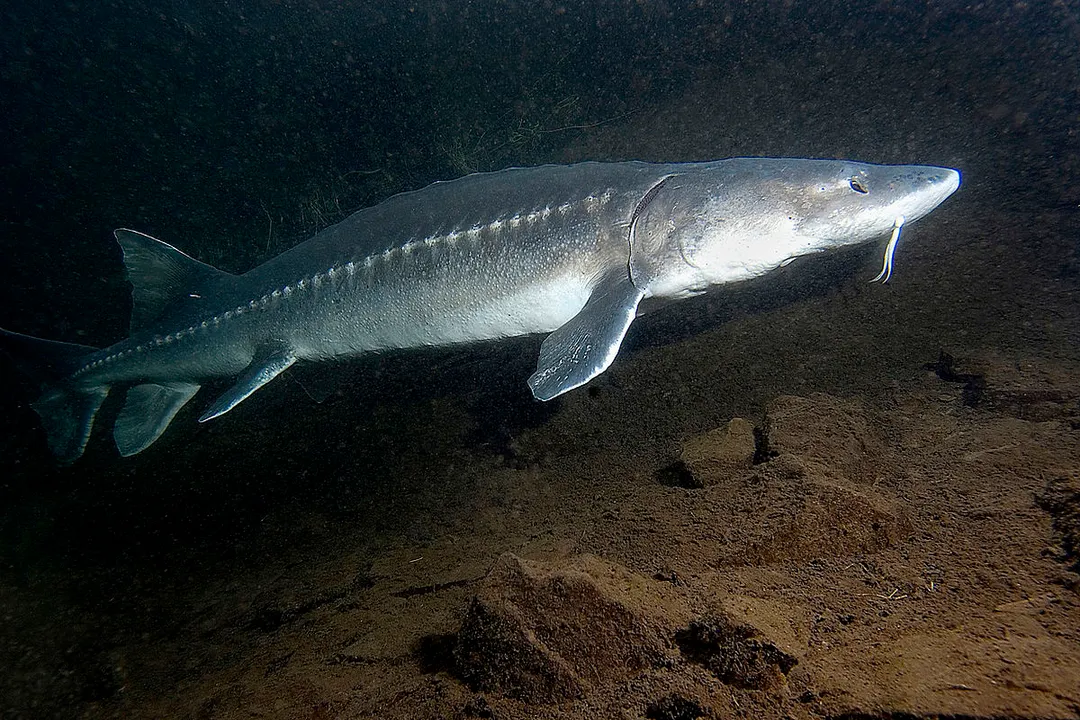
Size potential for the White Sturgeon is dependent on geography and life history. The landlocked population that resides in Montana’s Kootenai River, specifically downstream of Kootenai Falls, is recognized as being notably smaller than the anadromous populations found in other parts of their range. While the species generally has massive potential, adults in this restricted Kootenai system typically do not exceed 200 pounds, although documented fish there have reached lengths of 6 feet. This size difference highlights how environmental constraints within isolated river systems can influence the growth and maximum dimensions achieved by a species.
Related Questions
How is the White Sturgeon's body armored instead of using typical overlapping scales?What were the maximum historical measurements recorded for the White Sturgeon?What feature is absent from the White Sturgeon's specialized ventral mouth structure?Where are the highly sensitive taste buds located on the White Sturgeon?What type of caudal fin structure links the White Sturgeon to very early fish forms?How does the landlocked Kootenai River White Sturgeon population compare in size to others?Which specific food item do Young-of-the-Year White Sturgeon consume after relying on the yolk sac?According to the California Department of Fish and Wildlife, how many mid-lateral plates do adult White Sturgeon possess?Where are the four barbels on the White Sturgeon's blunt snout positioned relative to the mouth?Why is the White Sturgeon often referred to as a 'living fossil'?