What factor contributes to the fixation of different color characteristics in isolated demes of Sphaerodactylus species?
Answer
Localized environmental differences and camouflage needs
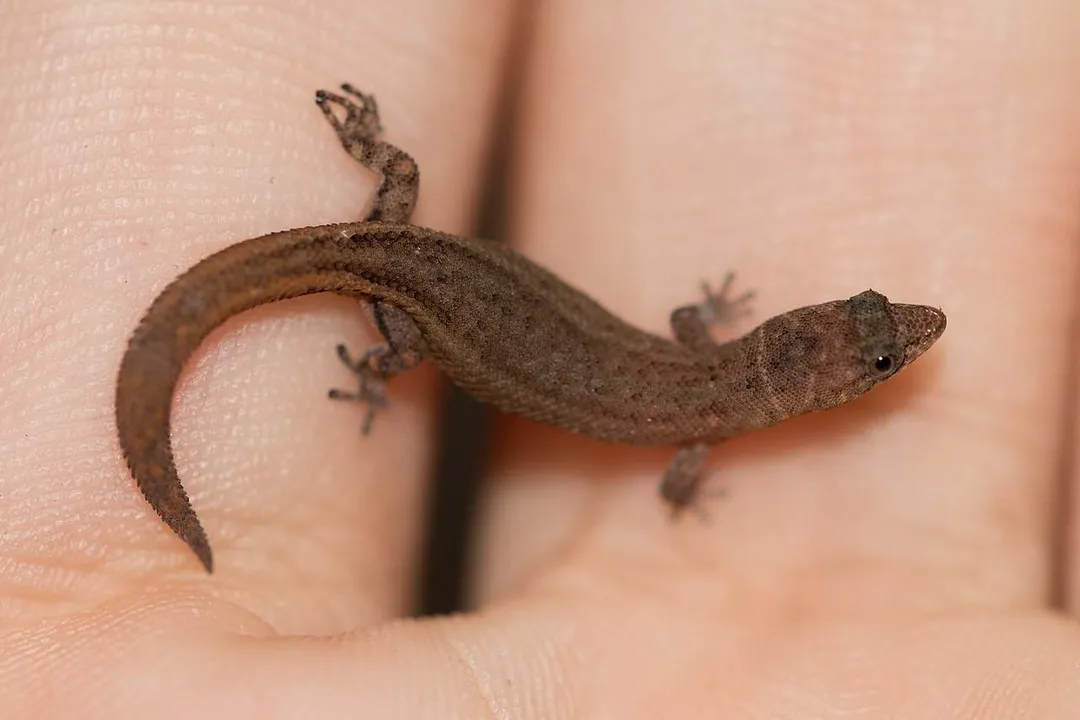
Coloration in these geckos is often subject to strong selection pressures, particularly for camouflage against specific substrates. Isolated populations often experience unique environmental conditions, such as different soil colors, variations in lichen growth on rocks, or changes in the light penetration of the understory vegetation. Over time, these localized factors drive the fixation of color morphs that best hide the geckos from predators, leading to slight variations in appearance between populations separated by geographic barriers.
Related Questions
What are the typical snout-vent lengths for male and female Sphaerodactylus parthenopion?In which specific island chain is the Sphaerodactylus parthenopion primarily found?Which evolutionary phenomenon describes the adaptation of the Virgin Islands Dwarf Gecko to its small island habitats?Where does the Sphaerodactylus parthenopion typically seek cover and moisture within its environment?To which family does the genus Sphaerodactylus belong?Why does the limited range of the Sphaerodactylus parthenopion place it at high endemism risk?Which group of researchers often studies the Sphaerodactylus genus as a natural laboratory for island evolution?What historical process, distinct from dispersal, has likely played a major role in establishing the major clades of the Sphaerodactylus genus?What is the known reproductive strategy of Sphaerodactylus parthenopion?What factor contributes to the fixation of different color characteristics in isolated demes of Sphaerodactylus species?