What is the Oriental Dwarf Kingfisher habitat?
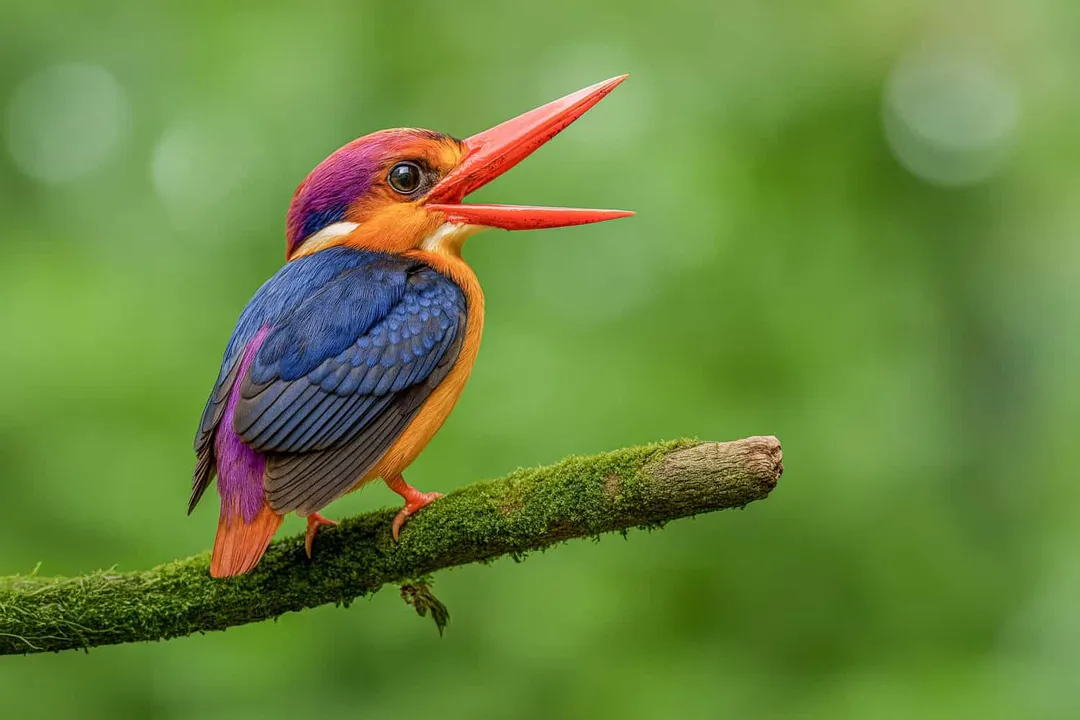
The Oriental Dwarf Kingfisher, a tiny jewel of the avian world, captivates birdwatchers with its vibrant plumage and elusive nature, making the question of where to find it a central pursuit for many enthusiasts. This small bird, scientifically known as Ceyx erithaca, is distributed across a broad swathe of South and Southeast Asia. Understanding its preferred environment is key to glimpsing this shy species.
# Range Spread
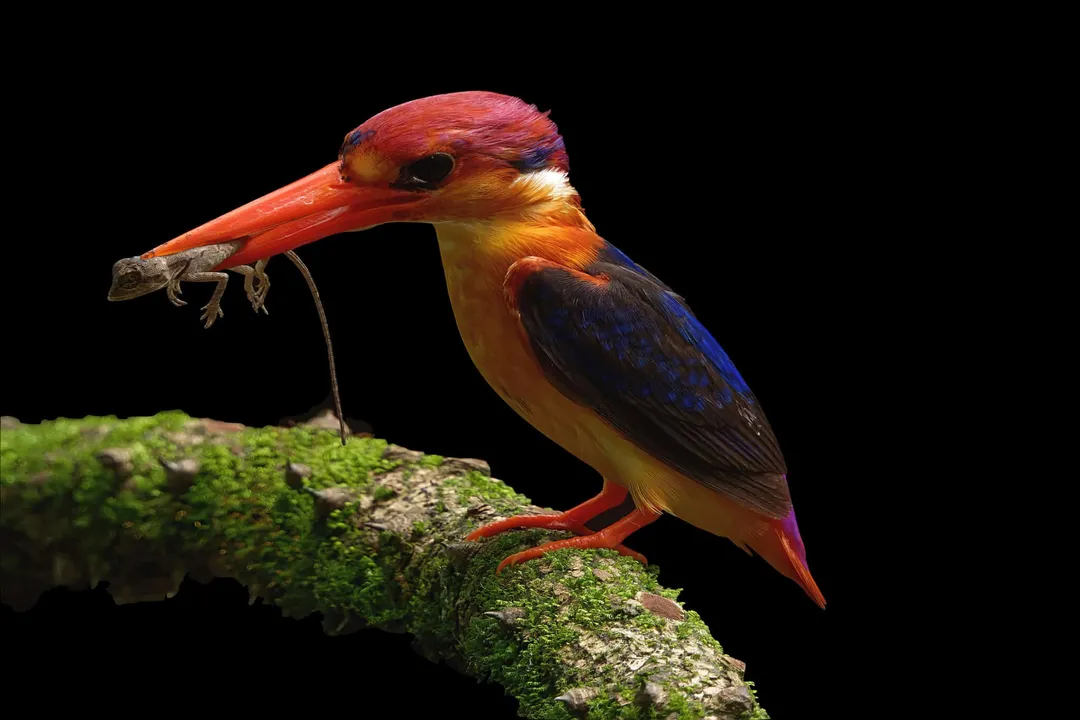
The bird’s distribution stretches across a significant portion of the Asian continent, starting in the Indian subcontinent and moving eastward. Specifically, its range encompasses India and Sri Lanka. From there, its territory extends into much of Southeast Asia, covering countries like Thailand, Malaysia, Indonesia, and the Philippines. While its presence is generally confirmed across this vast region, local abundance varies significantly, sometimes leading to it being considered rare or locally extirpated in specific urbanized zones.
Some sources classify the Oriental Dwarf Kingfisher as conspecific with the Black-backed Dwarf Kingfisher (Ceyx melanurus), which suggests an even wider potential distribution or close taxonomic relationship across the insular Southeast Asian islands. However, for practical identification in the field across the mainland and Sundaic regions, the name Oriental Dwarf Kingfisher is commonly used.
# Water Proximity
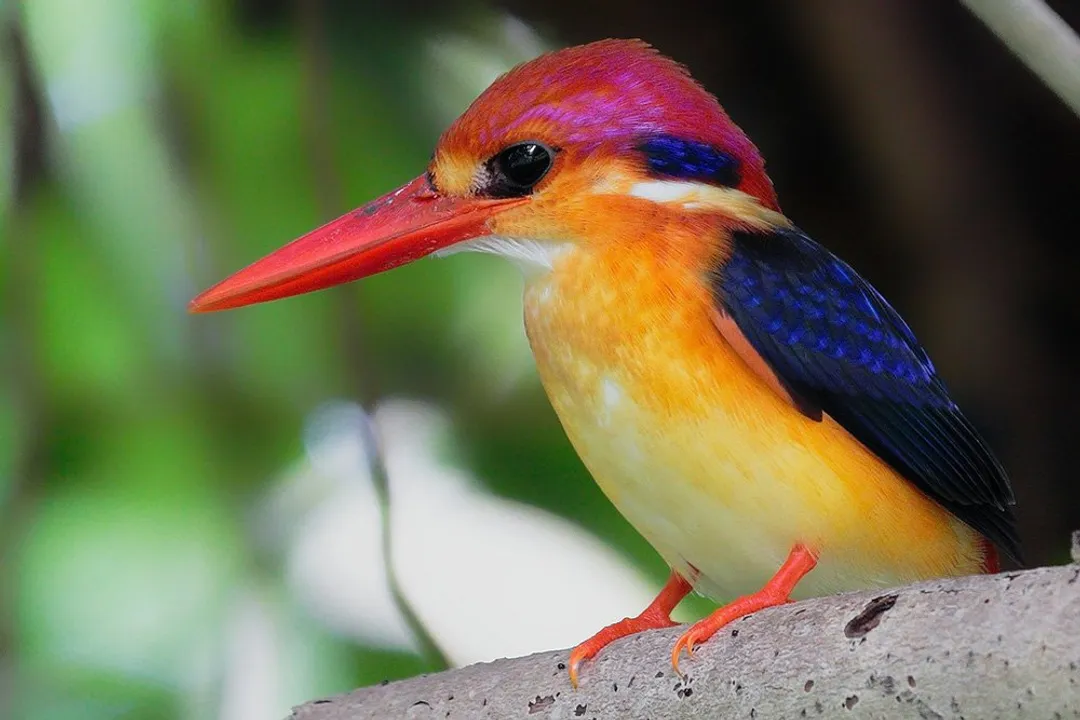
The defining feature of the Oriental Dwarf Kingfisher's habitat is almost always the presence of water, although it is not always found directly beside large, fast-flowing rivers like some of its larger kingfisher relatives. Instead, this species shows a strong preference for smaller, quieter aquatic features.
Look for them near:
- Slow-moving streams and forest rivulets.
- Marshes and swampy ground.
- Ditches and small, sheltered ponds.
- Cultivated areas like rice paddies, especially those with adequate surrounding cover.
The bird is generally found in lowlands. While it can inhabit areas up to about 1,000 meters (3,300 feet) above sea level, the majority of sightings and preferred breeding grounds occur in the lower elevations where these gentle water bodies persist. This preference for slow, shaded water sources suggests a feeding strategy centered on smaller prey items that might inhabit these calmer environments, perhaps insects, small fish, or amphibians, rather than the more robust prey found in rapidly flowing rivers.

# Vegetation Cover

Beyond the water itself, the structure of the surrounding vegetation is critical for the Oriental Dwarf Kingfisher's survival and camouflage. Unlike species that require open perches overlooking wide expanses of water, the Dwarf Kingfisher relies heavily on dense, low cover.
A perfect habitat mosaic often includes:
- Dense Undergrowth: Thickets, low bushes, and tangled vegetation right at the water's edge provide vital concealment from predators and opportunities to ambush unsuspecting prey.
- Forest Edges: They often favor the borders of primary or secondary forests, particularly where the forest floor meets a swamp or stream.
- Shade: The presence of shade appears to be important, suggesting they might avoid brightly sunlit, exposed areas.
For birders tracking this species, focusing observation efforts on the shaded margins of water bodies that are bordered by dense, low scrub or forest edge vegetation offers the highest probability of a sighting. It is not a bird that typically perches high on conspicuous branches to survey the area; rather, it stays low to the ground and close to cover.
# Habitat Variation Across Range
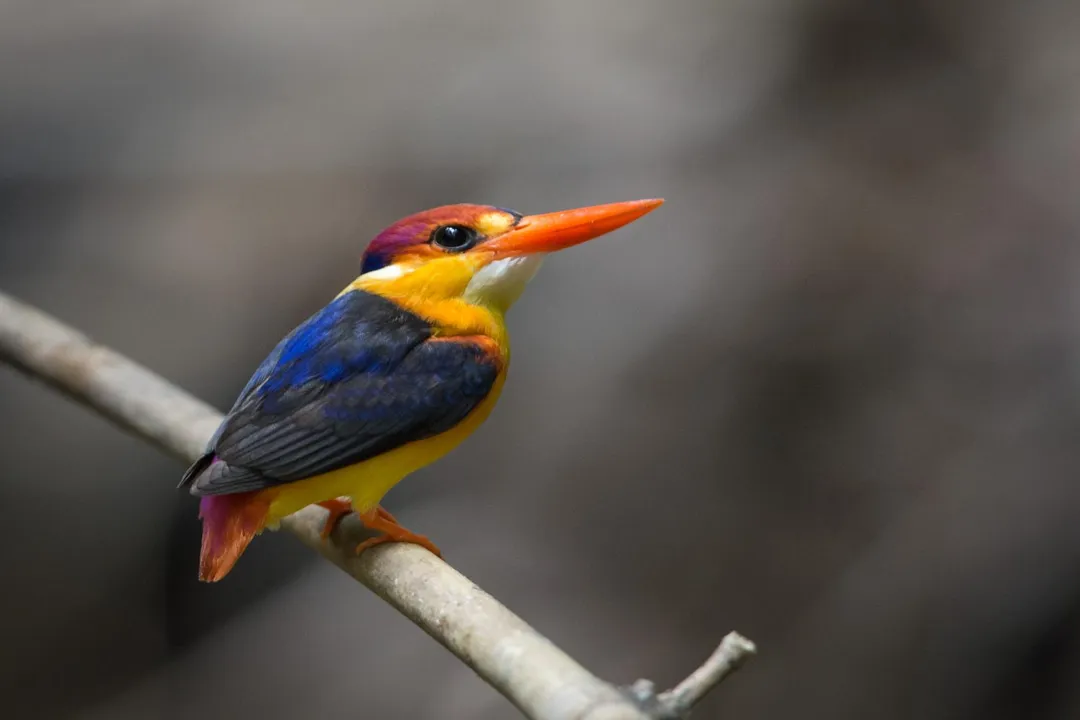
The specific local environment where the Oriental Dwarf Kingfisher is encountered can vary subtly depending on the geography of the region, although the core requirements of water and dense cover remain constant.
In the more open, cultivated landscapes common in parts of India, the bird might frequent small village ponds, irrigation channels, or the edges of agricultural fields, provided there is sufficient low vegetation immediately adjacent to the water. In contrast, in the wetter, more tropical environments of Borneo or peninsular Malaysia, the habitat leans more heavily towards primary or mature secondary lowland rainforest clearings where small forest streams run.
It is interesting to compare this species' habitat requirements with, say, the larger Ruddy Kingfisher (Halcyon coromanda) in the same regions. While the Ruddy Kingfisher might utilize coastal mangroves or larger water bodies, the Oriental Dwarf Kingfisher strongly favors the small, intimate water features associated with the understory. This specialization in microhabitat dictates the search strategy for observers. An ornithological note worth making is that in areas experiencing significant seasonal deforestation or drainage projects, the loss of these specific, narrow riparian zones can disproportionately affect the local population, even if large bodies of water remain nearby. The microclimate and cover provided by low, dense growth along a small stream cannot easily be replicated by a larger, more open wetland system.

# Status in Urbanizing Environments
The bird's dependence on specific, often fragile, low-lying aquatic habitats makes it sensitive to habitat loss, particularly in rapidly developing areas across Asia. For instance, in highly urbanized environments like Singapore, where natural streams and swamps are often converted to concrete channels or developed land, the species becomes increasingly scarce or absent. The NParks data for Singapore confirms this, noting its status as a rare, non-breeding visitor or vagrant in recent times, indicating that while the potential range covers the island, the actual sustainable habitat is diminished.
This sensitivity acts as a natural indicator of local ecological health. If an area still supports a healthy population of Oriental Dwarf Kingfishers, it suggests that the local network of small streams, ditches, or marshes remains relatively undisturbed and retains sufficient low, dense vegetation cover. This is a key takeaway for local conservation groups or even keen backyard birders: the presence of this tiny kingfisher is a positive sign for the area's wetland integrity. To encourage their presence in semi-natural gardens or parks, one might consider establishing small, shaded, slow-moving water features surrounded by dense, low native shrubs rather than manicured lawns or open ponds.
# Foraging Niche
The specific characteristics of the habitat directly influence the bird's diet, further cementing why these locations are essential. The Oriental Dwarf Kingfisher typically hunts by darting out from a low perch, catching prey in or very near the water surface, and immediately retreating back into cover. This behavior necessitates a habitat where the distance between a low perch and the water surface is minimal, and where the bird can quickly vanish post-capture.
The prey items are generally small. While some sources suggest they take small fish, their size suggests a significant reliance on aquatic insects, spiders, small frogs, and other terrestrial invertebrates found near the damp margins. If the stream bank is steep or heavily eroded, providing no low landing spots or cover, the bird will likely avoid that stretch of water, regardless of how many fish are present in the deeper channel.

# Breeding Habitat Context
While the primary focus is on feeding and general presence, the breeding habitat must also align with these requirements, often favoring slightly more secluded or heavily vegetated patches of the general range. Although detailed nesting habits are less commonly reported than general habitat preferences, the need for undisturbed, low cover near water would certainly extend to choosing nest sites, often involving holes in soft banks or dead wood near their favored feeding streams. The sheer density required for concealment when breeding and raising young further emphasizes why disturbed, open habitats are unsuitable for long-term establishment.
To summarize the ideal zone, the Oriental Dwarf Kingfisher seeks out the shaded, sheltered edges of slow-moving, small water sources across its range in South and Southeast Asia, avoiding both high altitudes and heavily developed, open landscapes. The presence of low, dense vegetation is not optional; it is a mandatory component of its specialized niche.
# Habitat Summary Table
To visualize the essential elements, one can break down the habitat into critical components.
| Habitat Element | Preferred Condition | Importance Level | Reference Points |
|---|---|---|---|
| Water Body Type | Slow-moving streams, marshes, ditches, paddies | High | |
| Elevation | Lowlands, typically under 1,000 meters | Medium/High | |
| Vegetation | Dense, low cover, thickets, forest edge | Critical | |
| Perching | Low, concealed vantage points | High |
Understanding this tight coupling between the bird’s minute size and its habitat preference explains why it can be so easily overlooked. It is a specialist bird living in specialist microhabitats within a broader geographical area.
When searching for this species, especially in a country like Thailand where multiple habitats exist, prioritizing the jungle floor near shaded, slow-moving forest streams over open coastal areas or large, exposed lakes yields much better results. This bird effectively occupies the ecological niche of the shaded, low-water margin, a niche that requires specific environmental integrity to be maintained across its varied Asian home range.
Related Questions
#Citations
Black-backed dwarf kingfisher - Wikipedia
Oriental dwarf kingfisher (Ceyx erithaca) - Thai National Parks
Oriental Dwarf Kingfisher Bird Facts - Ceyx erithaca - A-Z Animals
Oriental dwarf kingfisher, a rainbow by any other name
Oriental dwarf kingfisher habitat and characteristics - Facebook
Oriental Dwarf Kingfisher - Narvekar Birds - Chiplun | Birds of Konkan
Oriental Dwarf Kingfisher: Discover the shy bird's unique ...
Oriental Dwarf Kingfisher - Singapore - National Parks Board (NParks)
Oriental Dwarf Kingfisher - The Miro Project