What do tangerine leopard geckos eat?

Caring for a tangerine leopard gecko involves providing a diet that closely mimics what they would consume in the wild, which means focusing almost entirely on live prey. [6][7] The vibrant color of a tangerine morph doesn't change its fundamental dietary needs; they require the same insect-based nutrition as any other leopard gecko. [2][4][9] These reptiles are obligate insectivores, meaning their digestive systems are built exclusively for processing animal protein and the contents of their insect prey. [1][3][7]
# Staple Insects

A proper diet revolves around easily digestible, nutritionally balanced insects that form the bulk of the gecko's meals. [1][4] Providing variety among these staples is important to ensure a broad spectrum of nutrients, even if one insect serves as the primary feeder. [4]
The most widely accepted staple insects include:
- Crickets: These are an excellent, readily available choice, often making up the majority of the diet. [1][4] They are generally easy to gut-load, meaning you can feed them nutritious food so that the nutrients transfer to the gecko. [4]
- Dubia Roaches: Often considered superior to crickets by many keepers due to their excellent nutritional profile and the fact that they are quieter and less likely to hide. [1][4] They are also less prone to carrying parasites compared to some other options. [4]
- Mealworms: While popular, mealworms should be fed in moderation because their exoskeletons are harder to digest than those of crickets or roaches. [1][4] They are better suited as a secondary staple or for occasional feeding, especially for younger geckos whose digestion might struggle with tougher chitin. [4]
It is worth noting that while crickets are convenient, experienced keepers often find that rotating between crickets and Dubia roaches creates a better nutritional baseline for the gecko, as the roaches often provide more consistent fat and protein content when properly maintained. [4]
# Variety Feeders
To mimic the natural hunting experience and provide essential nutrients that might be missing from the primary staple, introducing a rotation of 'variety' insects is crucial. [1][4] These should be offered less frequently due to potential nutritional imbalances or higher fat content.
Insects that serve well as occasional treats or supplements include:
- Hornworms: These are fantastic for providing hydration due to their high water content and are rich in protein. [1][4] However, they are often expensive, grow very quickly, and must be fed only as an occasional treat because they can rapidly lead to obesity if overfed. [1][4]
- Superworms: These are larger and fattier than mealworms, and their size can be challenging for smaller or younger geckos. [1][4] Due to their size and fat content, they are best reserved for adult geckos and offered sparingly. [4]
- Waxworms: These are extremely high in fat and should be treated almost like candy. [1][4] They are often used carefully to encourage a reluctant eater to consume prey or to help a thin gecko gain weight, but they should not be a regular part of the feeding routine. [1][4]
- Black Soldier Fly Larvae (BSFL): Often noted for their excellent calcium to phosphorus ratio, BSFL are increasingly popular and can make up a significant portion of the varied diet without requiring heavy supplementation dusting. [1]
If you are structuring a weekly feeding menu, think of it in tiers: Tier 1 (Staples, 70-80% of food), Tier 2 (Nutrient-dense variety like BSFL, 15-20%), and Tier 3 (High-fat treats like waxworms, less than 10%). [4]
# Prey Size
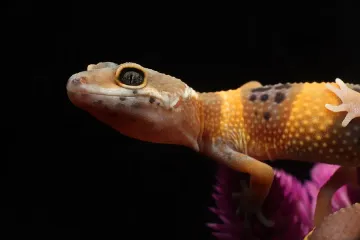
One of the most fundamental rules in feeding any leopard gecko, tangerine morph included, relates to the size of the prey item relative to the gecko itself. [1][4] If the insect is too large, the gecko may struggle to swallow it, leading to choking or impaction risks. [1]
The universally accepted guideline is simple: Never offer an insect that is longer than the distance between the gecko’s eyes. [1][4] For a juvenile gecko, this means starting with very small pinhead crickets or tiny roaches, gradually increasing size as the gecko grows. [4] For an adult, this usually translates to medium-sized crickets or appropriately sized roaches. [1]
# Non-Insect Foods
It is vital to understand that leopard geckos are not omnivores or herbivores. [7][9] They are strict carnivores and do not benefit from consuming vegetables or fruit. [1][3] While some anecdotal reports suggest dusting vegetables with supplements to entice a very picky eater, the gecko will still not derive nutritional value from the plant matter itself, and they are not biologically equipped to digest it. [3] If you see suggestions online for feeding greens, view them with extreme skepticism; a proper leopard gecko diet consists only of live insects. [7]
# Supplementation Necessity
Insects, even when gut-loaded, do not naturally provide the correct balance of calcium and other trace vitamins needed for a captive leopard gecko, especially one lacking access to natural sunlight for Vitamin D3 synthesis. [1][4] Supplementation is non-negotiable for long-term health and preventing metabolic bone disease (MBD). [1]
This typically requires two separate powders, which should never be mixed together in the same dish unless specifically instructed by a veterinarian. [4]
- Calcium with D3: This is usually dusted onto the insects for most feedings. A common rotation is dusting insects every time they are fed, or every other feeding. [1][4]
- Multivitamin: This powder contains essential Vitamin A and other trace minerals. It is offered less frequently, generally once or twice per week. [1][4]
If you are providing calcium with D3 every feeding, you must alternate days with the multivitamin. For instance, Monday: Cricket dusted with Calcium D3. Tuesday: Nothing or plain gut-loaded cricket. Wednesday: Cricket dusted with Multivitamin. Thursday: Calcium D3 again, and so on. This rotation prevents Vitamin D3 toxicity while ensuring steady calcium intake. [1]
An essential aspect of successful supplementation is dusting technique. You don't need a thick, visible coating of powder. A light toss in a small plastic bag or dedicated container until the insects are very lightly coated is sufficient. Over-dusting can cause the gecko to refuse the food or lead to unhealthy mineral buildup. [4]
# Feeding Schedule
The frequency of feeding depends heavily on the gecko's age and life stage. [1][4]
| Life Stage | Recommended Frequency | Notes |
|---|---|---|
| Juvenile (Hatchling to 6 months) | Daily or Every Other Day | Requires high protein intake for rapid growth |
| Sub-Adult (6 to 12 months) | Every Other Day | Growth slows; monitor weight gain |
| Adult (12+ months) | Every 2 to 3 Days | Focus on maintenance; monitor for fat deposits |
For an adult tangerine leopard gecko, offering food every other day is generally the standard recommendation, though some healthy adults thrive on a three-day cycle. [1][4] Always observe your individual gecko; a gecko refusing food for a full week (outside of brumation) warrants investigation, but occasional skipped meals are normal. [1]
The quality of the gut-loaded diet you provide the feeder insects has a monumental effect on your gecko’s health—far more than the brand of calcium powder you use. If you feed your crickets a diet of just dry oats, your gecko is essentially eating dry oats wrapped in powder. Aim to feed feeder insects nutritious items like specialized cricket chow, fresh carrots, dark leafy greens (like collards or turnip greens), or sweet potato for 24 to 48 hours before offering them to your gecko to maximize nutrient transfer. [1][4] This proactive approach to invertebrate nutrition is the true hallmark of expert gecko care.
Related Questions
#Citations
Leopard Gecko Complete Food Guide - Zen Habitats
Expert Advice on Feeding Your Hypo Tangerine Leopard Gecko
r/leopardgeckos - What vegetables are Leo geckos allowed to eat
tangerine leopard gecko diet - CB Reptile
Do leopard geckos eat salad or just live bugs ? - Facebook
What does a Leopard Gecko Eat? | Education Grants
How To Care For a Leopard Gecko - RSPCA
Leopard Gecko Care - Geeky Gecko Creations
Tangerine Leopard Gecko Facts & Photos | Wowzerful