Do satanic leaf-tailed geckos bite?
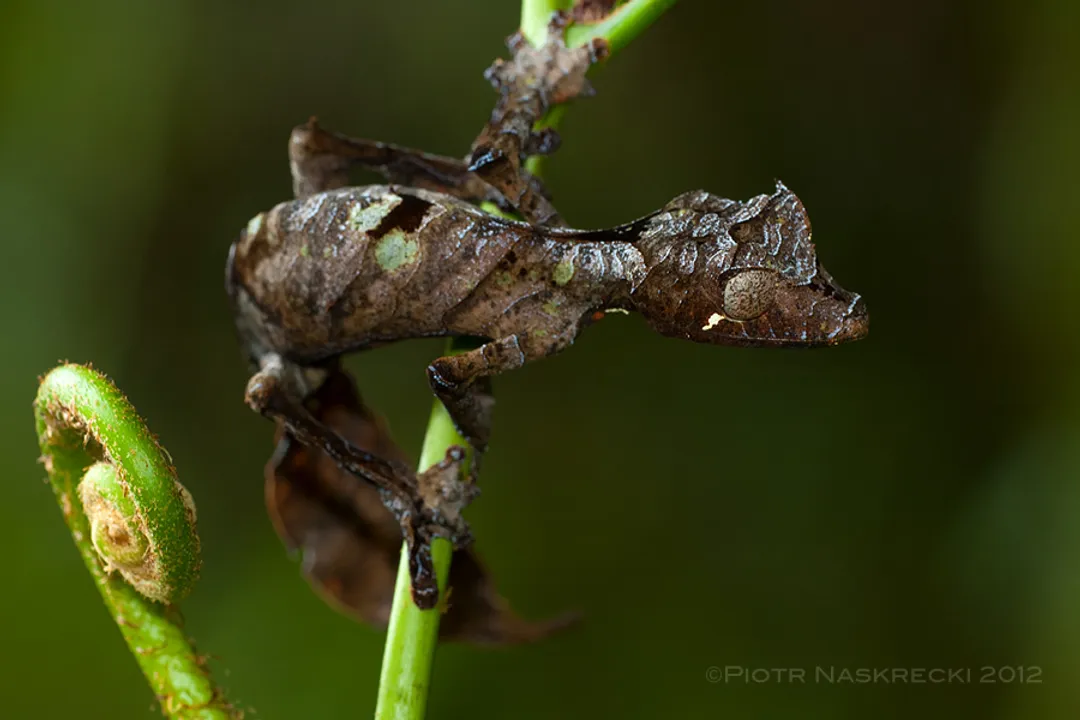
The Satanic leaf-tailed gecko, Uroplatus phantasticus, is instantly recognizable thanks to its incredible disguise, mimicking a dead, decaying leaf with remarkable accuracy. [3][9] This specialization in crypsis, or blending into the environment, naturally leads prospective keepers to wonder about their defense mechanisms beyond mere invisibility. While their appearance suggests a certain drama—often linked to their common name—many questions revolve around how they react when discovered or handled, specifically concerning whether these nocturnal beauties are prone to biting.
# Defense First

The primary survival strategy for these geckos, native to the rainforests of Madagascar, is avoidance. They are masters of concealment, relying on their flattened bodies, intricate patterning, and jagged tail edges to disappear against bark and leaf litter. [3] When they feel threatened, their first reaction is usually to remain perfectly still, trusting their camouflage to protect them. [3] If stillness fails to deter a perceived predator—or an overly curious human hand—they employ a clear threat display. This posture typically involves flattening the body further, displaying a bright red or orange-red interior of the mouth, and sometimes hissing. [3] This visual and auditory warning is designed to startle a threat into backing away before any physical contact is necessary.
# Bite Tendencies
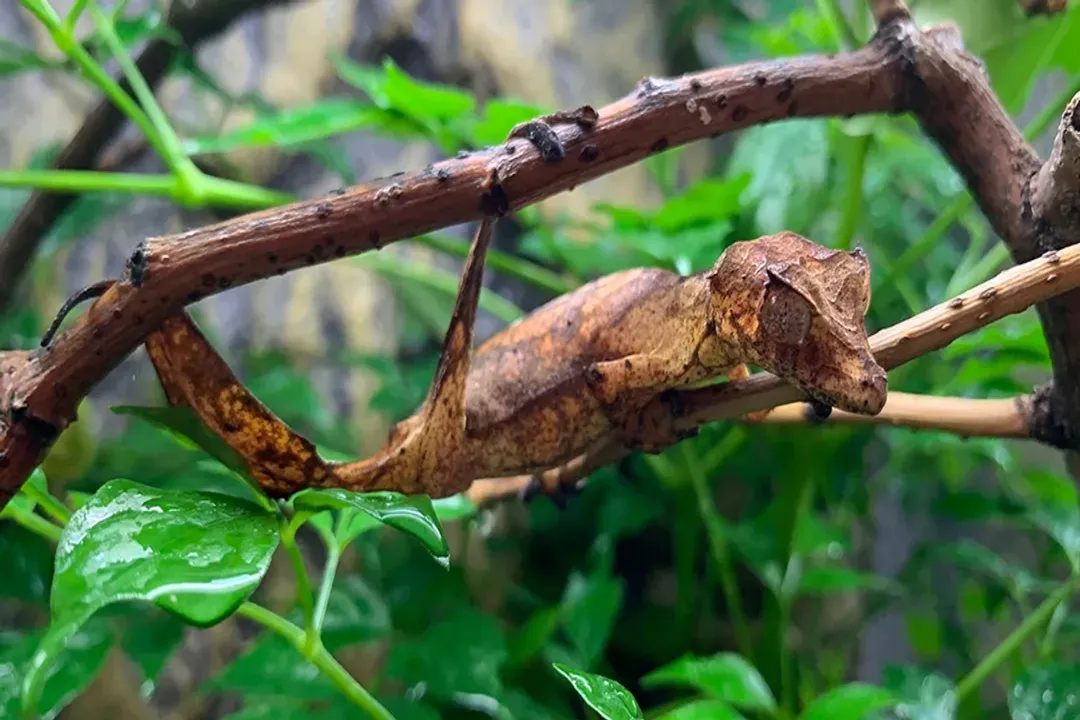
When examining whether Satanic leaf-tailed geckos bite, the general consensus gleaned from keepers and reptile enthusiasts suggests that biting is rare and usually a measure of last resort rather than aggression. [5][7] These geckos are generally not considered defensive biters when compared to more overtly territorial lizards. [7] In many documented cases from keeper forums and anecdotal accounts, the geckos are known for being relatively shy and preferring to flee or freeze rather than engage. [1][5]
However, like any wild-caught or even captive-bred reptile, they are capable of biting if they feel genuinely trapped, stressed, or physically hurt. [1][7] A bite from a U. phantasticus is usually described as a quick snap rather than a sustained hold, often resulting in a very minor injury due to their small size and delicate structure. [9] One keeper noted that while they prefer not to handle them often, a bite feels more like a sharp pinch than anything serious, especially from a smaller individual. [1] If a keeper attempts to pick up a gecko that is already displaying stress signals, such as an open mouth or jerky movements, the likelihood of receiving a warning nip increases significantly. [7] The bite is less an act of malice and more a desperate attempt to escape an uncomfortable situation where camouflage has failed.
# Handling Stress
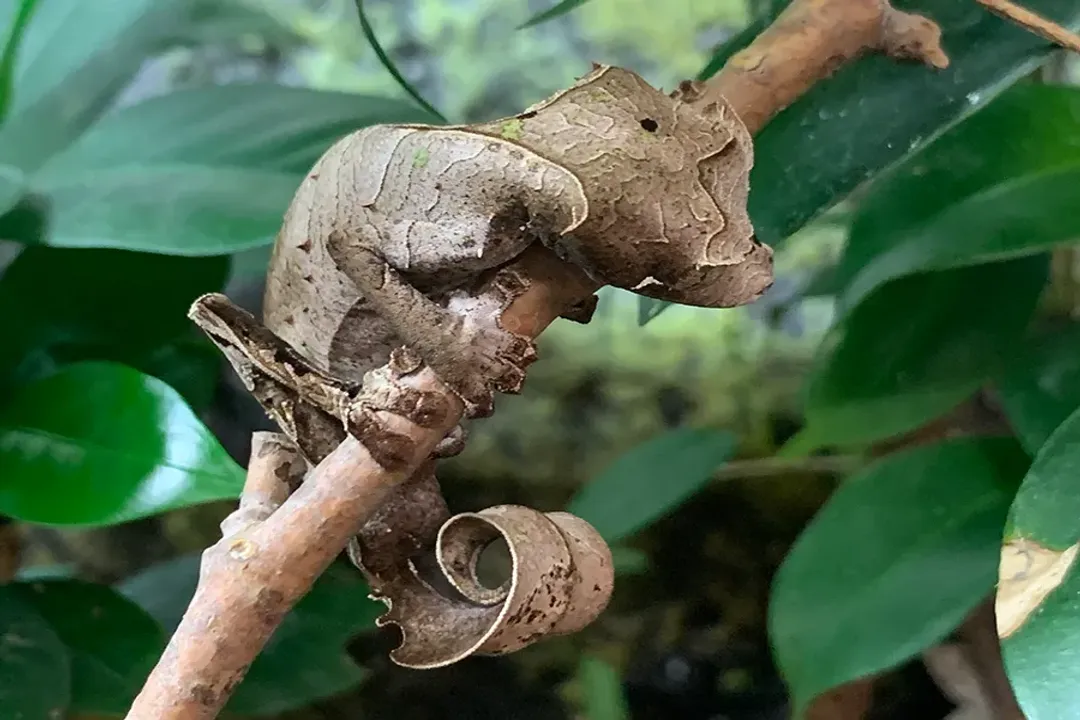
Understanding the gecko's natural aversion to being handled is crucial for preventing defensive actions. These animals thrive in specific, humid environments and are naturally crepuscular or nocturnal, meaning they are most active at dawn and dusk. [7] Attempting to handle them during the day when they are resting or when environmental conditions are slightly off can elevate their stress levels dramatically. [7]
The less a keeper interacts physically with these geckos, the better their overall well-being tends to be. [7] This principle is important because a consistently stressed animal is more likely to exhibit defensive behaviors, including opening its mouth or attempting to bite when finally moved or examined. [5] One way to gauge when they are least tolerant of interaction is by observing their shed cycles; handling an animal that is about to shed or is currently in a shed is highly stressful for them and is a near guarantee of a defensive response. [3] It is far better to observe them through the glass of their enclosure than to force physical interaction, especially when they are showing visible signs of distress. [7]
# Interpreting Behavior
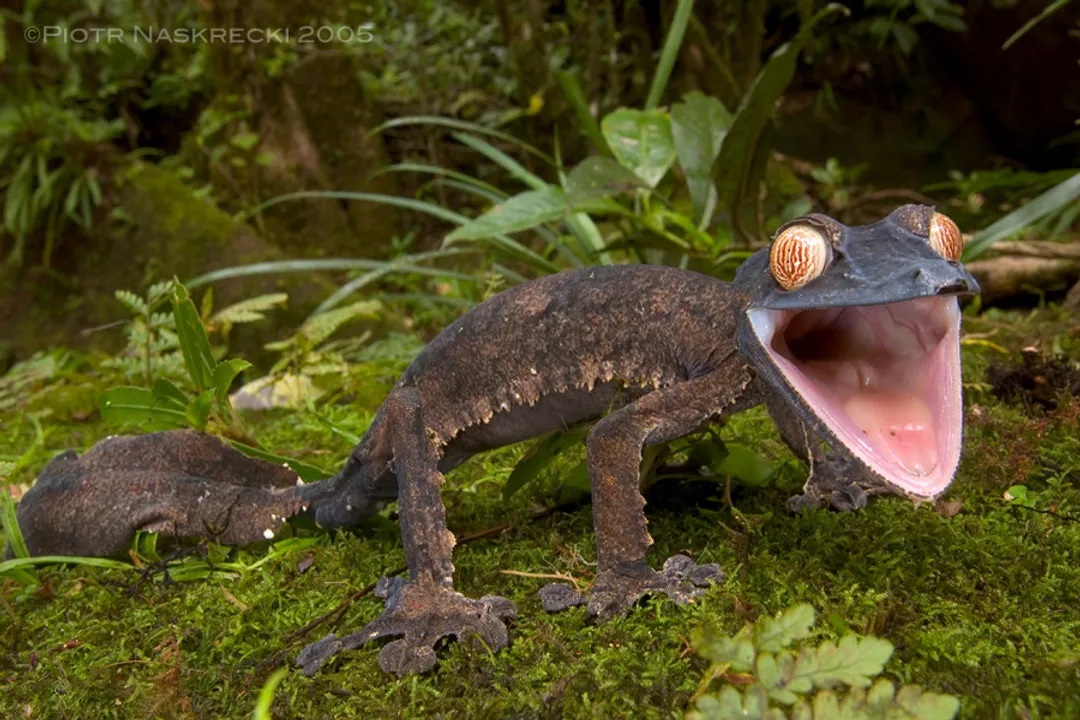
The elaborate physical defense mechanisms these geckos possess strongly suggest a strategy prioritizing stillness over confrontation. When you consider the energy expenditure required to perform a full threat display—inflating the body, flashing the mouth—it’s clear that physical defense, like biting, is an expensive, last-resort tactic. [3] Their entire biology is geared toward not being seen. Therefore, when a bite occurs, it often signals a complete breakdown in the animal's perceived safety; the camouflage failed, the threat display was ignored, and now, the final option is engagement. [1] Observing the subtleties of their body language—the quick dart of the eyes, the slight flattening of the body against a branch—provides the necessary cues to back off before a bite is even contemplated by the lizard.
# Temperament Comparison
While some geckos, like certain leopard geckos, can become quite tame with regular, gentle handling, the leaf-tailed geckos, including the Satanic variety, are generally not suited for that level of interaction. [7] They are widely regarded as display animals rather than pets meant for constant physical engagement. [7] If you are looking for a reptile that enjoys being handled daily, the Uroplatus phantasticus is likely the wrong choice. Their behavior strongly favors visual appreciation of their incredible adaptation to mimic dead foliage. [9]
This difference in husbandry expectation is worth noting for new owners. Unlike some geckos where successful taming is a measure of good husbandry, with leaf-tails, successful husbandry is measured by minimal disturbance. [7] They are complex creatures, and while they can be kept successfully in captivity, respecting their need for a quiet, stable environment minimizes the chances of any negative interactions, including bites. [5] Providing the necessary high humidity and appropriate temperature gradients, often between 75 and 80 degrees Fahrenheit, keeps them healthy and less susceptible to stress-related defensive actions. [7]
For someone new to these fantastic lizards, remember that their small size means any defensive action, while usually minor, should still be respected. Think of them as tiny, living pieces of forest floor litter that occasionally needs to remind you they are, in fact, alive. [3][9] If you see the flash of red in their mouth, you’ve crossed the line from observation to intrusion, and the appropriate response is to gently retreat and let them settle back into their stillness.
#Videos
Satanic Leaf-Tailed Gecko - Animal of the Week - YouTube
Related Questions
#Citations
What is this? Moved to a new house and thought it was a decoration ...
Uroplatus phantasticus also known as Satanic Leaf-Tailed Gecko ...
Absurd Creature of the Week: Satanic Leaf-Tailed Gecko ... - WIRED
The satanic leaf-tailed gecko is one of about twenty ... - Instagram
Satanic Leaftails- does anyone have any experience? - Other Geckos
Giant leaf-tailed gecko - National Zoo
Uroplatus phantasticus geckos as pets - Misty Mountain Phants
Satanic Leaf-Tailed Gecko - Animal of the Week - YouTube
Beanie babies with teeth - The Smaller Majority