What is the lifespan of a tangerine gecko?

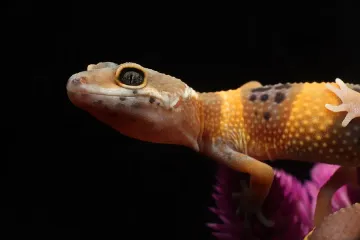
The longevity of a tangerine gecko, which is a specific color morph of the ever-popular Leopard Gecko (Eublepharis macularius), often surprises new keepers. These creatures are not fleeting pets; with proper dedication, they can easily become long-term companions, potentially sharing your life for two decades or more. [3][5] The sheer potential for lifespan in captivity sets them apart from many smaller reptile species.
# Expected Years

For the average Leopard Gecko maintained in good captive conditions, owners should reasonably expect their pet to live for anywhere between 10 and 20 years. [3][5] This is a broad range, reflecting the variance in husbandry practices from owner to owner. While 15 years is often cited as a solid average for well-cared-for individuals, reaching the higher end of that spectrum is entirely achievable. [1]
What is truly remarkable, and sets a high benchmark for captive care, is the documented maximum age. There is an account of a specific Leopard Gecko who reached the impressive age of 40 years old. [8] This astonishing outlier proves that when every aspect of care aligns perfectly—genetics, environment, and nutrition—the lifespan potential of this species is significantly higher than most hobbyists might initially assume. [8]
# Wild Versus Home

The conditions drastically change the expected survival window. In their native, arid environments, Leopard Geckos face significant challenges that curtail their lives. [5] Predation, inconsistent access to food and water, parasites, and harsh temperature fluctuations all contribute to a naturally shorter existence in the wild. [5] Captivity, when executed correctly, effectively removes these major mortality factors, allowing the gecko to devote its energy toward longevity. [1] The goal of the keeper is to replicate the benefits of the natural environment (like appropriate heat) while eliminating the dangers (like predators or drought). [5]
# Critical Care Factors

Reaching that 20-year mark is directly tied to managing a few non-negotiable elements of the enclosure. It is less about the tangerine coloring—which is purely aesthetic—and more about the fundamental species requirements that affect every Eublepharis macularius. [2]
# Thermal Needs
Proper heating forms the absolute foundation of a long, healthy life. Leopard Geckos are ectotherms, meaning they rely entirely on their environment to regulate body temperature, which directly impacts digestion and immune function. [5][9] If they cannot reach their optimal basking temperature, they cannot properly digest food, leading to malnutrition or fatal impaction. A successful setup requires a temperature gradient: a hot side, often achieved via an under-tank heater (UTH) regulated by a thermostat, should aim for about 90–95°F (32–35°C) on the warm surface, while the cool side remains in the 75–80°F (24–27°C) range. [5] Fluctuations outside these parameters introduce chronic stress or digestive failure. [1]
# Substrate Selection
The material beneath their feet plays a significant role in preventing acute, fatal incidents. Many keepers, particularly those new to the hobby, gravitate toward loose substrates like sand or soil mixes for aesthetic appeal. [1] However, loose materials present a substantial risk of impaction if accidentally ingested during feeding, especially if the gecko is dehydrated or its gut motility is slow due to incorrect temperatures. [9] A safer, longevity-focused approach often involves using solid, non-particulate substrates like paper towels, reptile carpet, slate tile, or paper cage liners. [9] These options eliminate the ingestion risk entirely, though they do require more frequent cleaning.
# Dietary Health
A diet composed only of insects will, over time, lead to severe health deficiencies. While Leopard Geckos thrive on a diet of gut-loaded feeder insects such as crickets, mealworms, and roaches, [5] these insects lack essential nutrients like calcium. [9] To prevent Metabolic Bone Disease (MBD)—a crippling, painful, and ultimately fatal condition caused by calcium deficiency—supplementation is mandatory. [5][9] This usually means dusting insects with a calcium supplement daily or every other day, and providing a separate bowl of pure calcium powder for them to ingest as needed. [9] Furthermore, consistent access to clean, fresh water is a simple but often overlooked requirement for proper hydration and organ function. [5]
# Tangerine Genetics

The term "Tangerine" describes a specific genetic expression that intensifies the orange and yellow coloration of the gecko, often manifesting as deep oranges or reds on the flanks and tail. [2] It is important to understand that this is a selective breeding trait, not a separate species. Therefore, the care requirements that dictate a 20-year lifespan apply equally to a standard wild-type gecko, a high-contrast Tangerine, a Mack Snow, or any other morph. [2]
While the basic biology is identical, keepers focusing on intensely colored designer morphs sometimes fall into the trap of prioritizing visual traits over fundamental husbandry. An original observation here is that very selectively bred lines, while often stunning, can sometimes harbor subtle, uncatalogued genetic predispositions. If a breeder focuses too heavily on maximizing a single color trait over several generations, there can occasionally be an increased sensitivity to environmental stressors compared to a more genetically diverse, standard line. It doesn't mean they will live shorter lives, but it often necessitates that the dedicated owner pays meticulous attention to stable parameters, compensating for any potential underlying fragility introduced through intense color selection. [2]

# Promoting Longevity
Securing a long life for your tangerine gecko involves moving from adequate care to proactive maintenance. This means creating an environment so stable that the gecko’s physiological systems can run without stress.
# Stability Checkpoint
The most significant factor after establishing the correct heat gradient is consistency. A reptile that experiences daily dramatic temperature swings, or whose humidity level drops sharply for days at a time, burns energy constantly readjusting its system rather than thriving. [1]
Here is a simple stability scorecard an owner can use to assess their setup:
| Parameter | Ideal Condition | Consistency Check |
|---|---|---|
| Daytime Warm Spot | 90–95°F (32–35°C) | Held steady via thermostat? |
| Nighttime Ambient | No lower than 70°F (21°C) | Does ambient temp drop too far? |
| Humidity | 30–40% (with humid hide) | Is the humid hide consistently damp? |
| Supplementation | Calcium/D3 Schedule Followed | Are supplements changed/replenished regularly? |
| Water Source | Fresh daily | Is bowl cleaned daily? |
# Stress Reduction Practices
Chronic stress suppresses the immune system, making the gecko susceptible to infections that can shorten its life. Ensuring the enclosure offers adequate security is key. A gecko needs secure places to hide on both the warm and cool sides of the tank so it feels safe retreating at any point of the day or night. [5] Furthermore, while Leopard Geckos are terrestrial, providing safe, low-to-the-ground climbing opportunities—like cork bark flats or smooth rocks—can offer mental stimulation without the fall risks associated with vertical climbing structures. This environmental enrichment keeps the mind engaged, which is just as important for a multi-decade companion as physical health is for a short-lived one. [1] Keeping handling to respectful sessions that benefit the bond, rather than forcing interaction, also minimizes unnecessary stress. [9]
#Videos
How Long Do Tangerine Leopard Geckos Live? - Reptilian Wonders
Related Questions
#Citations
How long do they live? : r/leopardgeckos - Reddit
Tangerine - Ringtail Exotics Pets
Tangerine Leopard Gecko Animal Facts - Eublepharis macularius
How Long Do Leopard Geckos Live & Care Tips to Extend Their ...
Leopard gecko, Eublepharis macularius, care sheet - Swell Reptiles
How Long Do Tangerine Leopard Geckos Live? - Reptilian Wonders
Leopard gecko lifespan - CB Reptile
reptileoftheday The world's oldest leopard gecko turned 40 this year ...
Caring For Your Pet Leopard Gecko | Pender Veterinary Centre