What evolutionary adaptation allows *Hypancistrus zebra* to maintain position against strong currents?
Answer
Suction-cup-like mouth structure
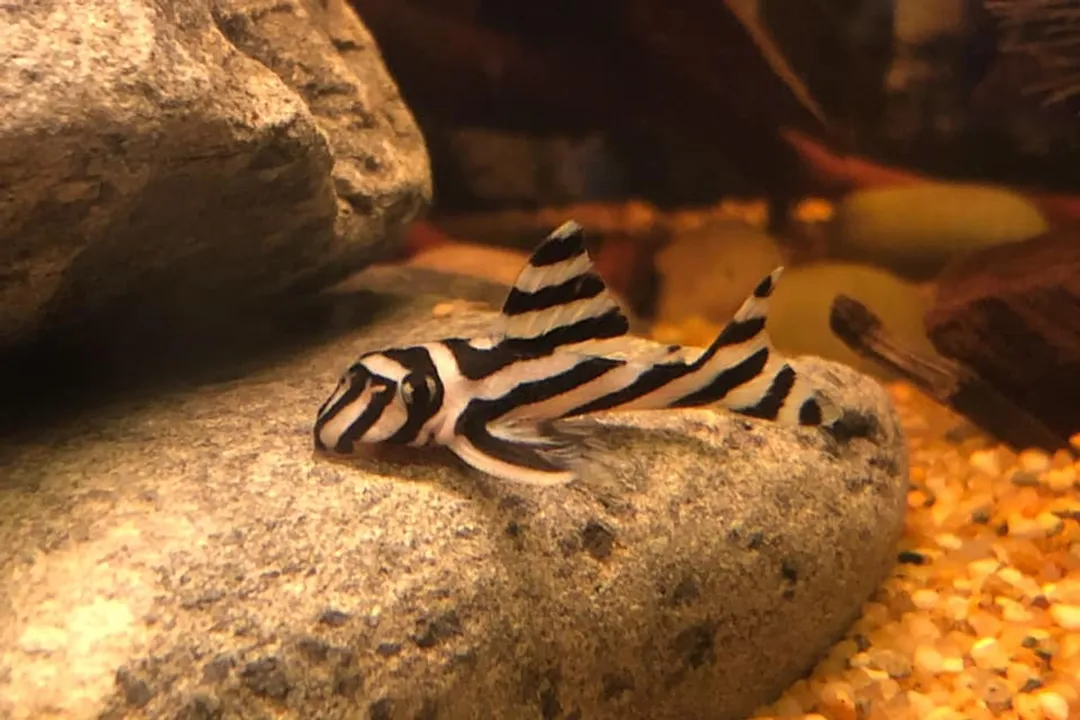
The physics of living in high-velocity currents necessitates specialized anchoring mechanisms, and the *Hypancistrus zebra* possesses a direct evolutionary response in the form of its mouth. This structure functions much like a powerful suction cup, enabling the fish to cling firmly to hard surfaces such as submerged boulders and large stones, even when powerful currents are flowing over them. This ability is vital both for resting securely and for maintaining position while grazing on the available biofilm and detritus found on those surfaces, demonstrating a perfect synergy between geography and biology.
Related Questions
What visual feature instantly characterizes the *Hypancistrus zebra*?Which specific river drainage system constitutes the native home of the Zebra Pleco?What characteristic defines the water dynamics where *Hypancistrus zebra* thrives?What evolutionary adaptation allows *Hypancistrus zebra* to maintain position against strong currents?How does the typical substrate of the Zebra Pleco's domain differ from many other plecos?Which precise geographical feature contains the most concentrated populations of the Zebra Pleco?Near which city in the state of Pará is the critical Volta Grande do Xingu located?Why is the restricted wild origin of *Hypancistrus zebra* important context for aquarists?What makes the Zebra Pleco inherently vulnerable to localized disturbances?What practice is critical for responsible aquarists to prioritize regarding *Hypancistrus zebra* sourcing today?