What distinctive social behavior characterizes the Prairie Vole, Microtus ochrogaster?
Answer
Cooperative family groups and complex tunnel systems
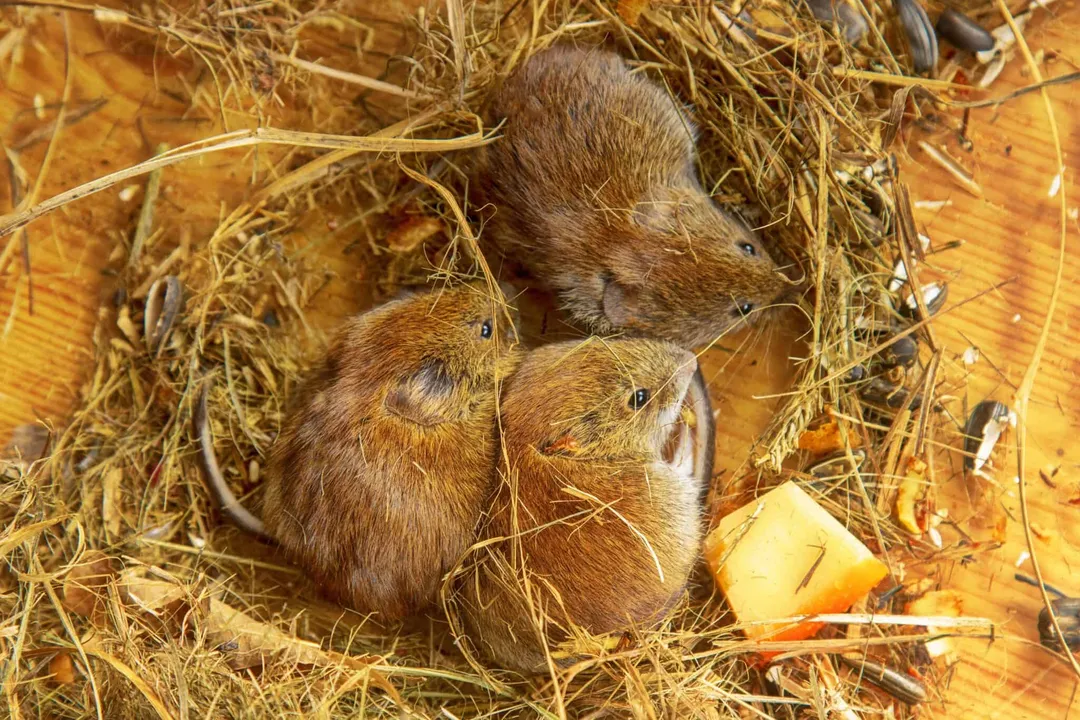
Unlike more solitary vole species, the Prairie Vole is highly social and known for living in cooperative family groups. They also maintain complex, semi-permanent tunnel systems beneath the ground. Understanding these behaviors is important for land management, as methods used to deter surface-dwelling rodents may not be effective against species with deep, subterranean infrastructure.
Related Questions
To which biological order do voles belong, characterized by a single pair of continuously growing incisors in both the upper and lower jaws?Which family classification separates voles from the true mice and rats found in the Muridae family?Within the family Cricetidae, which subfamily groups voles together with lemmings?Which genus contains the most frequently encountered voles, such as the common vole and prairie vole?What primary reproductive trait makes the Common Vole, known scientifically as Microtus arvalis, an agricultural pest?What distinctive social behavior characterizes the Prairie Vole, Microtus ochrogaster?Why is the Field Vole, Microtus agrestis, sometimes granted specific conservation protection in the United Kingdom?How is the Water Vole classified differently from the grassland-dwelling species of the Microtus genus?Why is it important for pest managers to differentiate between specific vole species during control efforts?What physical attributes generally distinguish voles from true mice and rats within the Muridae family?