What dental characteristic defines members of Order Diprotodontia?
Answer
Possessing two large, procumbent lower incisor teeth
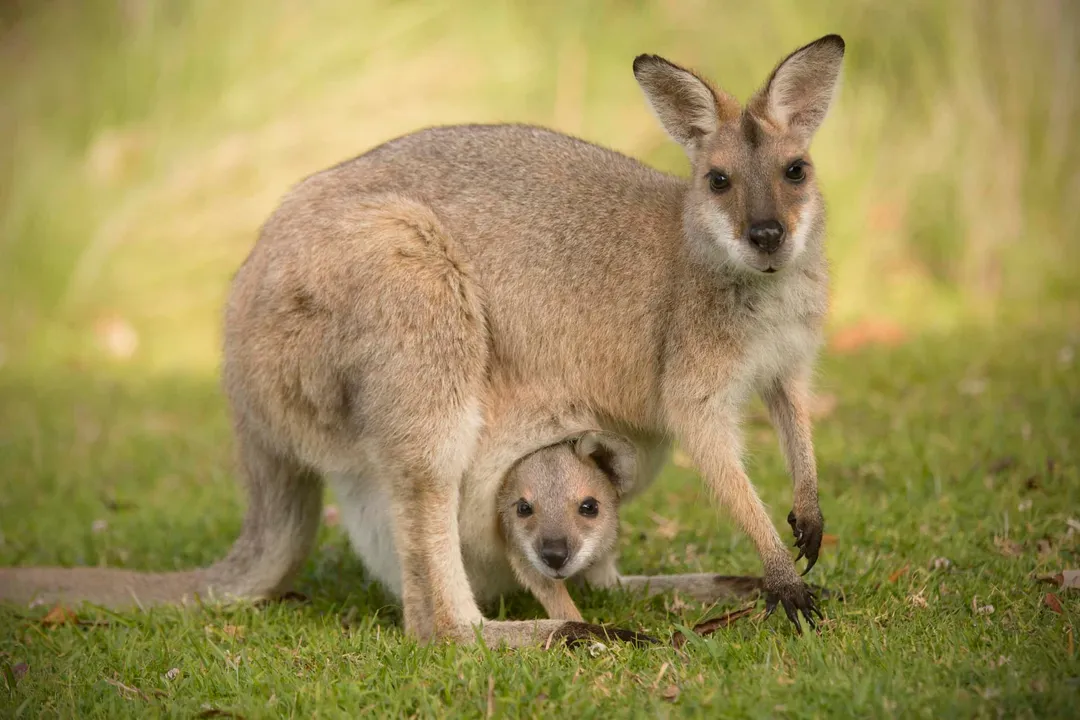
The Order Diprotodontia, which includes wallabies, kangaroos, koalas, and wombats, is fundamentally defined by a specific dental feature that unites this diverse group. Members of this order possess two large, forward-facing (procumbent) lower incisor teeth. This characteristic is a key element used by biologists to group these marsupials together, suggesting a shared evolutionary development related to their ancestral feeding strategies. This dental arrangement provides a reliable taxonomic marker, regardless of the vast differences in size or habitat among the animals within the order.
Related Questions
What rank does "wallaby" hold in the Linnaean hierarchy?What dental characteristic defines members of Order Diprotodontia?What is the derivation of the Family name Macropodidae?Which infraclass level separates wallabies from placental mammals like dogs?Within Family Macropodidae, what separates a 'kangaroo' from a 'wallaby'?Which genus specifically houses the rock-wallabies adapted for rocky terrain?What is a cited scientific designation for the Red-necked Wallaby?Which species holds the distinction of being the smallest Australian wallaby?Which genus contains the agile wallaby, *Wallabia bicolor*?In which genus is the Parma Wallaby placed alongside the Red-necked Wallaby?