Wallaby Scientific Classification
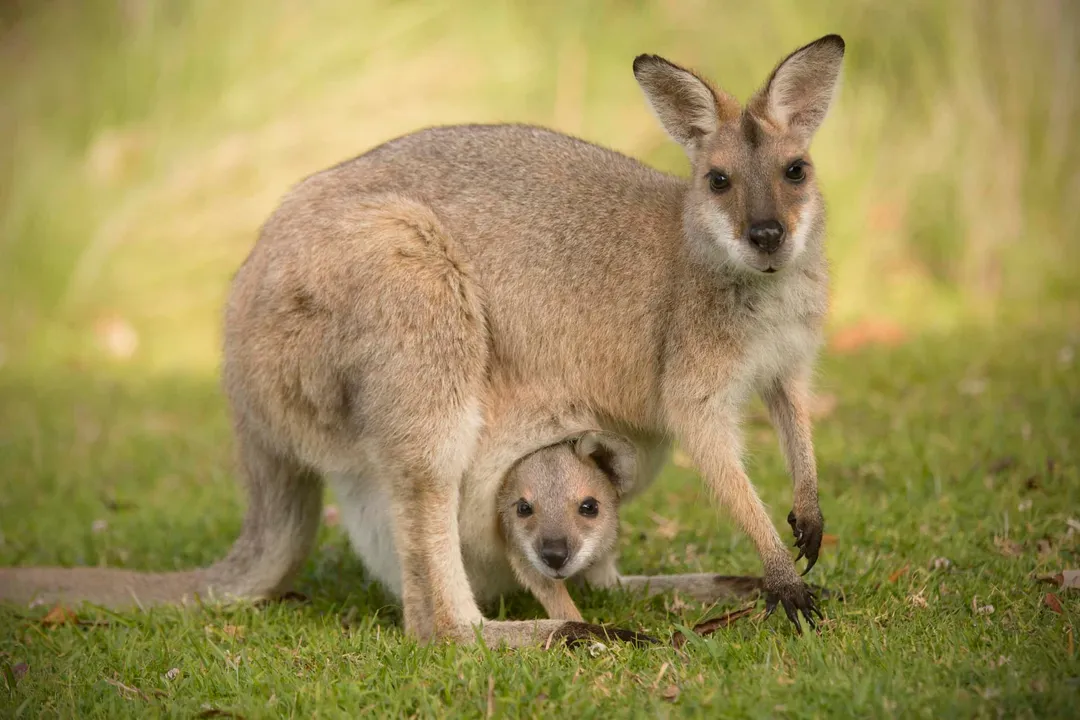
The wallaby, instantly recognizable as a smaller cousin to the kangaroo, occupies a fascinating niche within the world of Australian marsupials. While the common name evokes a clear image of a hopping, pouch-carrying creature, scientifically speaking, "wallaby" is not a specific taxonomic rank like genus or species; rather, it serves as a catch-all term for many medium-to-small members of the family Macropodidae. [1][3][6] Understanding the wallaby requires us to look beyond the common descriptor and delve into the Linnaean hierarchy that organizes these animals, beginning with their shared ancestry as placental mammals.
# Kingdom Placement
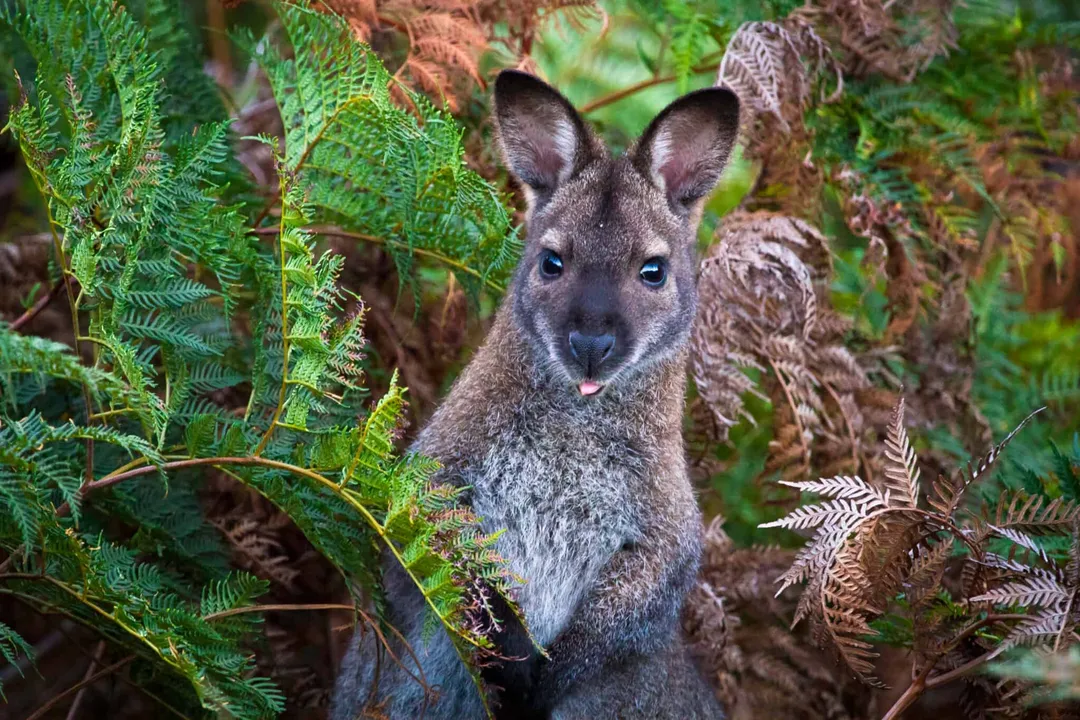
Like nearly all life discussed in biology, the wallaby begins its classification in the Kingdom Animalia, belonging to the Phylum Chordata, which signifies the presence of a notochord at some stage of development, eventually leading to a backbone. [1][5][6] They are firmly situated in the Class Mammalia, possessing hair and nursing their young with milk. [1][5][6] Crucially, wallabies belong to the Infraclass Marsupialia, setting them apart from placental mammals like dogs or humans due to their unique reproductive strategy involving a pouch, or marsupium, where highly altricial young complete their development. [1][5][6]
# Order Diprotodontia
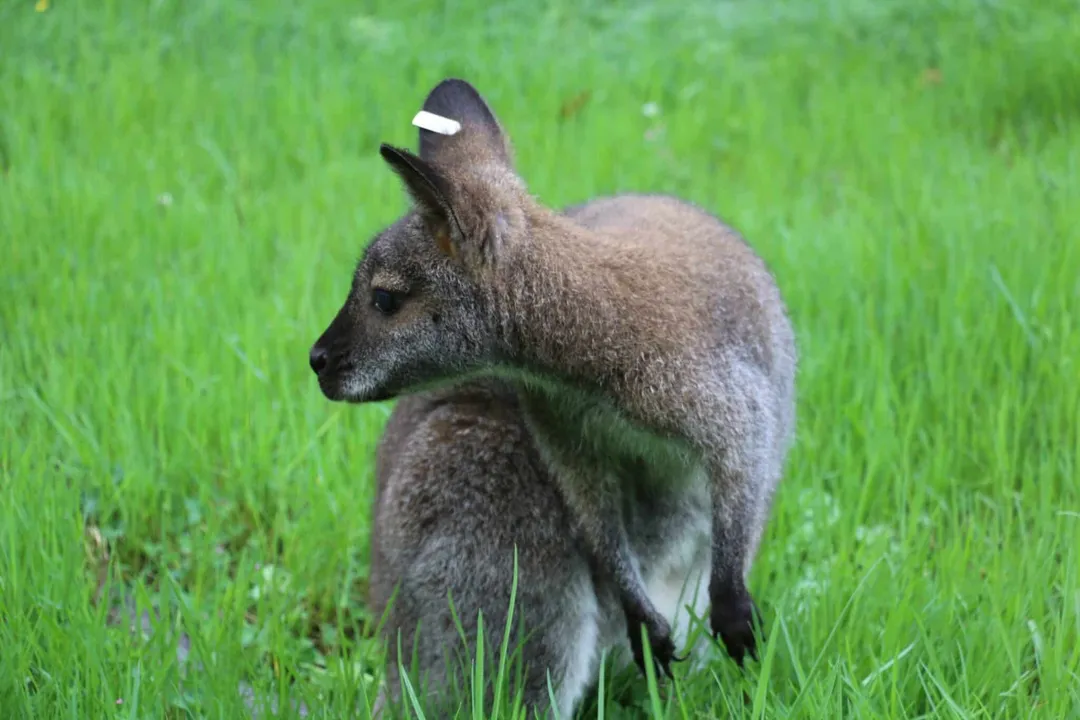
Moving down the ranks, wallabies are part of the Order Diprotodontia. [1][5] This grouping is significant because it primarily defines marsupials that possess two large, procumbent (forward-facing) lower incisor teeth, which is a defining dental characteristic. [1][5] The order is quite diverse, encompassing not only wallabies and kangaroos but also possums, koalas, and wombats. [1] This placement confirms that despite superficial differences in size or habitat—such as a tree-dwelling possum versus a ground-dwelling wallaby—they share a fundamental evolutionary heritage rooted in this particular dental and skeletal arrangement. [5]
# Family Macropodidae
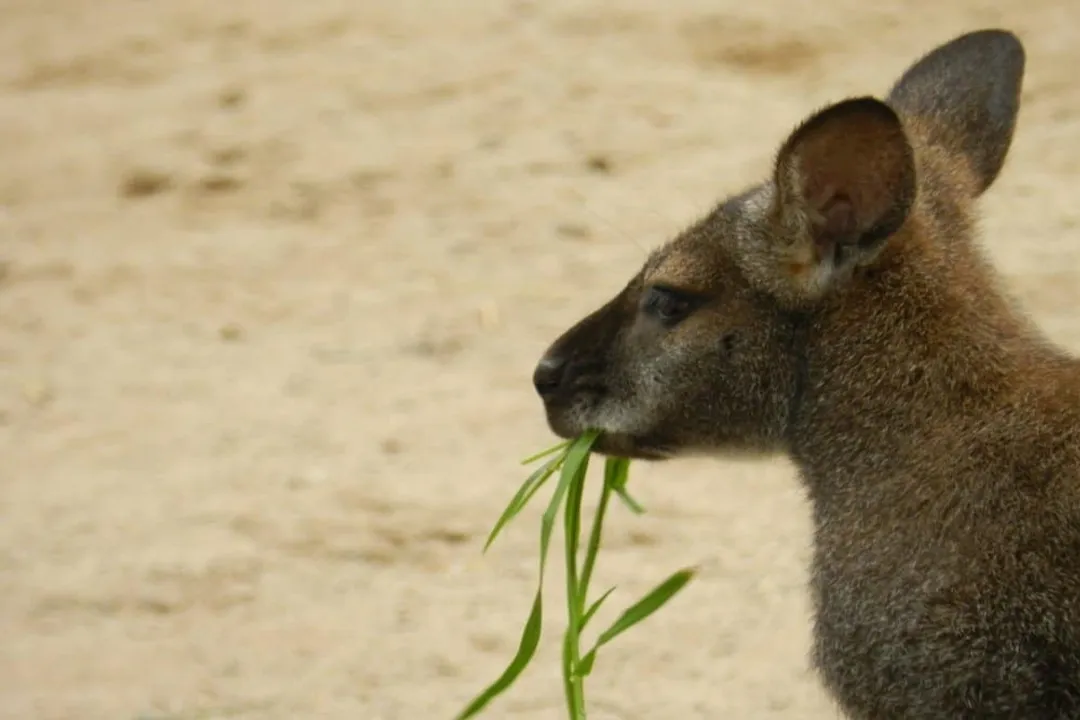
The next critical step in defining the wallaby is the Family Macropodidae. [1][5] This is the family of kangaroos and their kin, deriving its name from the Greek words makros (long) and podos (foot), referring to their famously large hind feet used for powerful hopping locomotion. [1] Within this family, wallabies are grouped together based on their general body plan, which includes strong hind legs, long tails for balance, and the characteristic pouch. [6] It is here, within Macropodidae, that the distinction between a "kangaroo" and a "wallaby" becomes purely a matter of general size, as there is no precise scientific line drawn at the genus or tribal level that consistently separates them. [1] For instance, some animals commonly called kangaroos might be similar in size to larger wallabies, highlighting that the common names are more ecological than strictly taxonomic. [6]
# Genus Variation
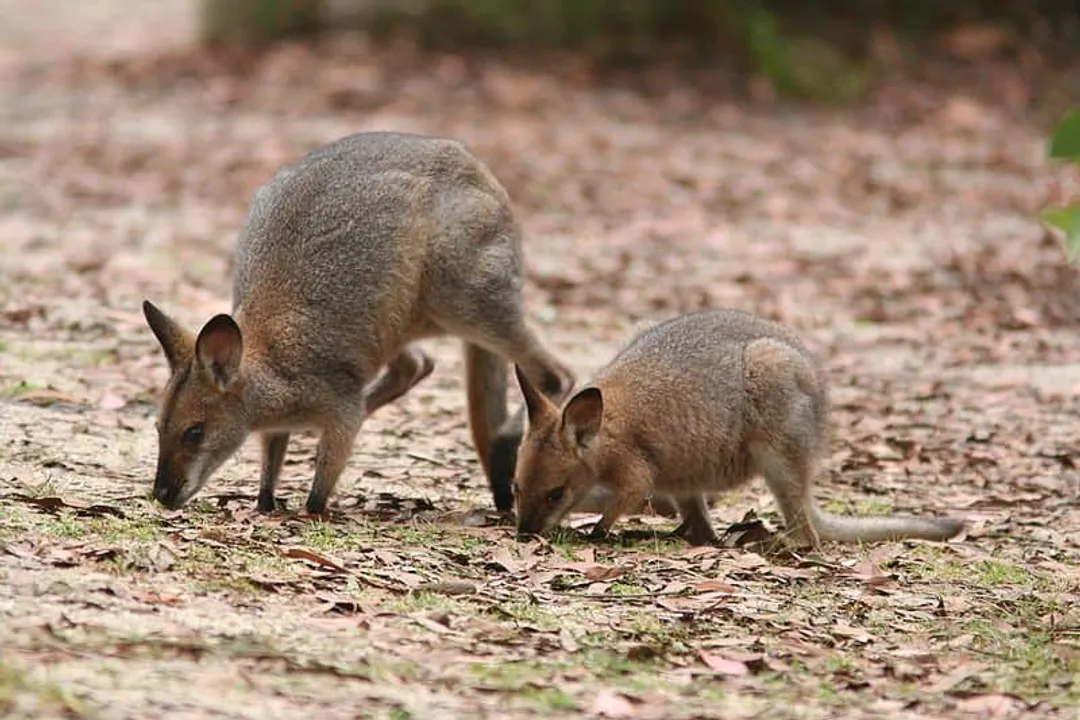
Because "wallaby" is a general term, these animals are distributed across several different genera within the Macropodidae family, reflecting different evolutionary paths or specializations within the group. [1] This genus-level classification is where true scientific distinction begins to appear, separating distinct evolutionary branches that share the common 'wallaby' body type.
For example, some of the recognized genera include:
- Macropus: Historically, this genus contained many species now often moved to Notamacropus or Osphranter, but it remains significant in macropod studies. [1]
- Thylogale: These are generally known as pademelons, often smaller wallaby-like marsupials. [1]
- Wallabia: Contains the agile wallaby, Wallabia bicolor. [1]
- Petrogale: This genus specifically houses the rock-wallabies, adapted for rocky terrain. [7]
It is fascinating to observe how the common term is applied across these varied groupings; for instance, the Bennett's Wallaby and the Parma Wallaby both fall under the genus Notamacropus (or Macropus depending on the classification scheme referenced). [2][4][8] Conversely, the Allied Rock-wallaby sits securely in Petrogale. [7] If one were to design a classification based purely on habitat or immediate physical appearance for a quick reference guide, mapping species to these genera would be far more reliable than relying on the single word "wallaby" alone. [1][7]
# Species Examples
Examining specific species further illustrates this classification spread. The Red-necked Wallaby (or Bennett's Wallaby) provides a good case study. Its scientific designation is often cited as Notamacropus rufogriseus or sometimes Macropus rufogriseus. [2][4] This species is well-known for its reddish-brown neck and grayish body. [2] The variability in naming (Notamacropus vs. Macropus) speaks to ongoing debates and revisions within marsupial taxonomy, emphasizing that scientific understanding is dynamic. [2][4]
In stark contrast to the often larger Red-necked Wallaby, the Parma Wallaby (Notamacropus parma) represents a smaller extreme within the group. [8] It holds the distinction of being the smallest Australian wallaby species. [8] Its placement in Notamacropus alongside the Red-necked Wallaby suggests a closer recent evolutionary split between them than with, say, the rock-wallabies. [8]
Then we find the specialized Allied Rock-wallaby, Petrogale assimilis. [7] Its classification within Petrogale directly reflects its adaptation to rugged, rocky environments, setting it apart ecologically and morphologically from its forest or grassland cousins. [7] This adaptation is so pronounced that they have evolved specialized, non-slip pads on their feet for climbing on steep surfaces, an adaptation not shared to the same degree by the genus Notamacropus. [7]
To summarize how these distinct types fit into the formalized structure, one can view the genus as the primary segregating factor for these common names:
| Common Name Group | Representative Genus | Key Feature |
|---|---|---|
| Wallabies (General/Forested) | Notamacropus | Medium size, generalized habitat use [2][8] |
| Rock-wallabies | Petrogale | Specialized feet for rocky terrain [7] |
| Agile Wallabies | Wallabia | Distinct lineage within Macropodidae [1] |
This structure confirms that while we use one word casually, their scientific classification reveals specialized adaptations and differing evolutionary timescales, organized neatly through the genus assignment. [1][7] The decision to lump or split genera is often based on genetic evidence that modern science can now provide, which sometimes shifts species between these established scientific groupings over time. [4]
Related Questions
#Citations
Wallaby - Wikipedia
Red-necked Wallaby (Notamacropus rufogriseus) Fact Sheet
Wallaby - Simple English Wikipedia, the free encyclopedia
Bennett's wallaby | Smithsonian's National Zoo and Conservation ...
Wallaby | Taronga Conservation Society Australia
Wallaby Animal Facts - Macropus
Petrogale assimilis (allied rock wallaby) - Animal Diversity Web
Wallaby - ZOOCHOSIS Wiki - Fandom