What covers the Wolf Eel's skin instead of traditional scales?
Answer
A thick layer of mucous.
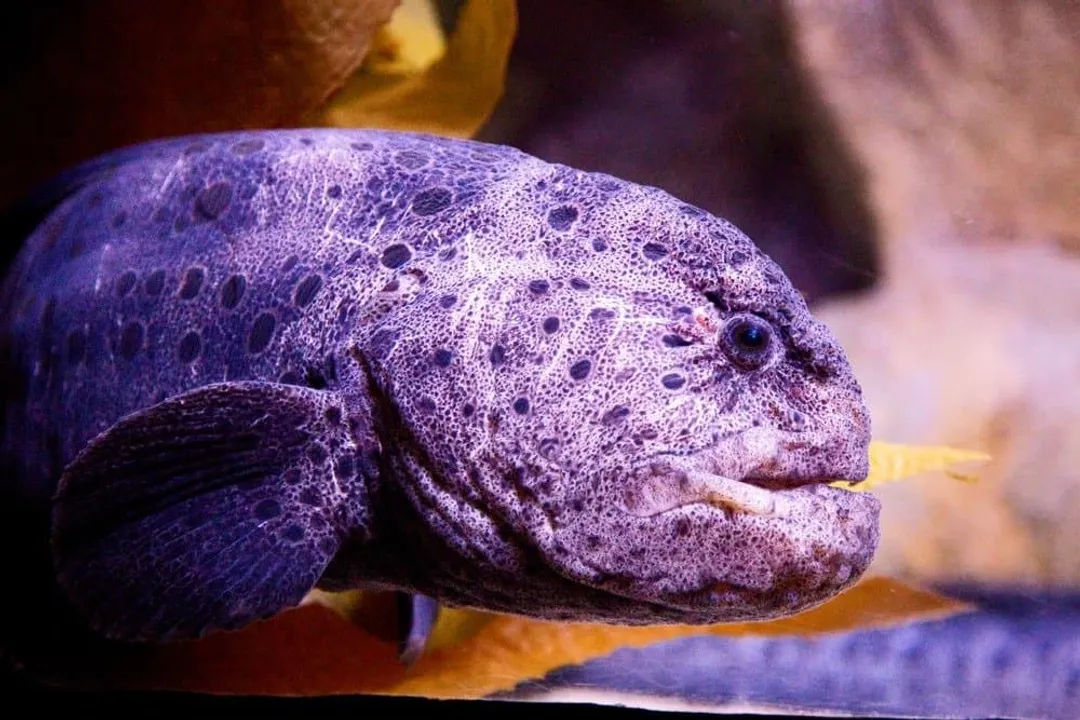
The physical covering of the Wolf Eel's body is specialized for its rough, abrasive habitat. The skin completely lacks traditional scales. Instead, it is covered by a thick layer of mucous. This mucous coating serves several vital functions related to its lifestyle navigating complex, hard-substrate environments. Primarily, it offers protection against constant abrasion caused by rubbing against rocks, kelp, and other rough surfaces within its preferred reef structure. Secondly, this thick mucous layer is also understood to reduce drag, aiding its movement through the water column in the currents common to its habitat.
Related Questions
What distinguishes the Wolf Eel's genus, Anarrhichthys, evolutionarily?What specialized dentition allows *A. ocellatus* to consume crabs and mollusks?How is the Wolf Eel's caudal fin structurally different from a true eel's tail?How long might an adult Wolf Eel occupy the same lair in its rocky reef habitat?Who typically assumes the role of guarding the sticky egg masses inside the secure den?What physical feature does the species name ocellatus specifically reference?Which life history traits make the Wolf Eel highly vulnerable to fishing pressure?To which family, closely related to the Wolf Eel, do pricklebacks belong?From which northern locations down to which southern location does the Wolf Eel range in the North Pacific?What covers the Wolf Eel's skin instead of traditional scales?