Wolf Evolution
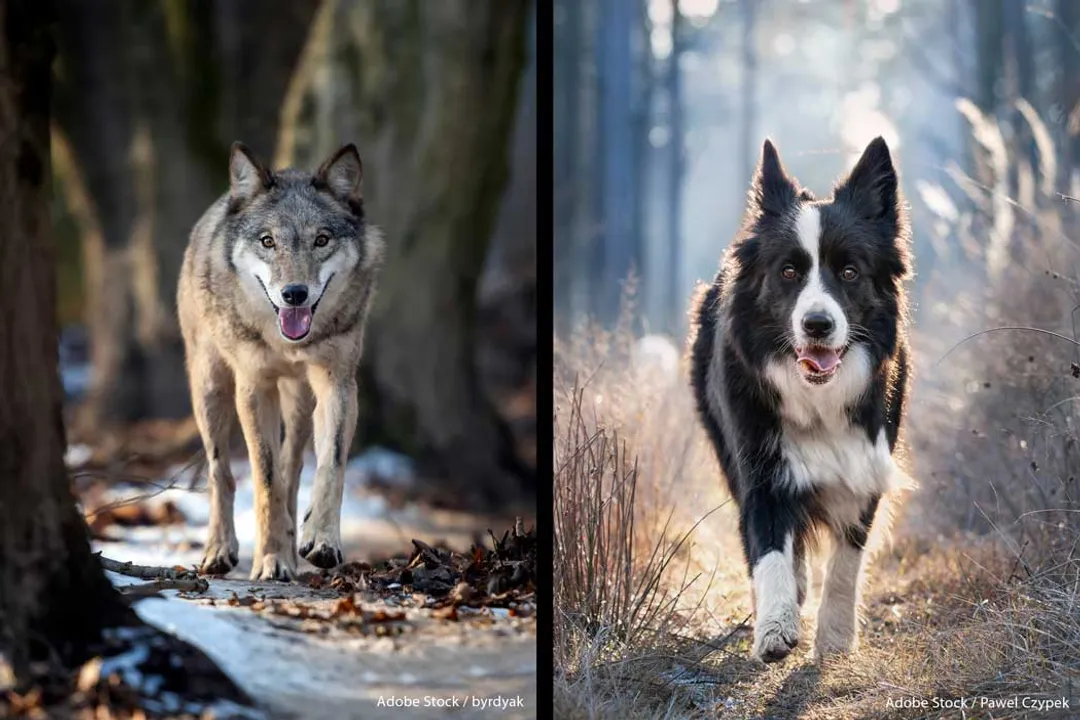
The story of the wolf is not just about the creatures that roam wild today; it is the deep narrative of how the entire genus Canis took shape and, perhaps most dramatically, how one branch of that family transformed to walk alongside humans. Tracing this evolution takes us back millions of years, past the familiar gray wolf (Canis lupus), into the fossil record where the ancestors of all modern canids—dogs, coyotes, jackals, and wolves—first appeared. [1] The family Canidae itself is ancient, but the specific lineage leading to the wolf is more recently defined, setting the stage for both adaptation in the wild and the profound impact of domestication. [1]
# Canis Lineage
When we talk about the evolution of the wolf, we are placing Canis lupus within a broader taxonomic context. Wolves belong to the subfamily Caninae and the genus Canis. [1] The fossil record suggests that early wolf-like canids diverged from other members of the Canidae family, such as the extinct Borophaginae, which were known as bone-crushing canids. [1] The divergence point for the ancestors of modern wolves, dogs, and coyotes is significant in understanding their evolutionary relationship. [1] While the precise details of the earliest members of the Canis genus are subject to ongoing research, the group that includes the gray wolf has a relatively well-defined path separating it from other canids. [1]
The gray wolf itself is recognized as a highly adaptable species. This adaptability is a key feature, allowing Canis lupus to survive across diverse environments, from arctic tundra to forests and mountains. [10] This capacity for environmental negotiation is central to understanding why they were the ancestral stock capable of undergoing domestication when environmental conditions shifted. [1]
# Divergence Point
Pinpointing the exact moment wolves became distinct from their immediate ancestors, and subsequently, when they split into the dog lineage, is a central question in paleontology and genetics. The divergence between wolves and dogs is not a clean, single event but rather a process spanning millennia, heavily influenced by human interaction. [7] Current scientific understanding places the genetic split between ancestral wolves and the ancestors of domestic dogs somewhere between 15,000 and 40,000 years ago. [1] This timeframe is vast; consider that agriculture as we know it, which fundamentally changed human society, began taking hold roughly 12,000 years ago. [1] The earliest genetic separations were occurring while nomadic human hunter-gatherer lifestyles were still the norm across much of the globe. [1]
While the most famous split is that leading to dogs, wolves themselves have diversified into numerous subspecies across Eurasia and North America. [1] This ongoing speciation and adaptation within Canis lupus reflect the continuous evolutionary pressure imposed by varying ecosystems long before human intervention became the dominant selective force. [10]
# Comparing Pressures
It is fascinating to consider the differing pressures acting on the wolf populations at this critical juncture. For the wolves remaining in the wilderness, selection favored traits ensuring survival in harsh, natural landscapes: acute hunting skills, complex pack coordination for taking down large prey, and wariness toward humans. [10] Conversely, the ancestral population that would become dogs experienced a selection process where tolerance became an asset. Those individuals less inclined to flee human proximity, perhaps drawn to refuse piles or simply less aggressive when encountering small human groups, gained a relative survival advantage. [7] This difference in selective pressure—survival against nature versus survival near humans—is what fundamentally carved the two separate evolutionary paths from a shared ancestor. [6]
# Domestication Drivers
The transition from wolf to dog is one of the most successful—and earliest—examples of domestication in the animal kingdom. [7] It was not a sudden transformation engineered by humans but likely a case of self-domestication driven by ecological opportunity. [6] Wolves that were bolder or less fearful, those able to persist near human settlements to scavenge scraps, were essentially the first to undergo selection pressure favoring tameness. [7]
Selective breeding, though perhaps unintentional at first, certainly accelerated the process. [6] Early humans would have favored the wolves that were easier to manage, less aggressive, and perhaps even useful for tasks like guarding or hunting assistance. [7] Over generations, this preference cemented behavioral and physical changes that distinguished the dog from the wild wolf. [6] While the exact location of this origin remains debated—with evidence pointing toward either East Asia or Europe—the general mechanism involves a gradual recruitment of already bold individuals into the human sphere. [1]
# Genetic Shifts
The evolutionary change visible in dogs compared to wolves isn't just behavioral; it's written in their DNA. [5] Genetic studies, often employing ancient DNA analysis, allow researchers to map these shifts. Traits like floppy ears, coat color variation, and changes in cranial size are all visible markers of this divergence, though they are secondary to the neurological and behavioral adaptations. [5]
For instance, the ability of dogs to digest starch efficiently, a trait often linked to agricultural societies, shows a clear genetic divergence from wolves, which are obligate carnivores whose primary diet relies on meat protein. [6] If we look closely at the genetic makeup, we can often trace specific gene variations in dogs back to their wolf ancestors, confirming the Canis lupus origin. [1][5] This genetic information allows scientists to estimate the timing of divergence with increasing accuracy, supporting the thousands-of-years timeline. [5]
# Modern Species
Today, the gray wolf (Canis lupus) exists in various populations across the globe, having successfully navigated the evolutionary crucible while retaining its wild identity. [10] It stands as the ancestral species from which the domestic dog (Canis familiaris or Canis lupus familiaris) descended. [1] The relationship is so close that hybridization remains possible, underscoring the recent nature of the split relative to deep evolutionary time. [1]
Understanding the evolution of the wolf provides crucial context for conservation efforts today. [10] When we study wolf populations, we are examining species that have perfected a highly successful, millennia-long survival strategy in the face of changing climates and landscapes. [1] Their resilience is built into their physiology and social structure, which is why managing their reintroduction or coexistence with human populations requires respecting their inherent biological programming shaped over countless generations. [10]
The entire history, from the ancient divergence of the Canis genus to the fine-tuning of C. lupus subspecies and the creation of the dog, reveals evolution not as a straight line, but as a branching, opportunistic process driven by available niches and, eventually, by the intentional or unintentional hand of humanity. [1][6] The wolf, therefore, is not just an animal; it is a benchmark in mammalian evolutionary history.
#Videos
Wolf Evolution - YouTube
Evolution & Timeline Of Wolves and The Direwolf - YouTube
Related Questions
#Citations
Evolution of the wolf - Wikipedia
Evolution of Wolves and Dogs - Mission:Wolf
Wolf: The Evolution Online RPG - Apps on Google Play
Wolf Evolution - YouTube
Demography and evolutionary history of grey wolf populations ...
How did wolves become dogs? Time, food, selective breeding
How Wolf Became Dog | Scientific American
Evolution of the wolf | Fenrir Throws
Wolf Profile - Project Coyote