What characteristic physical features do yellowjackets lack that differentiate them from honey bees?
Answer
Dense hair and pollen-carrying legs
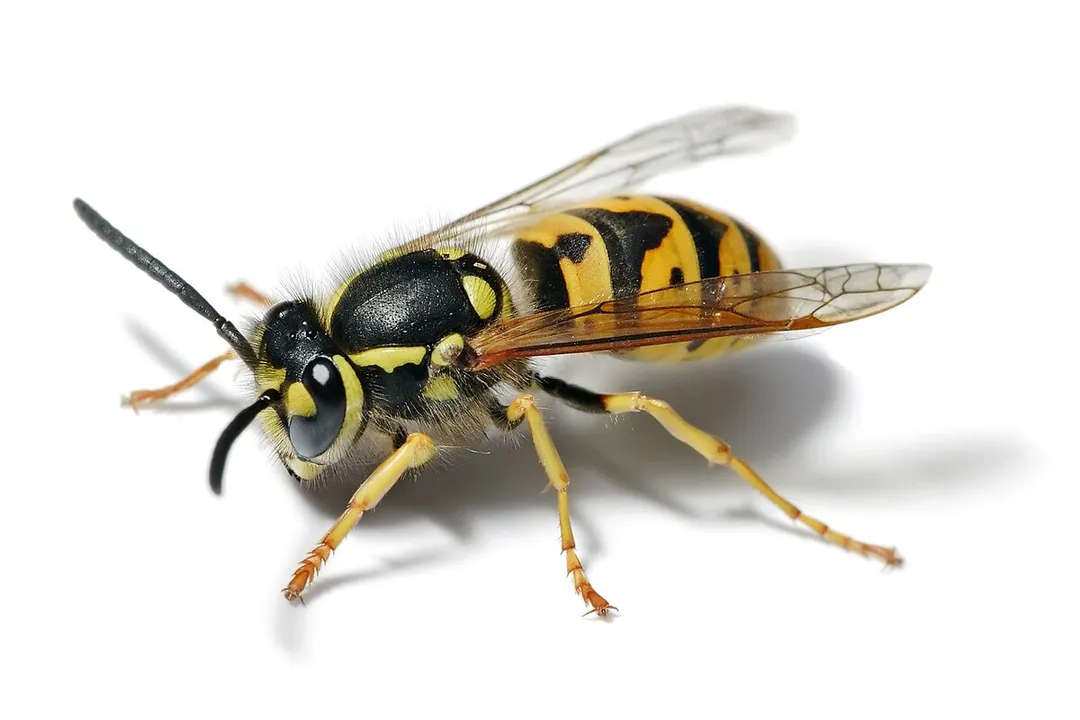
While yellowjackets share a superficial resemblance to honey bees due to their common black and yellow banding pattern, they are biologically distinct wasps belonging primarily to the *Vespula* and *Dolichovespula* genera. A key morphological distinction lies in their body covering and leg structure. Honey bees are covered in dense, branching hairs which facilitate the collection and transport of pollen back to the hive. Yellowjackets, conversely, possess smooth, glossy exoskeletons, appearing much less hairy than bees. Furthermore, yellowjackets lack the specialized structures on their legs, known as corbiculae or pollen baskets, which are used by bees specifically for carrying pollen loads.
Related Questions
What is the approximate foraging radius where 90% of yellowjacket activity occurs around the nest site?What two materials are combined with saliva to create the paper-like substance used by yellowjackets to build their nests?Which specific structural cavity does the nonnative German Yellowjacket (*Vespula germanica*) commonly favor for nesting instead of building underground?Which yellowjacket life stage is the only one guaranteed to survive the winter by hibernating to initiate the next year's colony?Between which hours of the day is the optimal time window for observing yellowjackets actively engaging in foraging flights?What characteristic physical features do yellowjackets lack that differentiate them from honey bees?What specific food requirement do yellowjackets meet using protein sources like meat or fish when baiting for tracking purposes?In the milder Southern US climate, what designation is given to the small percentage of Southern Yellowjacket nests that survive the entire winter season?What common underground nesting site, often associated with burrowing mammals, is the preferred location for the Eastern Yellowjacket (*Vespula maculifrons*)?When marking a suspected underground yellowjacket nest entrance, where must a flag or rock be placed relative to the actual hole?