What characteristic coloration fact about the body generally indicates a spider is NOT a Cheiracanthium species?
Answer
If the spider is decidedly dark brown or black.
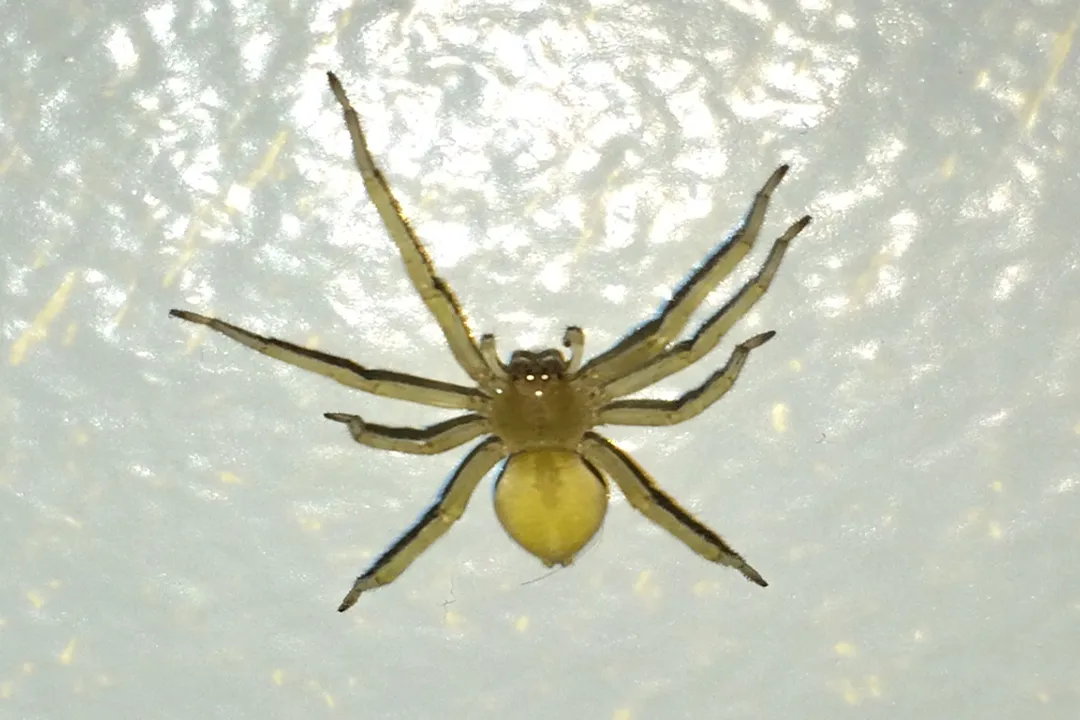
While the exact shade of yellow or green can vary based on age, environment, or recent feeding events, the *Cheiracanthium* group remains fundamentally light-colored. The abdomen is frequently pale yellow or greenish-yellow, and the cephalothorax mirrors this paleness. This adaptation aids in crypsis, allowing them to blend into pale vegetation or light-colored crevices where they rest. Therefore, the presence of a decidedly dark brown or black body coloration serves as a strong exclusionary factor; specimens exhibiting such dark pigmentation are almost certainly identified as a different species altogether.
Related Questions
What is the typical body length range for adult female Yellow Sac Spiders belonging to the genus Cheiracanthium?What coloration feature on the mouthparts is a valuable identification marker for the Yellow Sac Spider?How are the eight eyes of the Yellow Sac Spider arranged across the front of the cephalothorax?What is the typical form and function of the silk structure spun by Yellow Sac Spiders?What characteristic coloration fact about the body generally indicates a spider is NOT a Cheiracanthium species?In mature male Yellow Sac Spiders, what appendages become specialized and often appear enlarged or club-like?What key difference in abdominal marking separates *Cheiracanthium mildei* from *Cheiracanthium inclusum*?What type of visual pattern is generally absent or extremely subtle on the dorsal abdomen of *Cheiracanthium inclusum*?What characteristic contributes to the agile movement of the Yellow Sac Spider relative to its body size?How large is the day retreat typically spun by a mature female Yellow Sac Spider?