In mature male Yellow Sac Spiders, what appendages become specialized and often appear enlarged or club-like?
Answer
The pedipalps used in reproduction.
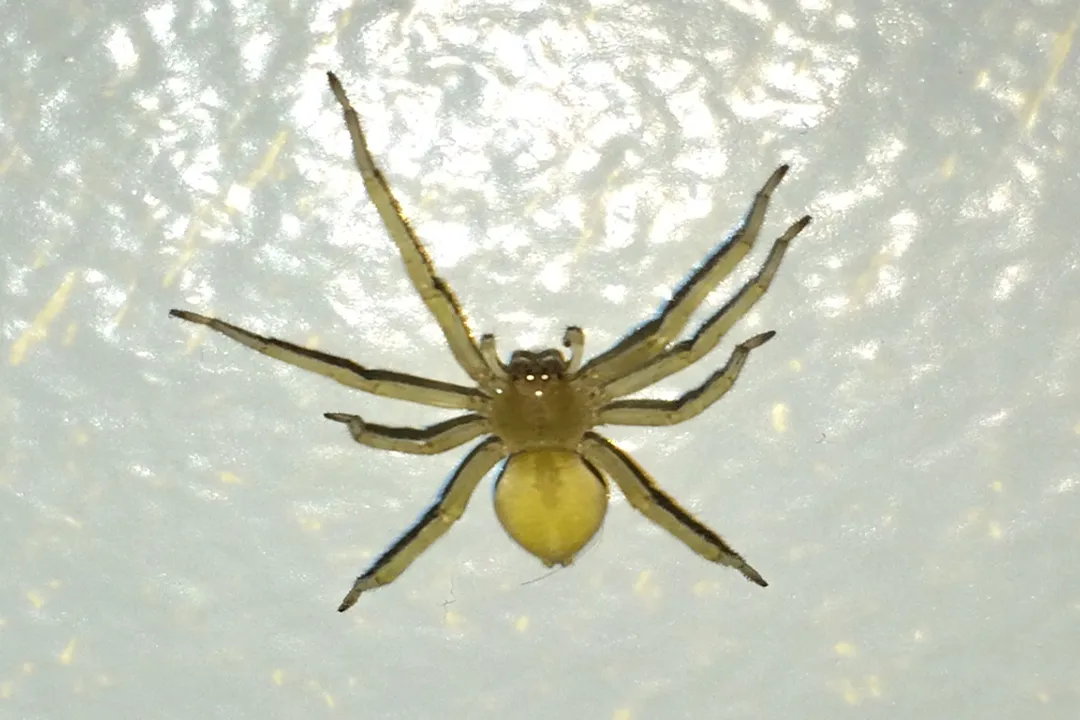
Sexual dimorphism is evident in Yellow Sac Spiders, extending beyond the general size difference where females are typically larger and more robust. A crucial morphological difference involves the pedipalps, which are the small, leg-like appendages situated near the mouthparts. While both sexes utilize these for feeding, in mature reproductive males, the pedipalps undergo specialization. They develop into structures specifically adapted for transferring sperm during mating, often resulting in them appearing noticeably enlarged or club-like at their tips when contrasted with the generally smaller, more uniform pedipalps found on the females.
Related Questions
What is the typical body length range for adult female Yellow Sac Spiders belonging to the genus Cheiracanthium?What coloration feature on the mouthparts is a valuable identification marker for the Yellow Sac Spider?How are the eight eyes of the Yellow Sac Spider arranged across the front of the cephalothorax?What is the typical form and function of the silk structure spun by Yellow Sac Spiders?What characteristic coloration fact about the body generally indicates a spider is NOT a Cheiracanthium species?In mature male Yellow Sac Spiders, what appendages become specialized and often appear enlarged or club-like?What key difference in abdominal marking separates *Cheiracanthium mildei* from *Cheiracanthium inclusum*?What type of visual pattern is generally absent or extremely subtle on the dorsal abdomen of *Cheiracanthium inclusum*?What characteristic contributes to the agile movement of the Yellow Sac Spider relative to its body size?How large is the day retreat typically spun by a mature female Yellow Sac Spider?