How rare are yellow sac spiders?

The question of how frequently yellow sac spiders are encountered often leads to more questions about their actual prevalence than their supposed danger. Contrary to what some might assume about obscure pests, the yellow sac spider genus, Cheiracanthium, is far from rare. In fact, in the New World, the species that most frequently cross paths with humans are considered common and are among the most frequently encountered arachnids by people in North, Central, and South America.
# Global Range
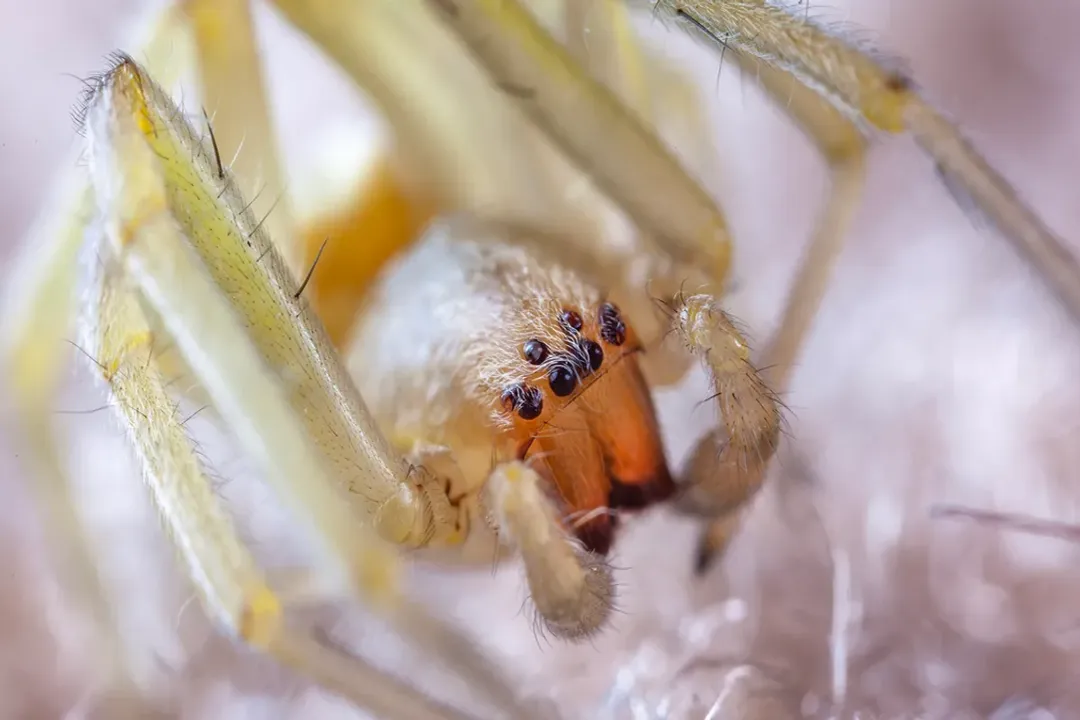
Globally, the genus Cheiracanthium is quite extensive, predominantly belonging to the Old World. Numerous species inhabit areas stretching from Southern Africa up through Japan and into Australia. This signifies a large, established lineage across many continents.
# New World Species

For North America specifically, the picture narrows considerably regarding the species an average person might find. Only two species are widely recognized as established or introduced: Cheiracanthium inclusum and Cheiracanthium mildei. C. inclusum is native to much of the United States, generally excluding the northernmost states, though it also appears in Africa and Réunion. C. mildei is the European import that has successfully colonized much of the Holarctic region, including parts of North America and Argentina, with its range likely expanding since the late 1970s. Their successful establishment across diverse biomes—from temperate grasslands to urban settings—demonstrates significant adaptability.
# Abundance Reality

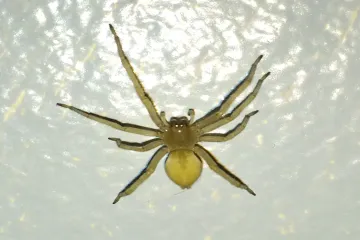
The term "common" applies strongly to their presence in both natural and human-made environments. They are found in gardens, under leaf litter, near woodpiles, and on structures. Inside homes, they seek out undisturbed areas, often settling in corners where walls meet ceilings or along window sills. It is this very habit of frequenting human structures, especially as the weather cools, that leads to high rates of encounter.
If we look at documented bites, one might mistakenly conclude they are rare, but the data suggests the opposite for encounters. Experts have noted that yellow sac spiders likely account for more human bites than any other single spider species. This suggests a high density of interaction, even if the defensive reaction (the bite) is infrequent relative to the sheer number of spiders present. This perceived contradiction—being extremely common yet rarely causing alarm—is a key feature of this spider's reputation.
# Hunting Style
Unlike many web-building spiders that wait for a meal to arrive, yellow sac spiders are active hunters. They do not rely on intricate, traditional webs to trap prey; instead, they wander, typically at night, in search of food. They are fast movers, using their agility to capture small prey like aphids, beetles, and even other spiders. They can secure prey that is temporarily airborne by employing silk threads to bridge gaps or lower themselves. This nocturnal activity means that sightings indoors often occur when the spider is actively moving across walls or ceilings in search of insects attracted to the structure.
# Day Shelters
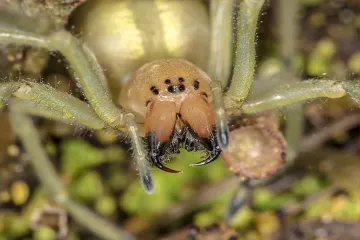
During the daytime, these active hunters retreat into small, silk-spun enclosures they construct themselves. These silken tubes or sacs are vital for their survival, offering protection from predators and the elements. They can spin these retreats quite quickly, sometimes in under ten minutes. Because these sacs are small and often built in neutral-colored corners or crevices, they can blend in perfectly with the background, which is one reason the spiders themselves are often overlooked until they are disturbed or begin their nightly hunt. They also consume nectar, which can support their fitness, particularly when insect prey is scarce.
One interesting aspect of their prevalence involves their relationship with architecture. Their preference for building daytime retreats in the tight seams of buildings—such as where a wall meets the ceiling—means that even a small population can be spread thinly across many surfaces, making thorough detection difficult without direct, close inspection of high corners.
# Bite Profile
When yellow sac spiders do bite, it is almost always because they have been physically provoked, trapped against skin by clothing or bedding, or accidentally pressed against a person. While they possess cytotoxic venom, documented studies reviewing verified bites in the US and Australia indicated that necrosis, or tissue death, is not a consistent outcome, despite historical medical assumptions.
Bite symptoms usually start with immediate, noticeable pain, often likened to a bee or wasp sting. This initial pain may be followed by localized reactions: redness, edema (swelling), pruritus (itching), and sometimes blistering. Systemic reactions, such as muscle cramps, malaise, or nausea, are possible but much less common and significantly less severe than those associated with other medically significant spiders. A positive piece of data to consider is that studies of verified bites rarely show severe or necrotic outcomes, helping to clear the spider’s undeservedly dark reputation, which was often built on circumstantial evidence or misdiagnoses. In many cases, symptoms, while painful initially, resolve within a few days.
# Prevention Tips
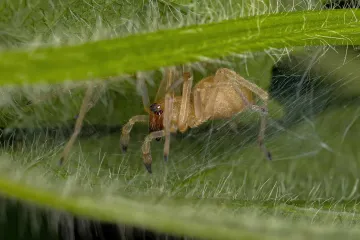
To manage the presence of these common but generally non-aggressive spiders, prevention is key, focusing on removing their habitat and food sources. Given that they are active hunters attracted to insects, managing the exterior environment is a proactive step: reducing outdoor lighting, which attracts their prey, can be helpful, as can keeping plants trimmed away from the structure's perimeter.
Inside the home, the most effective measures target their need for security during the day. Because they construct silken sacs in quiet, undisturbed areas, thoroughly cleaning and removing these silk retreats and any accompanying egg sacs is a critical step in population control. Simply ignoring a stray web may allow a new generation to hatch unnoticed. You can quickly remove these sacs using a vacuum cleaner hose attachment for an effective, non-contact removal method.
It is helpful to remember that the yellow sac spider is an incredibly beneficial predator in agricultural settings, controlling pests in fields and orchards. This ecological benefit contrasts with their status as a "household pest" when they venture indoors seeking refuge or warmth. Their widespread presence is a reflection of their successful adaptation to environments altered by humans, not necessarily a sign of an invasive threat to public health, provided one respects their need to hide during daylight hours.
Related Questions
#Citations
Cheiracanthium - Wikipedia
Are yellow sac spiders as dangerous as they are made out to be?
[PDF] A Guide to Yellow Sac Spider - Alameda County Vector Control
Cheiracanthium inclusum | INFORMATION - Animal Diversity Web
Yellow Sac Spider: Facts & Identification Guide
The Yellow Sac Spider Surprisingly Doesn't Build a Web
Yellow sac spiders - Plant & Pest Diagnostics
The Ultimate Guide To Yellow Sac Spiders In Maine