What characteristic color pattern, common to whiting species, serves as camouflage in the water column?
Answer
Silvery or whitish undersides
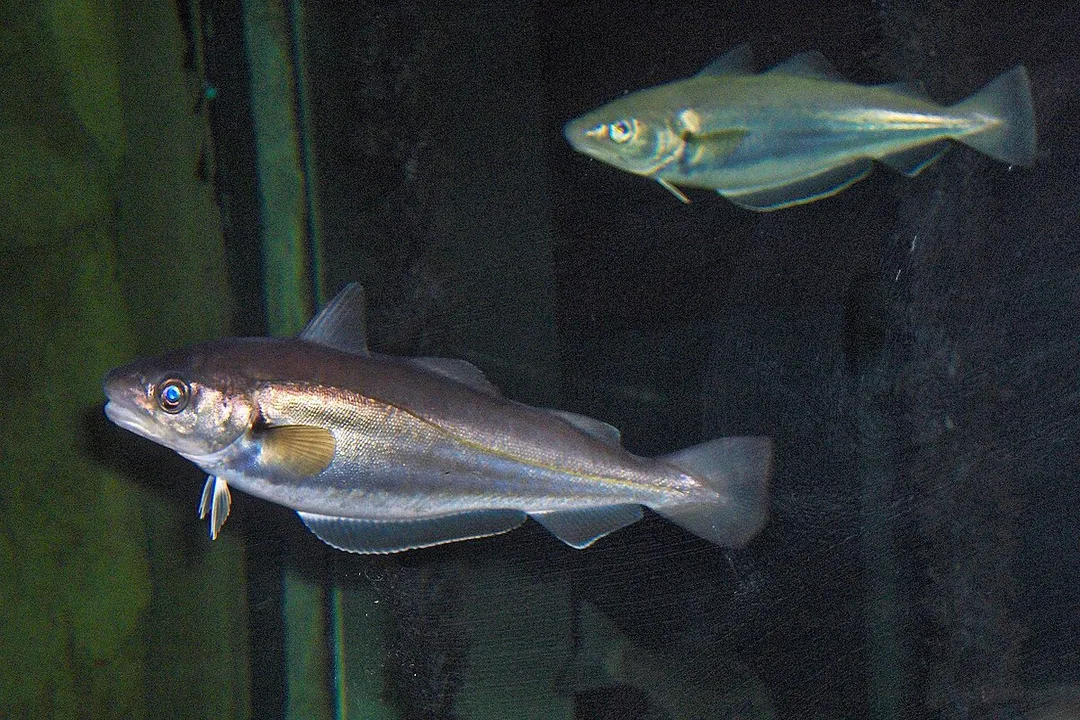
A consistent morphological feature observed across whiting species within the Merlangius genus is their coloration, which employs countershading for camouflage. This effect is achieved because their undersides tend to be silvery or whitish, blending them against the bright surface light when viewed from below, while their upper flanks are typically darker (grayish or brownish-yellow).
Related Questions
Which genus is most commonly associated with whiting, and what larger family does it belong to?What is the recognized scientific name for the species commonly called European Whiting, confirmed by FishBase?What specific fin structure characterizes the European Whiting (M. merlangus) based on detailed biological surveys?Which regulatory body in the United Kingdom is responsible for managing the European Whiting (M. merlangus) stocks?What geographical boundary defines the distribution of the Pacific Whiting (Merlangius productus)?What is the primary management agency handling the Pacific Whiting (M. productus) due to its vast trans-boundary US distribution?How do the management scopes for M. merlangus and M. productus illustrate the impact of classification?What characteristic color pattern, common to whiting species, serves as camouflage in the water column?What is the typical maximum reported length cited for the European Whiting (M. merlangus)?How can the specific species of whiting subtly alter the final culinary product served to consumers?