What are the three primary defining adaptations contributing to the evolutionary success of the white rhinoceros species over millions of years?
Answer
Massive size, two horns, and specialized square lip
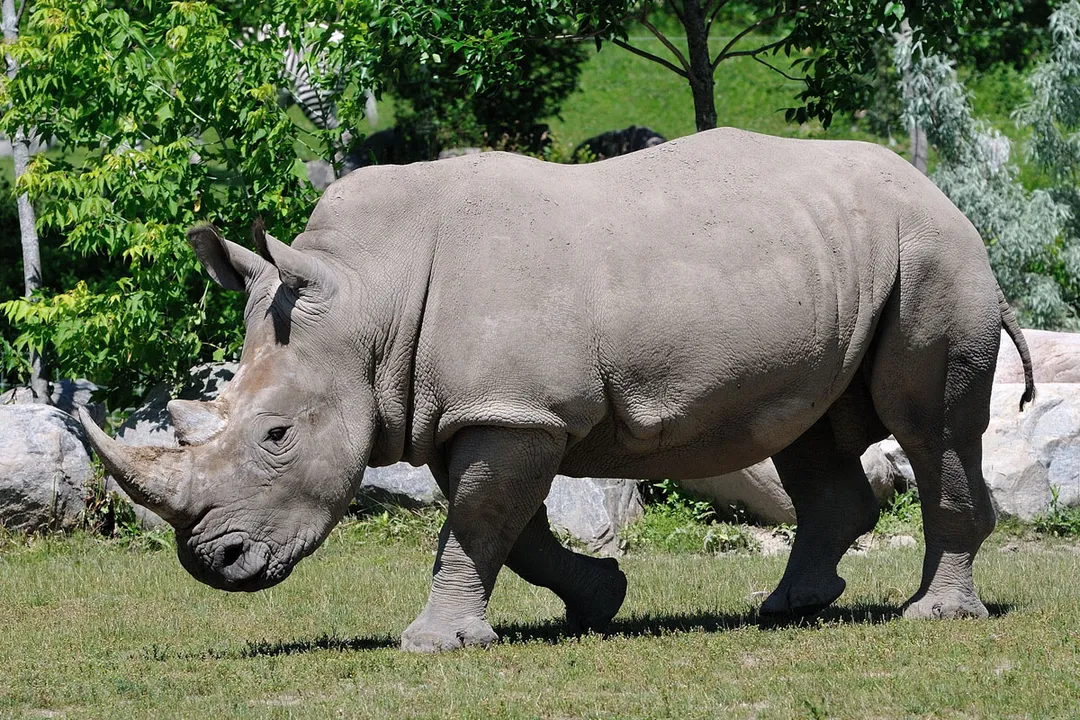
The long-term evolutionary success of *Ceratotherium simum*, spanning millions of years, is attributed to a combination of key physical and behavioral adaptations honed over deep time in response to ancient ecological niches. These three defining traits are its massive overall body size, which likely aided in predator avoidance and efficient digestion; the presence of two horns, central to its identity; and the highly specialized broad, square lip, which underpins its unique dietary strategy of grazing. These features collectively allowed the lineage to thrive until the rapid stressors introduced in the modern era.
Related Questions
Which mammals share the order Perissodactyla with the white rhinoceros, *Ceratotherium simum*?What element of the scientific designation *Ceratotherium simum* describes the rhino's distinctive wide muzzle?What key ecological specialization defines the modern *C. simum* compared to its ancestral forms?Which related rhino species is structurally adapted for stripping foliage from bushes, contrasting with the White Rhino's grazing?What demographic context describes the current situation of the Northern White Rhino (*Ceratotherium simum cottoni*)?What was the approximate minimum wild population reached by the Southern White Rhino during its near-extinction event?What physical characteristic reflects the White Rhino's specialization as a grazer, contrasting with ancestral browsers?For approximately how many million years has the mammalian lineage that includes the white rhino persisted on Earth?What significant evolutionary transition does the genus *Ceratotherium* represent in rhino history concerning diet and size?In what specific year did the last known male Northern White Rhino die, leading to the subspecies' functional extinction?What distinguishing cranial feature has historically been noted in the Northern White Rhino (*C. s. cottoni*) compared to the Southern subspecies?What are the three primary defining adaptations contributing to the evolutionary success of the white rhinoceros species over millions of years?